Hungarian parliament removes President Tamás Sulyok from office
Office Hungarian parliament removes President Tamás Sulyok - The Hungarian parliament has taken a decisive step by removing President Tamás Sulyok from his

Hungarian Parliament Removes President Tamás Sulyok from Office
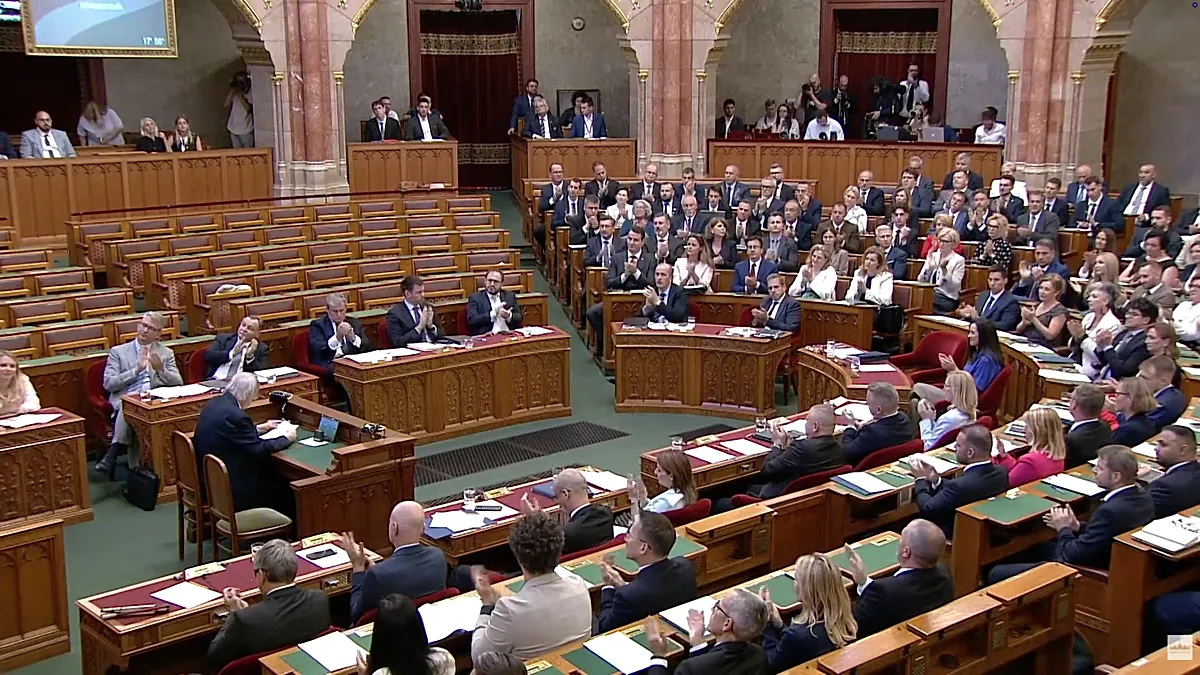
Poinews.com – The Hungarian parliament has taken a decisive step by removing President Tamás Sulyok from his position through a constitutional amendment. On July 13, lawmakers approved the 17th constitutional reform with 139 votes in favor, 6 against, and 54 abstentions. This landmark change allows the parliament to remove the current president, Tamás Sulyok, and establishes a precedent for future actions against heads of state. The amendment also outlines a timeline for the transition, ensuring the country moves forward with a new leadership structure under the revised framework.
The Shift in Presidential Authority
President Tamás Sulyok’s removal marks a significant shift in the balance of power within Hungary. The amendment stipulates that his term will end immediately upon its enactment, with the parliament tasked to elect a new head of state. This new leader will serve until the constitutional changes are fully implemented, with a maximum term of five years. The move signals a clear effort to centralize authority and streamline governance, aligning with the broader political agenda of the ruling Fidesz party.
Under the new provisions, the parliament holds the exclusive power to initiate and execute the removal process. This contrasts with previous constitutional norms, which required a more complex procedure involving multiple institutions. The reform grants MPs the ability to override the president’s role in certain matters, effectively redefining the relationship between the legislative and executive branches. For Sulyok, this means his position as president of the Constitutional Court and his influence over judicial independence may be diminished in the coming months.
Prime Minister Magyar’s Constitutional Vision
Prime Minister Péter Magyar positioned the constitutional amendment as a critical tool for preserving Hungary’s democratic integrity. Speaking ahead of the vote, he described the process as “the founding document of the Hungarian Cosa Nostra built by Fidesz–KDNP,” highlighting its role in safeguarding the nation from external and internal threats. Magyar argued that the amendment would protect the people from arbitrary power, ensure transparency in state institutions, and shield the freedom of elections from interference.
“The constitutional task is to protect the country from external threats, Hungarian people from arbitrary power, common property from looting, the freedom of elections from interference by the state and the secret services, children entrusted to the care of the state from their abusers, and state institutions from being used by a party that has lost an election to preserve its own power.”
This rhetoric underscores the government’s determination to assert control over the country’s institutional framework, even as it acknowledges the removal of Sulyok as a symbolic gesture of political realignment.
Magyar also criticized the previous government for consolidating authority under a single leader. He noted that the absence of accountability for decisions, such as the financial mismanagement of the MNB, had allowed unchecked power to persist. By removing Sulyok, the government aims to demonstrate its commitment to enforcing constitutional principles, even if it means challenging the status quo within its own ranks.
Opposition’s Strategy and Political Realignment
The opposition’s decision to boycott the final stages of the amendment’s passage reflects a strategic shift in the political landscape. Fidesz and KDNP MPs, led by Miklós Panyi, withdrew from the debate, arguing that the process was a “dismantling of democracy.” This absence allowed the ruling coalition to secure the necessary majority for the amendment, bypassing potential objections from the opposition. Sulyok’s non-participation in the vote further emphasized the symbolic nature of his removal, as he was not present to defend his position.
Leader of the Fidesz parliamentary group, Gergely Gulyás, emphasized the impact of the amendment on internal party dynamics. He stated that the process had created a situation where at least half of the MPs were excluded from the leadership competition, weakening the opposition’s ability to challenge the ruling party. Gulyás also hinted at resigning from his role, citing the need to address the imbalance in parliamentary representation that the amendment has introduced. This move highlights the broader implications of the reform, not just for Sulyok but for the political structure of Hungary as a whole.
Legal Mechanisms and Public Reaction
The amendment’s legal framework includes provisions for swift removal of the president, with the parliament able to act if the president fails to sign the legislation within five days. This mechanism has drawn criticism from some quarters, with concerns raised about its potential for misuse. However, supporters argue that it provides a clear pathway to address constitutional violations and hold leaders accountable.
President Sulyok had previously raised objections to the amendment, warning of its impact on judicial independence and the rule of law. He sought support from the Constitutional Court and the Venice Commission to challenge the reform’s validity. Despite these efforts, the amendment passed with overwhelming support, signaling a decisive victory for the ruling coalition. The public response has been mixed, with some viewing the removal as a necessary step toward political stability, while others see it as an erosion of democratic norms.
As the new leadership takes shape, the focus will shift to implementing the constitutional changes and addressing the remaining challenges to Hungary’s governance. The removal of President Tamás Sulyok from office is not just a procedural change but a reflection of the ruling party’s strategy to consolidate power and redefine the role of the presidency within the nation’s political system.