Full ban on Israeli settlement trade gets ‘most support’ from EU countries, Kallas says
EU Consensus Grows for Full Ban on Israeli Settlement Trade Full ban on Israeli settlement trade - European Union foreign ministers have increasingly aligned

EU Consensus Grows for Full Ban on Israeli Settlement Trade
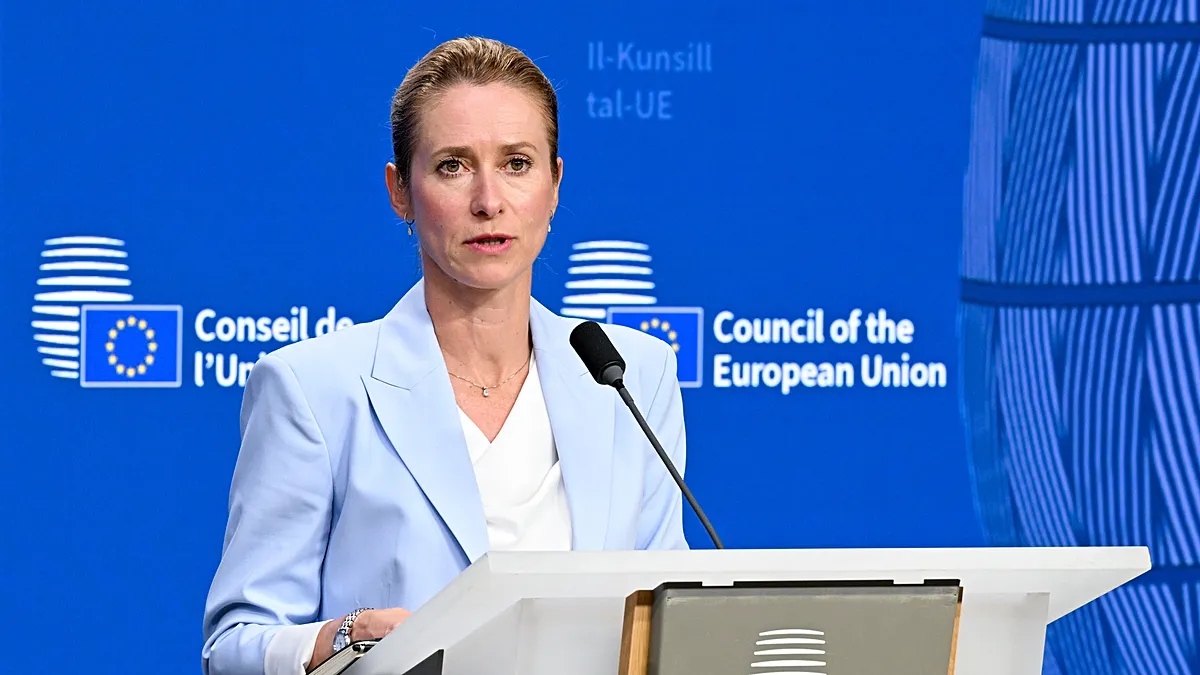
Poinews.com – European Union foreign ministers have increasingly aligned behind a comprehensive trade embargo on goods from Israeli settlements, a decision that has gained significant traction among member states. The push for a full ban on Israeli settlement trade was highlighted by Kaja Kallas, the EU’s foreign policy chief, who emphasized its broad support during a recent meeting. The European Commission had proposed several measures to curb settlement trade, with the most stringent option—excluding all goods from settlements—emerging as the preferred approach. Kallas noted that this choice resonated most strongly with EU countries, signaling a potential shift in the bloc’s stance on the issue.
Legal Framework and International Law
Israeli settlements in the occupied Palestinian territories are widely regarded as illegal under international law, a principle upheld by the EU. This legal foundation has strengthened calls for a full ban on Israeli settlement trade, as settlement activities are seen as contributing to the ongoing occupation. The European Commission’s proposal to frame the ban as a trade measure, rather than a foreign policy directive, is designed to avoid requiring unanimous agreement. This approach allows for quicker implementation, relying instead on qualified majority support—15 states representing 65% of the EU population.
“The option that got the most support was banning the trade with the illegal settlements,” Kallas told reporters in Brussels on Monday evening.
The EU’s upcoming ministerial meeting in October is expected to formalize the policy, but some diplomats have raised concerns about the timing. Israel’s legislative elections, scheduled for later this year, could delay progress, as certain members advocate for waiting until after the vote to avoid political friction. However, a majority of EU countries have pushed for immediate action, framing the ban as a necessary application of international law.
Member States’ Diverging Views
While the full ban on Israeli settlement trade has found support, not all member states are in agreement. Italy’s Foreign Minister Antonio Tajani, for instance, argued that measures should be postponed until after the Israeli elections. “No measures should be taken before the ballot,” Tajani said earlier on Monday, suggesting that premature action might complicate diplomatic efforts. In contrast, the Dutch Foreign Minister Tom Berendsen emphasized the practicality of the trade-based approach, stating, “These are trade measures, so that means that, as far as we are concerned, that should be possible with a qualified majority.”
“We need to have a unified position, and so far we have not been able to have that unified position,” Kallas noted. “There is a legal opinion that we can do this also with the qualified majority. And, you know, if there is a will, then we can move forward.”
Belgian Foreign Minister Maxime Prévot expressed frustration with the European Commission’s delayed proposal, calling it a “bone to chew on” rather than a clear roadmap. “I am concerned that we are engaging in delay tactics, debating endlessly without taking action, when such debate is not actually necessary. A decision not to trade would simply be an application of international law,” Spain’s Foreign Minister José Manuel Albares added, underscoring the urgency of the matter.
Despite differing opinions, the full ban on Israeli settlement trade has become a focal point in EU discussions, reflecting growing pressure to isolate settlements economically. The policy’s potential impact on trade relations with Israel and its alignment with the International Court of Justice’s 2024 advisory opinion on the illegality of settlements have further solidified its relevance. As negotiations continue, the EU’s ability to implement the ban without unanimous consent could mark a pivotal step in its foreign policy toward the Israeli-Palestinian conflict.