Wages vs prices: The economic pressures behind Europe’s protests
Economic anxiety spilled onto the streets in several European countries over the weekend, as large demonstrations focused on the widening gap between

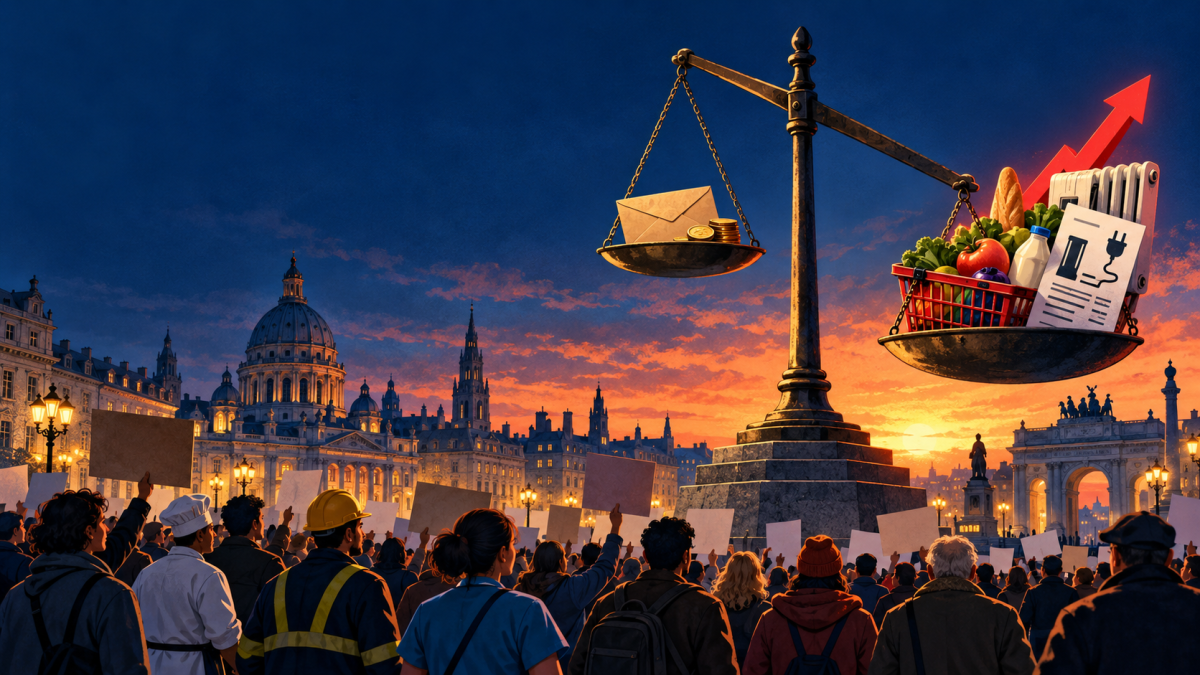
Table of Contents
Cost Pressures Drive Weekend Protests Across Europe
Poinews.com – Economic anxiety spilled onto the streets in several European countries over the weekend, as large demonstrations focused on the widening gap between household incomes and the cost of basic necessities. Protesters raised concerns ranging from expensive housing and stagnant pay to strained public services, with students, workers, unions and housing advocates among those taking part.
Although the protests did not form one coordinated continental movement, they reflected a shared frustration: many households feel that everyday expenses have risen faster than their ability to pay for them. Food, energy, rent and mortgage payments have become central pressures, particularly for lower-income workers, tenants and younger residents trying to secure housing in major cities.
France Sees Mass Turnout and Episodes of Violence
In France, demonstrations drew an estimated 550,000 to 800,000 people across the country. Students and other groups joined marches centred on living costs and the state of public services. Much of the activity was peaceful, but some cities experienced serious unrest that damaged businesses and public buildings.
Limoges city hall was set on fire, while Lyon’s well-known tourist office on Place Bellecour also burned. Town halls in Marseille, Lille and Angers were entered by vandals. In Bordeaux, attackers ransacked the prefect’s residence.
“Protesting is a right, and anger deserves to be heard. Yet, no disagreement or grievance can ever justify the destruction of public property,” Guillaume Guérin, the mayor of Limoges, said, calling the violence “unacceptable.”
The distinction between peaceful protest and destructive acts became a major part of the political response. The demonstrations gave voice to concern over purchasing power and access to services, while the violence prompted condemnation from local officials and raised questions about how public anger can be expressed without further damage to communities.
Belgian Demonstrations Include Student Concerns
Cost-of-living protests in Belgium led to clashes between demonstrators and police in Brussels and Liège. The economic discontent has also intersected with education concerns. In recent weeks, high-school students have protested rising education costs, echoing complaints voiced by students in France over school conditions and shortages of teachers.
Belgian Interior Minister Bernard Quintin condemned the violent incidents on Saturday, arguing that events had moved beyond legitimate dissent.
“No longer simply a protest,” he said, describing the situation as “pure and simple violence.”
The student participation underlines how financial pressure extends beyond monthly shopping bills. For families, education-related expenses and the quality of public services can add to the sense that essential parts of daily life are becoming harder to afford or access.
Housing, Pay and Public Services at the Centre of Demands
In Portugal, trade unions and housing-rights organisations called for higher wages, stronger pensions, improved public services and more effective action on housing affordability. Organisers pointed to rent increases, higher mortgage payments and rising routine expenses as burdens weighing on family budgets.
Italy also saw demonstrations linked to economic conditions and higher prices. Clashes were reported in Milan, Turin and Bologna, leaving people injured. Dozens of people were detained in Milan.
Housing remains one of the most sensitive issues behind the broader cost-of-living debate. Renters may face repeated increases in monthly costs, while potential buyers can find mortgage payments difficult to manage. For younger people, the challenge of finding an affordable home can shape decisions about work, education and whether they can live independently.
At the same time, low-paid employees are especially exposed when essential bills take up an increasing share of earnings. Even a modest price rise can have an outsized effect when little money remains after housing, food, transport and energy costs have been covered.
Why Lower Inflation Does Not Always Feel Like Relief
A slowdown in inflation does not mean that prices return to earlier levels. It means prices are rising less quickly than before. For households that have already absorbed several years of higher costs, the financial strain can remain severe even if the rate of increase eases.
Food offers a clear illustration of that problem. European Union figures show that food and non-alcoholic beverage prices were 34% higher in August 2026 than they had been in August 2021. Such changes affect households frequently because groceries are unavoidable and purchased regularly.
A comparison of gross monthly minimum wages and the amount of food they could buy found declines in several countries. Purchasing power for food fell by 6% in Malta, 5% in Spain and 4% in France. It increased in most of the countries examined.
That measure, however, captures only part of the experience facing households. It does not include taxes, housing payments or other regular costs. A worker may therefore see a different picture in practice, especially in places where rent or mortgage expenses absorb a large proportion of income.
A Wider Test for Household Budgets
The demonstrations show that public concern is not limited to a single price category or one national policy. The pressures differ across Europe, and each country’s protests have their own immediate demands. Yet the same basic question runs through many of them: whether pay can keep pace with the cost of essentials.
For policymakers, employers and public-service providers, the challenge extends beyond headline inflation figures. People judge their financial position through the practical choices they face each month: what they can buy, where they can live, whether services are available, and how much room remains after the basics are paid for.
As long as those choices remain constrained, the tension between wages and prices is likely to remain a powerful source of public discontent across Europe.
Related Reading
Frequently Asked Questions
What is Wages vs prices?
Wages vs prices is the main topic of this guide. The article explains the context, practical details, and next steps readers should understand.
Why does Wages vs prices matter?
Wages vs prices matters because readers are looking for a useful answer, not just a short summary. Good content should match search intent and help them decide what to do next.