Video. Belgium: Thousands protest alleged police violence in Brussels
Alleged Police Violence in Brussels Belgium’s capital, Brussels, became the epicenter of widespread public unrest as thousands took to the streets to demand

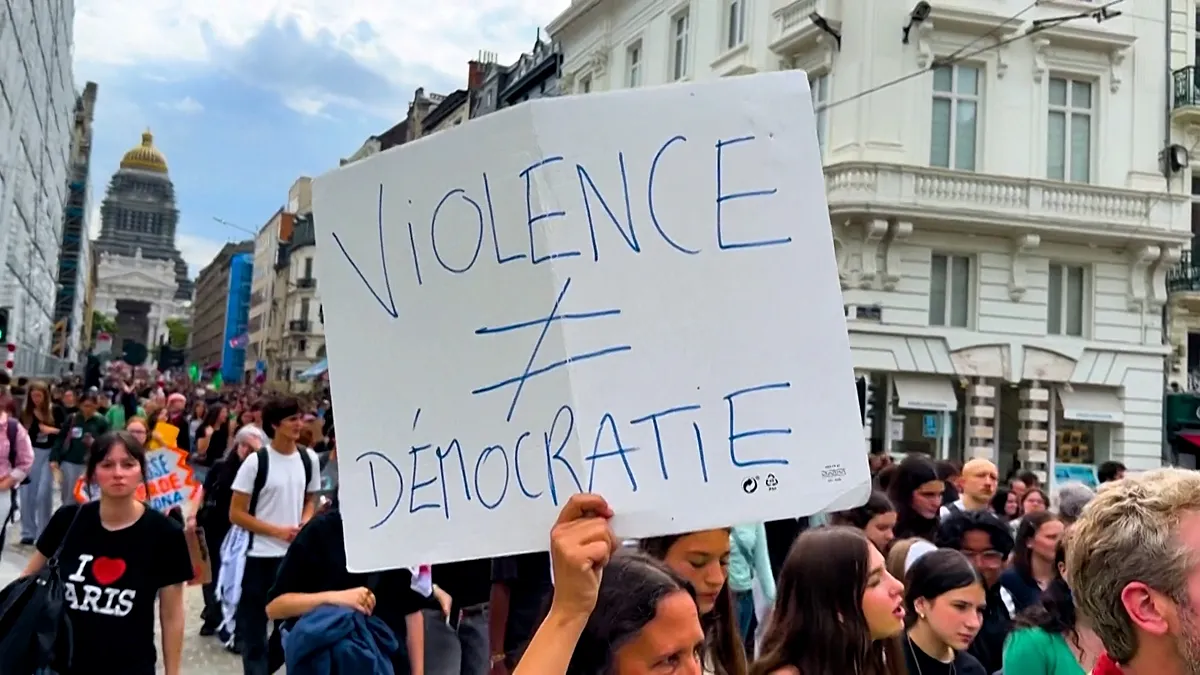
Belgium: Mass Protests Against Alleged Police Violence in Brussels
Poinews.com – Belgium’s capital, Brussels, became the epicenter of widespread public unrest as thousands took to the streets to demand accountability for alleged police brutality. The demonstrations, which erupted in response to recent budget proposals, have drawn significant attention due to the escalation of confrontations between demonstrators and law enforcement. Protesters have criticized the use of force, with reports of tear gas, water cannons, and physical altercations becoming common during the clashes. The unrest has sparked a national conversation about the balance between maintaining public order and respecting civil liberties, particularly in the context of the proposed cuts to education services in French-speaking regions.
Context of the Protests and Their Growing Momentum
The protests are rooted in frustration over budget cuts that have disproportionately affected schools and public infrastructure in the French-speaking parts of Belgium. Activists argue that these reductions threaten the quality of education and exacerbate regional inequalities, fueling a sense of injustice among citizens. As tensions rose, the demonstrations grew from localized protests to a citywide movement, with crowds gathering in major squares and streets. The events have also highlighted the deepening divide between the French-speaking and Dutch-speaking communities, as the budget dispute has become a symbol of broader political tensions. The scale of the protests, with thousands participating daily, indicates a significant level of public dissatisfaction with the government’s handling of the issue.
Belgium’s political landscape has been further complicated by the role of the Mars Attacks group, a prominent grassroots movement that has mobilized citizens against the proposed reforms. The group’s leaders have emphasized the need for dialogue and transparency, accusing authorities of using excessive force to suppress dissent. Their efforts have included organizing daily marches and distributing flyers to raise awareness about the budget cuts. The movement’s focus on education has resonated with many, particularly parents and students who fear the long-term consequences of reduced funding. As the protests continue, the pressure on the government to address concerns has intensified, with demands for a revision of the budget plans gaining traction across the country.
The Role of Social Media and Public Awareness
Belgium’s youth and activist groups have leveraged social media platforms to amplify their message, sharing videos and images of police encounters that have gone viral. These digital campaigns have played a crucial role in uniting protesters and keeping the issue in the public eye. Hashtags such as #BelgiumProtests and #PoliceViolence have trended on platforms like Twitter and Facebook, showcasing the widespread support for the demonstrations. The use of multimedia has not only documented the events but also exposed the perceived disconnect between the government and the people it serves. As the protests gain momentum, the role of online advocacy in shaping public opinion and holding officials accountable has become increasingly evident.
Authorities in Belgium have faced mounting criticism for their handling of the protests, with many arguing that the response was disproportionate. The deployment of riot police and the use of crowd-control tactics have raised questions about the prioritization of order over safety. In response to the growing unrest, the government has acknowledged the need for a more nuanced approach, though it maintains that the measures were necessary to prevent the situation from spiraling out of control. The protests have also sparked discussions about the effectiveness of police training and the importance of community engagement in preventing conflicts. As the demonstrations continue, the challenge for Belgium’s leaders is to address the root causes of the unrest while maintaining public confidence in their ability to manage the crisis.
Regional Implications and Broader Political Impact
The protests in Brussels have underscored the regional tensions that have long been simmering in Belgium. French-speaking citizens, who feel marginalized in national decision-making, have used the demonstrations to voice their grievances. The budget cuts, which target education in their region, have been framed as an attack on cultural and linguistic identity. This has led to a growing sentiment that the Dutch-speaking majority is imposing its will on the French-speaking minority, deepening the political divide. The unrest has also drawn comparisons to past movements, such as the 2011 “Cordon Bleu” protests, which similarly highlighted regional disparities. As the situation evolves, the implications for Belgium’s unity and governance will depend on how effectively the government addresses the concerns of all communities.
Belgium’s media outlets have played a key role in shaping the narrative around the protests, with coverage highlighting both the demonstrators’ demands and the government’s justifications. News reports have emphasized the emotional impact of the events, with many citizens expressing frustration over the perceived lack of empathy from law enforcement. The visibility of police violence has also prompted calls for independent investigations into the incidents, as well as for reforms to policing practices in the country. As the protests continue, the role of the media in either amplifying or mitigating the conflict will be critical in determining public sentiment and the eventual resolution of the dispute. The events in Brussels are not just a local issue but a reflection of the broader challenges facing Belgium in maintaining social cohesion amid political and economic pressures.