Video. Kyiv protesters rally after Zelenskyy sacks defence minister Fedorov
Kyiv Protesters Rally After Zelenskyy Sacks Defence Minister Fedorov Kyiv protesters rally after Zelenskyy sacks - On Thursday, July 16, 2026, Kyiv’s central

Kyiv Protesters Rally After Zelenskyy Sacks Defence Minister Fedorov
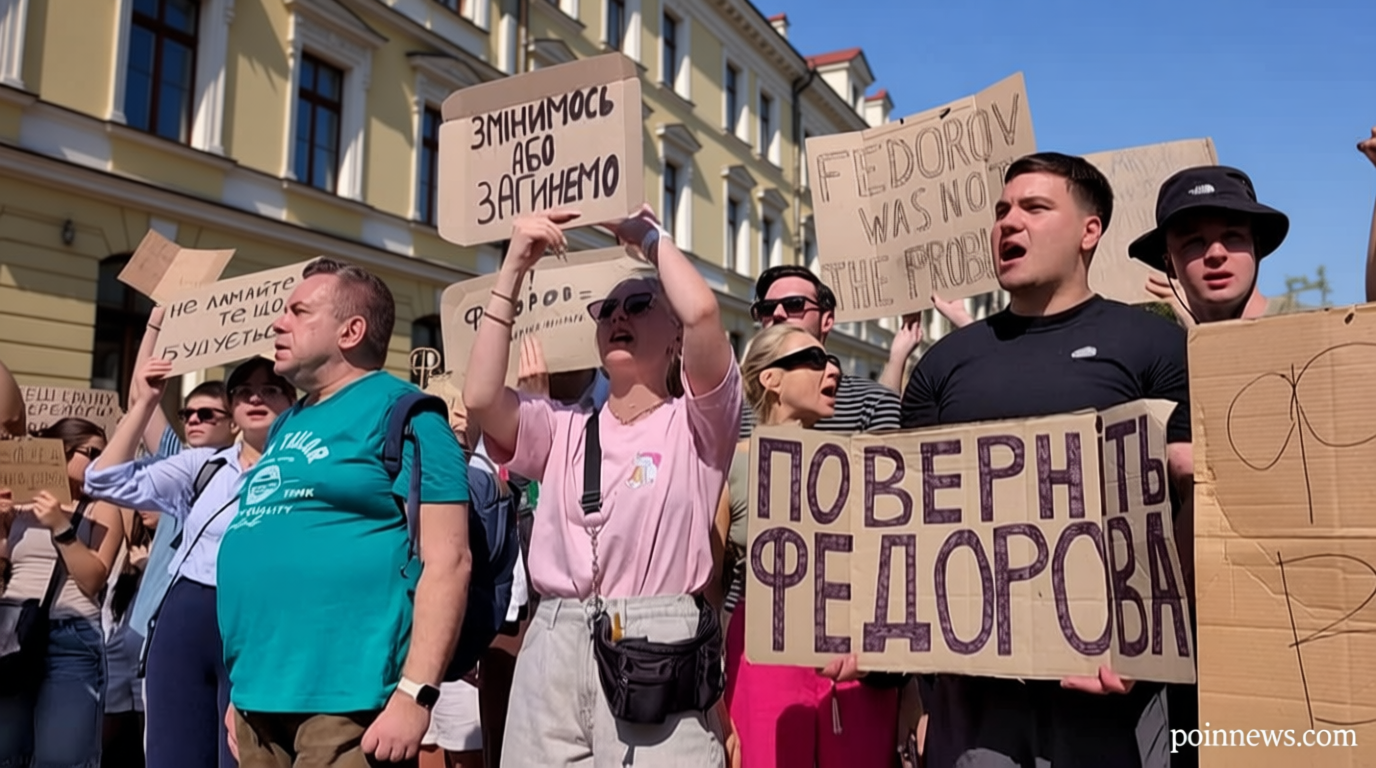
Poinews.com – On Thursday, July 16, 2026, Kyiv’s central streets erupted into a sea of protest as hundreds of citizens gathered to voice their discontent with President Volodymyr Zelenskyy’s decision to replace Defence Minister Denys Fedorov. The rally, marked by the repeated chant of “Shame!” and the presence of banners reading “The army is the priority,” highlighted growing public frustration over perceived mismanagement of Ukraine’s military efforts. Among the demonstrators was a woman holding a sign that declared:
“I don’t want to die.”
Her words encapsulated the fear and anger fueling the crowd, as many believed Fedorov’s dismissal would jeopardize the country’s defense against Russian aggression.
Context of the Leadership Change
President Zelenskyy’s removal of Fedorov came amid a series of government reorganizations six months into his presidency, reflecting the ongoing challenges of balancing political priorities with military strategy. Fedorov, a 35-year-old reformist known for spearheading drone initiatives and modernizing Ukraine’s defense infrastructure, had played a pivotal role in slowing Russia’s advance during the early stages of the war. His replacement, Serhii Koretskyi, a former energy executive, raised questions about the government’s commitment to military innovation. The decision also coincided with the resignation of Prime Minister Yulia Svyrydenko, further intensifying speculation about internal power struggles within Zelenskyy’s administration.
The lack of public justification for Fedorov’s sacking added to the controversy, with some analysts suggesting tensions between the president and Armed Forces Commander Oleksandr Syrskyi were a key factor. Unconfirmed reports indicated that Fedorov’s focus on technological upgrades had clashed with Syrskyi’s more traditional military strategies. This disagreement, however, was not immediately addressed by Zelenskyy, who instead opted to reshuffle his cabinet. As a result, several officials, including a deputy air force commander, resigned in protest, signaling deepening divisions within the ruling party.
Regional Protests and Broader Implications
While Kyiv dominated the headlines, similar demonstrations unfolded in other key cities like Dnipro and Odesa, illustrating the nationwide impact of Zelenskyy’s decision. In Dnipro, protesters gathered outside the regional administration building, demanding accountability for military decisions that they claimed had cost lives. Meanwhile, in Odesa, crowds marched through the historic port area, linking Fedorov’s removal to broader concerns about corruption and inefficiency in the defense sector. These regional movements underscored the fact that Kyiv protesters rally after Zelenskyy is not a singular event but part of a larger wave of public discontent.
The fourth government restructuring since Russia’s invasion began in 2022 has sparked debates about the stability of Zelenskyy’s leadership. Critics argue that the frequent changes in key positions have created uncertainty, both in the military and among citizens. Supporters, however, view the reshuffles as necessary to adapt to evolving threats and improve governance. Despite the turmoil, the president’s focus on maintaining momentum in the war effort remains central to his political agenda. As Kyiv protesters rally after Zelenskyy, the question lingers: will these changes strengthen Ukraine’s position or deepen its internal fractures?
Public sentiment toward the decision to sack Fedorov has been mixed, with many Ukrainians expressing concern over the abrupt removal of a trusted minister. Social media platforms saw a surge in discussions, with hashtags like #KyivProtesters and #ZelenskyySacksFedorov trending for hours. Some citizens praised the move as a bold step to reinvigorate the defense sector, while others warned that it could undermine the morale of soldiers and civilians alike. The protest also drew attention to the importance of civilian oversight in military decisions, as demonstrators called for transparency and a clear explanation of the rationale behind the change.