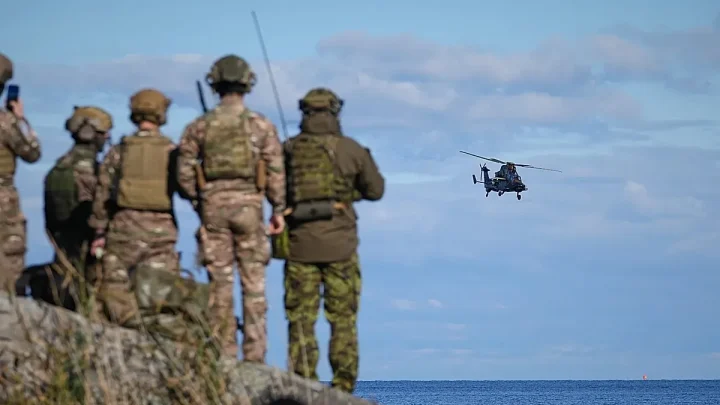
With an eye on Russia, Finland runs Europe’s largest civil defence exercise since WWII
Behind blast-rated doors carved into bedrock, two Finnish conscripts in full hazmat gear and respirators sweep a cave with radiation detectors, converting

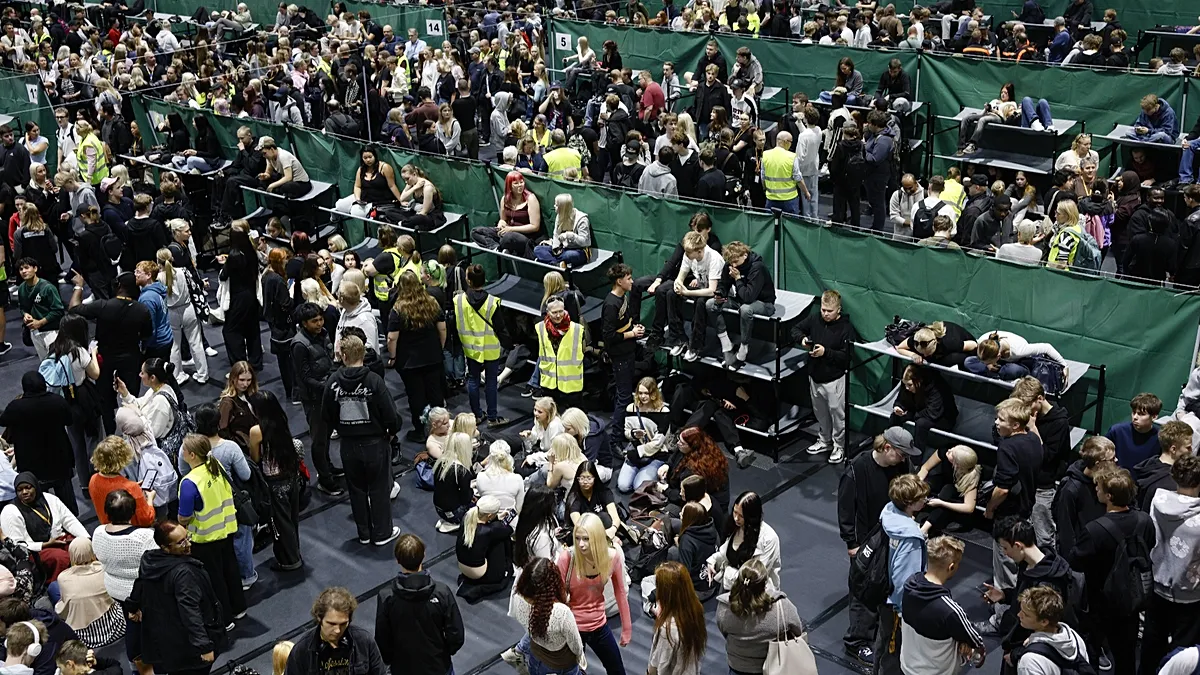
Table of Contents
Finland Stages Europe’s Largest Post-War Civil Defence Drill as Shadow of Russian Conflict Looms
Poinews.com – Behind blast-rated doors carved into bedrock, two Finnish conscripts in full hazmat gear and respirators sweep a cave with radiation detectors, converting what was once a natural rock formation into a refuge capable of sheltering thousands. Above ground, in a converted sports hall, hundreds of civilians sleep on stacked camp beds through the night. Together, these scenes form part of a scenario that has drawn more than 2,000 participants — volunteers, students, and military personnel — into what organizers describe as the most ambitious civil defence rehearsal in Europe since the Second World War ended.
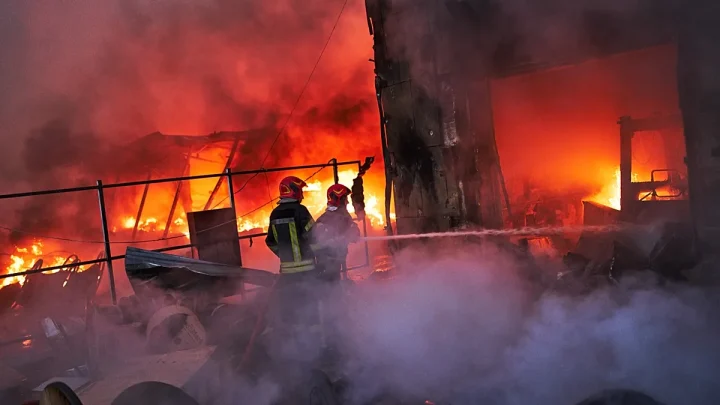
The exercise, staged in the central Finnish city of Kuopio, simulates a compound crisis: cyberattacks have severed the city’s electricity grid and water supply, while the spectre of ballistic missile strikes from neighbouring Russia hangs over every decision. Local government officials and everyday residents walk through the same protocols they would follow under genuine attack, testing communication chains, evacuation routes, and shelter intake procedures under pressure.
A Border That Defines Strategy
Finland’s frontier with Russia spans more than 1,300 kilometres, running from the shores of the Baltic Sea northward past the Arctic Circle. For decades, Helsinki maintained a policy of military non-alignment, preparing to face any Russian aggression essentially on its own. That calculus changed decisively in 2024, when Finland and Sweden simultaneously acceded to NATO in the wake of Vladimir Putin’s full-scale invasion of Ukraine. Yet membership in the alliance has not erased the need for robust domestic preparedness; if anything, it has sharpened the question of what ordinary citizens must be ready to do when professional military response takes time to arrive.
The Conscription Mindset
Retired Army Colonel Asko Muhonen, who designed and oversaw the Kuopio drill, argues that Finland’s layered defence rests as much on civilian psychology as on hardware. The country retained its conscription system long after the Soviet Union dissolved, and that institutional habit, Muhonen contends, embeds a sense of collective responsibility that no amount of treaty language can replicate.
“It’s our duty to serve and protect this country like people have before us. That’s why we have our independence,” said Jyry Pietikainen, 23, a conscript assigned to operate the Kuopio shelter overnight during the exercise.
Not every young Finn embraces national service with enthusiasm, but the cultural expectation persists. The drill deliberately mixes military conscripts with university students and community volunteers, mirroring the mixed population that would actually fill a shelter in a real emergency.
Lessons Imported from Ukraine
Muhonen is explicit that the war in Ukraine has rewritten Finnish assumptions about what a shelter must achieve. The largest purpose-built facility in Kuopio can house roughly 7,000 people, but Ukrainian experience shows that civilians sometimes get only minutes to reach the nearest subway entrance or underground parking garage. The implication, he stresses, is that protection need not mean surviving a nuclear detonation; it means having a reachable space that offers meaningful shielding against blast fragments and initial radiation.
That lesson is personal for Dmytro Untila, a 20-year-old Ukrainian student enrolled at Kuopio’s university. On 24 February 2022 — the first day of the full-scale invasion — he was at home in Odesa when Russian missiles struck the city. With no alternative, he took cover in the entrance hall of his apartment building.
“Because nobody knew this could happen,” Untila recalled of the absence of any prior training for such a scenario.
He now participates in Finnish drills that rehearse precisely the kind of split-second decisions he had to make without preparation.
Energy Grids Under Quiet Pressure
For the Savon Voima electricity company, which serves the Kuopio region, the most familiar threats remain heavy snowfall, storms, and seasonal weather extremes, according to CEO Juha Räsänen. Since the Ukraine invasion, however, the company ceased purchasing Russian biofuel, and Räsänen reports a marked uptick in cyberattacks aimed at its network.
Physical anomalies have also surfaced. Last year, engineers discovered at least ten small reflective stickers affixed to particularly vulnerable points along energy infrastructure. Other Finnish utilities have found similar markers and cannot determine their origin. Räsänen notes that an explosion at one such marked point could destroy an entire dam. Drones have been sighted hovering over power lines, though no operator has been identified.
“If there was an explosion at that point, it could destroy a whole dam,” Räsänen said.
The Finnish Security and Intelligence Service told reporters it had investigated “a wide range of observations” and found nothing warranting alarm. In a written statement, the agency attributed the reflective stickers to routine land-survey work and said drone sightings had “largely been explained by everyday occurrences.” It acknowledged, however, that Russian jamming of GPS signals remains an ongoing nuisance and that public vigilance has increased since 2022.
Seventy-Two Hours of Self-Reliance
Because no infrastructure can be guarded against every conceivable threat, Finnish civil defence planners insist that every household be capable of sustaining itself for at least 72 hours without external power or potable water. The Kuopio exercise tests that assumption at scale: can a city of that size keep its population fed, hydrated, and medically attended through a multi-day blackout while missile threats persist? The answers, organizers hope, will inform national guidance before the next winter brings both snow and uncertainty to the Finnish grid.
Related Reading
Frequently Asked Questions
What is With an eye on Russia Finland?
With an eye on Russia Finland is the main topic of this guide. The article explains the context, practical details, and next steps readers should understand.
Why does With an eye on Russia Finland matter?
With an eye on Russia Finland matters because readers are looking for a useful answer, not just a short summary. Good content should match search intent and help them decide what to do next.