Hidden figures: Stephan Gladieu on photographing the people of North Korea
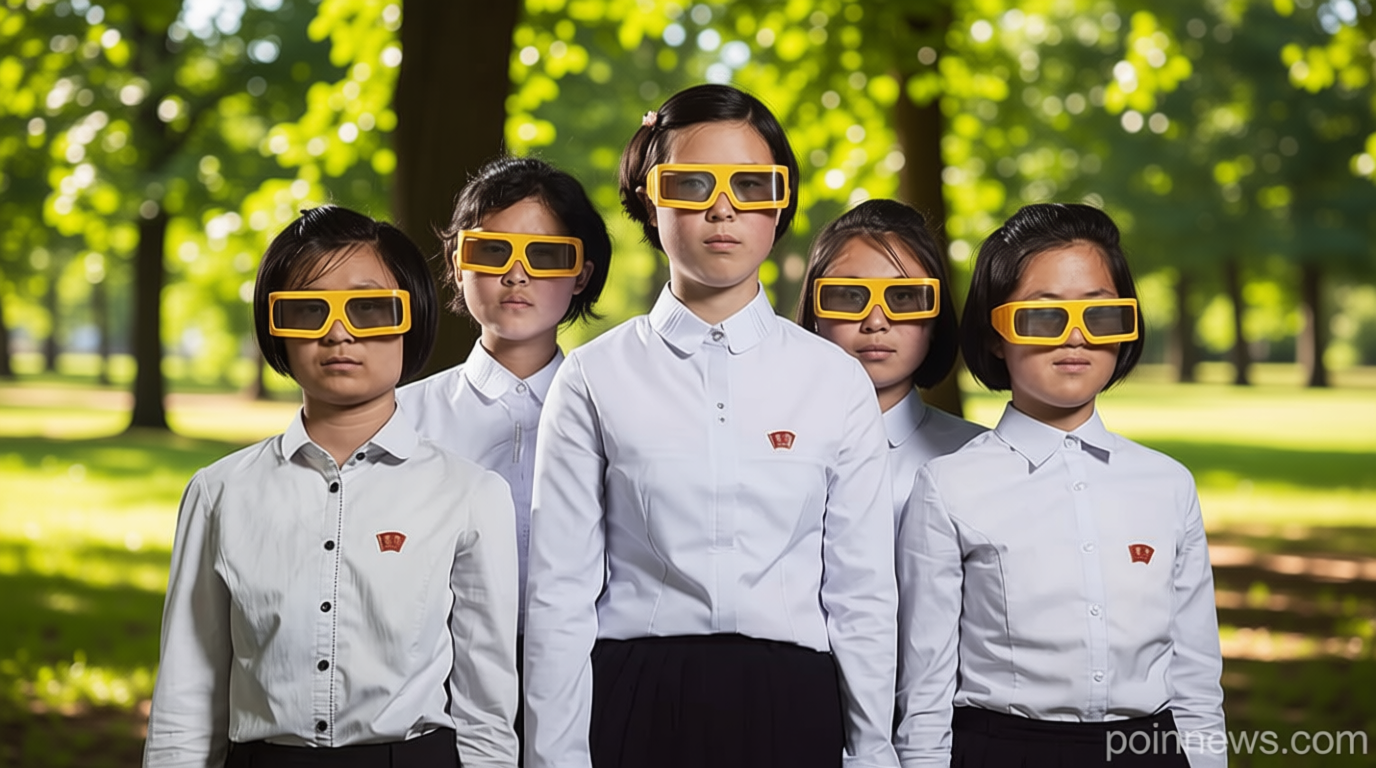
Hidden figures: Stephan Gladieu on photographing the people of North Korea Hidden figures - Five young students face a deep blue wall, their crisp white

Hidden figures: Stephan Gladieu on photographing the people of North Korea
Poinews.com – Five young students face a deep blue wall, their crisp white uniforms stark against the backdrop. Their golden-yellow sunglasses cast a bold hue, and their eyes meet the camera with unwavering confidence. This image, part of a larger body of work, captures the essence of Gladieu’s mission: to spotlight the North Korean people, often overlooked in global narratives. The photographer’s journey to the country began when his request for permission was granted, marking a pivotal moment in his career.
“I wanted to give a representation of North Korean people,” Gladieu explains to Euronews Culture. “They’re rarely seen in the media, and the regime doesn’t often share their stories. Plus, in Europe, the US, and Asia, there’s little attention given to them.”
North Korea’s population exceeds 26 million, yet access to external information has dwindled significantly in recent years, as highlighted by a 2025 report from the United Nations Human Rights Office. During five visits between 2017 and 2020, Gladieu created a series titled *North Korea*, aiming to reveal a community seldom featured in international media. His approach blends intimacy with a stylized aesthetic, offering a fresh perspective on daily life.
Aesthetic of Simplicity and Symbolism
Gladieu’s work in documentary photography took him across continents, from Romania after the collapse of Nicolae Ceaușescu’s regime to Namibia, where he explored the legacy of colonial-era genocide among the Ovaherero people. It was in Namibia that he refined his signature “iconic portraits,” a style he later applied to his North Korean project. By integrating studio techniques—such as controlled lighting—into street settings, he crafted a visual language that bridges the real and the symbolic.
“I was drawn to the idea of the icon,” he notes. “Not for its religious meaning, but for the way it conveys messages through minimalism. It’s a tool for communication, and I wanted to use that to build a humanist story.”
The portraits in *North Korea* feature a subdued color palette, consistent framing, and a luminous quality reminiscent of fashion photography. Yet, the subjects—captured in front of mundane settings like grocery stores and clinics—are grounded in authenticity. Gladieu’s deliberate use of repetition and symmetry creates surreal scenes that challenge perceptions of the everyday. “I chose the same distance and lighting for each shot,” he says. “That way, everything you see is real, but it feels like a curated moment.”
Creating Moments of Freedom
While documentary photography often demands flexibility, Gladieu’s iconic style allowed him to impose a cohesive framework, making his subjects more at ease. “This code gave my guides a sense of comfort,” he explains. “It created a small space of autonomy within the controlled environment.” Over the course of his five trips, each spanning roughly two weeks, he gradually built trust and deeper connections. Despite cultural and historical differences, he found that shared moments of visual storytelling could foster understanding.
“You learn as much about yourself as you do about the person in front of you,” Gladieu reflects. “It’s like meeting someone in real life, but through the lens of a photograph.”
Through this blend of artistry and observation, Gladieu transforms North Korea’s hidden figures into subjects of universal recognition, inviting viewers to see beyond the borders of a nation often shrouded in secrecy.