From Pompeii to Évora: Invisible solar panels for heritage sites
nels for Heritage Sites From Pompeii to Évora - Across the globe, heritage sites face a growing challenge: how to maintain their historical authenticity while

From Pompeii to Évora: Invisible Solar Panels for Heritage Sites
Poinews.com – Across the globe, heritage sites face a growing challenge: how to maintain their historical authenticity while embracing modern sustainability solutions. This dilemma is being tackled by two iconic locations—Pompeii, the ancient Roman city preserved by volcanic ash, and Évora, a UNESCO World Heritage Site in southern Portugal. Both are pioneering the use of invisible solar technology, which seamlessly integrates photovoltaic panels into architectural elements without altering their traditional appearance. The initiative, now gaining momentum in historical preservation, represents a significant leap in harmonizing ancient beauty with contemporary energy needs. By employing these discreet solar solutions, cities like Pompeii and Évora are setting a precedent for other heritage sites seeking to power their operations without compromising their aesthetic or cultural value.
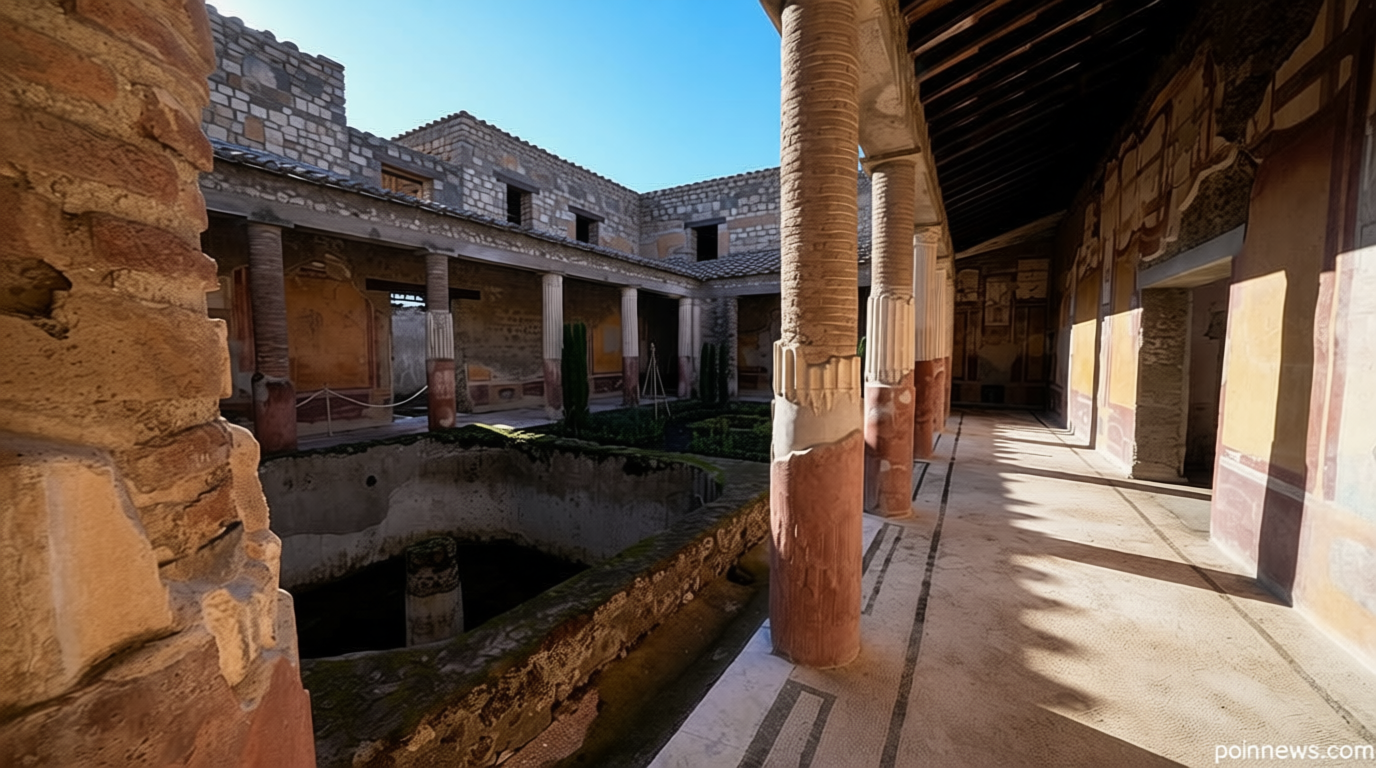
In Pompeii, the Roman Villa of the Mysteries has become a standout example of this innovation. What appears to be a classic Roman tile on the exterior is, in fact, a cutting-edge solar panel designed to blend with the surrounding architecture. According to Gabriel Zuchtriegel, Director of the Pompeii Archaeological Park, this system powers the villa’s lighting and contributes to its overall energy consumption, demonstrating that even in highly protected areas, sustainable energy can be both functional and unobtrusive. The project’s success has inspired plans to expand the technology to other parts of the archaeological park, particularly sites that are far from the electricity grid. Meanwhile, Évora is also embracing solar integration, with its city hall showcasing semi-transparent solar shingles that double as roofing materials. These epoxy-based tiles, embedded with solar cells, generate electricity for the building’s own use while maintaining the visual harmony of the historic cityscape.
Blending Tradition with Innovation
At the heart of this movement is a commitment to preserving the integrity of heritage sites while modernizing their infrastructure. The use of invisible solar panels exemplifies this balance, allowing historical structures to remain visually untouched while harnessing renewable energy. In northern Italy, a family-run company has developed a unique process for creating these solar tiles, embedding photovoltaic cells into a resin-based material before applying a second compound that mimics the texture and color of traditional stone. Matteo Quagliato, a representative from the firm, explained that the result is a product that “retains its traditional look while capturing solar energy,” ensuring that the technology complements rather than disrupts the site’s character.
Évora’s efforts are part of a broader European initiative known as POCITYF, which seeks to evaluate scalable solutions for heritage preservation. The city’s historic core, recognized as a UNESCO World Heritage Site since 1986, serves as a living laboratory for these innovations. One of the key projects in Évora involves the installation of glass roofs with photovoltaic panels, which provide natural light while generating electricity for nearby buildings. Additionally, solar canopies in school courtyards are being tested to power public spaces without altering their architectural identity. These experiments, alongside those in Pompeii and Alkmaar, Netherlands, highlight the growing interest in adopting solar technology across diverse cultural landscapes. “From Pompeii to Évora,” noted Zuchtriegel, “the goal is to ensure that these advancements do not come at the cost of historical preservation.”
Applications and Impact
The invisible solar panel technology is not limited to Italy or Portugal. Cities across Europe are exploring similar approaches to meet the demand for sustainable energy in historic areas. For example, in Alkmaar, Netherlands, public buildings are being equipped with solar canopies that resemble traditional architectural features, reducing the need for new construction. These efforts underscore the potential for solar integration to transform how heritage sites operate, from lighting systems to climate control. By incorporating solar panels into rooftops, facades, and even interior elements, cities can reduce their reliance on fossil fuels and lower carbon emissions without sacrificing the charm of their historical surroundings.
Experts emphasize that the success of these projects depends on careful planning and collaboration between architects, engineers, and conservationists. Humberto Queiroz, R&D Manager at EDP, highlighted the importance of “designing solutions that complement the surroundings rather than dominate them.” This philosophy is evident in Évora, where the semi-transparent solar shingles have been engineered to reflect the city’s medieval aesthetic. Meanwhile, in Pompeii, the focus is on creating a system that is both durable and unobtrusive, with photovoltaic panels hidden behind layers of traditional materials. The dual benefits of preserving cultural heritage and reducing environmental impact make these projects a model for sustainable urban development. “From Pompeii to Évora, the challenge is to innovate without erasing the past,” said Nuno Bilo, EU project coordinator at Évora Municipality. “The future of heritage sites lies in their ability to adapt to modern needs while remaining rooted in history.”
As these initiatives progress, their influence is expected to extend beyond individual cities. The POCITYF project aims to assess the viability of such technologies across Europe, providing guidelines for other heritage sites to follow. This could lead to a widespread adoption of invisible solar solutions, particularly in regions with rich historical architecture and limited access to modern energy infrastructure. The potential for scalability is significant, as the technology can be tailored to suit different climates, building materials, and design requirements. For instance, the glass roofs in Évora are designed to maximize sunlight absorption in a region with abundant solar exposure, while the photovoltaic tiles in Pompeii are optimized for the specific conditions of an ancient site.
Ultimately, the integration of solar technology into heritage sites marks a new era in cultural preservation. By making renewable energy solutions invisible yet effective, these cities are proving that historical landmarks can evolve without losing their essence. The collaboration between Pompeii and Évora not only demonstrates the power of innovation but also highlights the importance of global cooperation in addressing environmental challenges. As more sites adopt these techniques, the message becomes clear: the past and future can coexist, and the key to sustainability lies in thoughtful design and technological ingenuity.