Gulf states weigh living side by side with Iran as Tehran weaponises Hormuz
Gulf States Consider Coexistence with Iran Amid Hormuz Tensions Unified Gulf Response to Iranian Actions Gulf states weigh living side by side - For the first

Gulf States Consider Coexistence with Iran Amid Hormuz Tensions
Unified Gulf Response to Iranian Actions
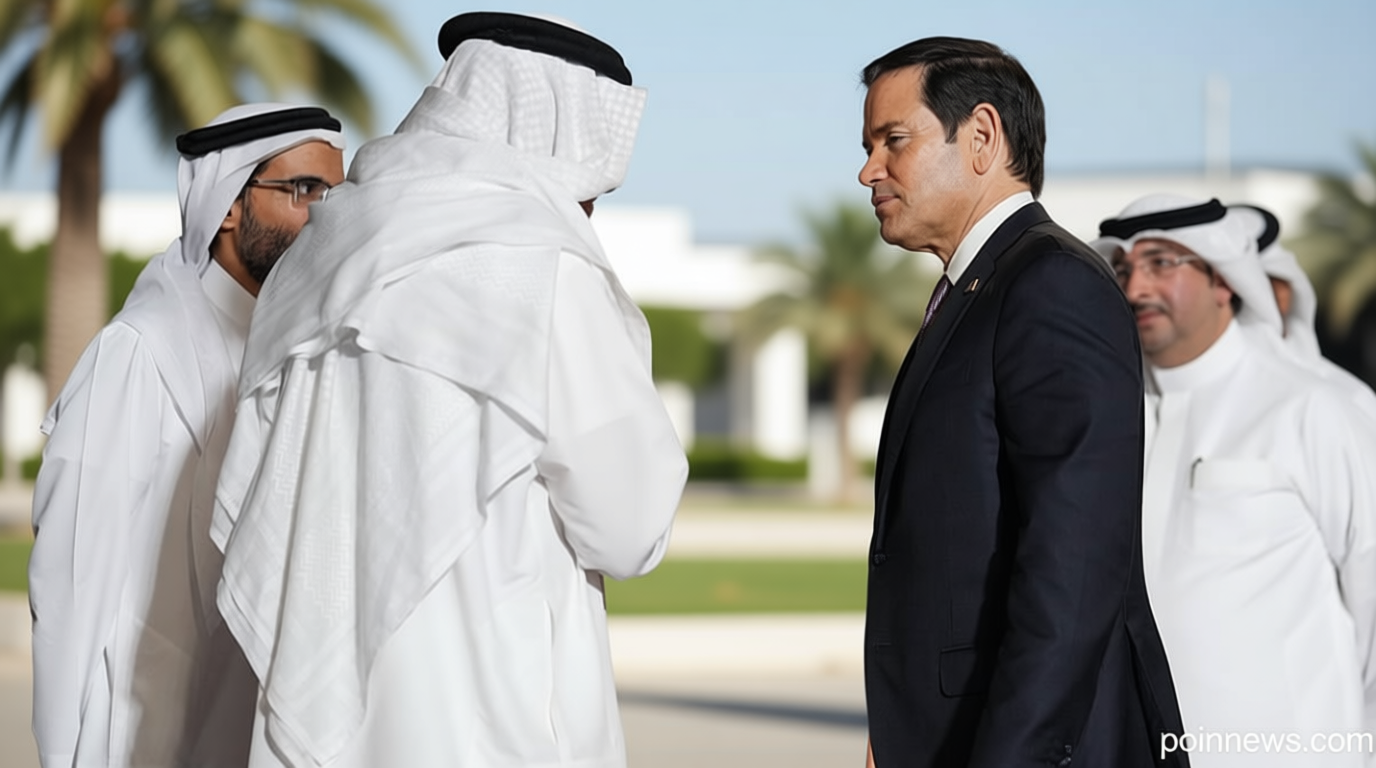
Poinews.com – For the first time since the US-Iran framework deal was signed to conclude the conflict, the Gulf Cooperation Council (GCC) nations gathered in a coordinated effort to counter Iran’s influence and affirm support for the United States. The summit in Manama, attended by Saudi Arabia, the United Arab Emirates, Qatar, Kuwait, Bahrain, and Oman, focused on addressing the evolving security dynamics in the region. The discussions centered on the US-Iran agreement and the need for tangible steps to ensure unimpeded maritime movement through the Strait of Hormuz, a vital waterway. US Secretary of State Marco Rubio joined the gathering, emphasizing Washington’s commitment to restoring pre-war navigation conditions as promised by President Donald Trump.
“The ministers rejected any tolls, fees, or attempts to assert control over the Strait and welcomed the Sultanate of Oman and the International Maritime Organisation’s announcement on the launch of an evacuation plan for over 11,000 seafarers stranded in the region,” the US-GCC statement said.
Iran’s Strategic Use of Hormuz
The Gulf states highlighted their “strong commitment to the US-GCC strategic partnership,” a relationship Iran has sought to undermine through military and political pressures. They stressed the importance of maintaining unity as peace talks progress, citing the need for consistent regional stability. The joint statement reaffirmed the shared goal of preventing Iran from acquiring a nuclear weapon, while also addressing broader threats such as ballistic missiles, drones, and support for regional proxies.
A major point of disagreement arose over Iran’s ability to retain its missile arsenal, a concern the Gulf nations argued poses ongoing risks. They asserted that “free, unconditional, and unrestricted navigation, including the right of transit passage as guaranteed under international law, remains essential to regional and global security.” This underscores their stance that the Strait of Hormuz must remain open to all without Iranian interference.
Conditional Engagement and Regional Security
During the summit, the GCC and the US outlined their position on future economic ties with Iran. They stated such engagement would be “conditional and reversible, contingent on Iran’s compliance with the MOU and the final agreement,” as well as the “cessation of its destabilizing behavior.” This framework aims to create the conditions for renewed economic cooperation, but only if Iran meets its commitments.
The Gulf partners also clarified that peace negotiations are not dependent on resolving other conflicts, such as Iran’s stance on Israel’s operations against Hezbollah in Lebanon. They called for “the full disarmament” of Hezbollah, emphasizing that “Lebanese sovereignty cannot be achieved while non-state armed groups maintain military capabilities outside the Lebanese state authority.” The statement acknowledged the role of supporting the Lebanese Armed Forces in this process.
Gaza and Broader Regional Stability
Expanding their political coordination, the GCC nations reiterated their backing for President Trump’s plan to resolve the Gaza conflict. They reaffirmed the principle that “no one will be forced to leave Gaza, and those who wish to leave will be free to return.” However, the alliance also signaled their readiness to take decisive action if Iran continues to exploit the Strait of Hormuz as a leverage point, testing the limits of the existing US-Iran Memorandum of Understanding.