Lazio Maremma cowboys: tradition and innovation at Canale Monterano’s Riarto
emma Cowboys: Tradition and Innovation at Canale Monterano’s Riarto Lazio Maremma cowboys - Nestled in the heart of Lazio, the Maremma region hosts a scene

Lazio Maremma Cowboys: Tradition and Innovation at Canale Monterano’s Riarto
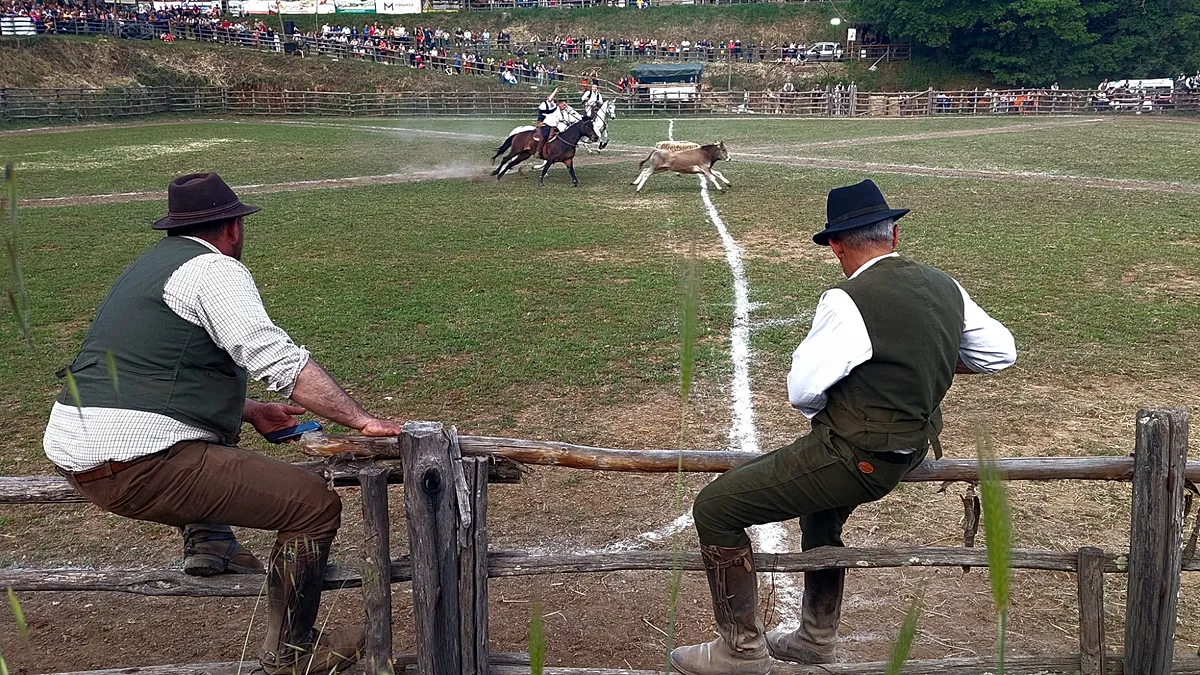
Poinews.com – Nestled in the heart of Lazio, the Maremma region hosts a scene that evokes the imagery of a classic Western. Riders on horseback patrol open fields, guiding livestock through the landscape, a practice rooted in centuries-old customs. This role, however, is not a relic of the past but a living tradition that continues to define the area’s cultural identity. The buttero, a figure central to rural life, remains a vital part of the community, bridging heritage with modern adaptability.
Unlike the American cowboy, whose legacy is tied to more recent history, the buttero traces its origins to ancient practices. The term derives from the Greek *būtórōs*, meaning “goader of oxen,” and reflects a way of life that has endured for generations. In Canale Monterano, the buttero’s work is more than a profession—it is a symbol of the region’s deep connection to its agrarian roots. The Butteri di Canale Monterano association plays a key role in preserving these traditions, ensuring they are passed down through time.
Traditionally, Maremma cattle were raised on open-range pastures, requiring herders to navigate challenging terrain. The skill of “monta da lavoro,” or working-mounted riding, was essential for rounding up animals, guiding them into enclosures called *rimessini*, and managing their care. Horses, alongside trained dogs, were indispensable tools, helping to control herds in the hilly landscape. Branding with hot irons, a practice known as *merca*, served as a critical method for identifying livestock, especially in an era before microchips and ear tags.
As technology advanced, the methods of cattle management evolved. While tractors and farm vehicles now aid in herding, the core of the buttero’s expertise remains. “The job used to be more about managing the herds and knowing every animal’s habits,” explains Rinaldo Camilletti, a buttero and third-generation farmer. “Now, tools have changed, but the knowledge we carry is still intact.” Camilletti and his son Cesare continue the family’s work, ensuring that the role of the buttero is not forgotten despite its diminishing numbers.
“I had uncles, my mother’s cousins. To keep the memory and the tradition alive, we never abandoned it, even in our own small way,” says Rinaldo Camilletti, a buttero and owner of a cattle and sheep farm in Canale Monterano.
For younger generations, the buttero’s role has taken on new dimensions. Marta Papa, a 27-year-old vet and buttera, emphasizes the shift in perspective: “This is less about driving the animals and more about working alongside them, because our horses and cows were born and raised here. All I can do is ride with them and guide them.” Her brother Alessandro, 21, shares this sentiment, highlighting that family ties and a love for the land have been pivotal in their decision to embrace the role.
“Finding myself living in this environment is something I really love; for me, it is a real breath of fresh air,” Marta Papa adds.
While modernization has streamlined some tasks, it has also introduced challenges. The use of branding, once a communal celebration, now faces restrictions due to laws against it. Yet, the tradition persists, adapted to contemporary needs. “The work has become easier in many respects, but it’s also more marginal,” Marta notes. “Fewer people are doing it, and it’s no longer the primary source of income for many.” Despite this, the essence of the buttero’s legacy endures, blending old-world methods with new tools to sustain a way of life that has shaped the Maremma for centuries.