Dinner diplomacy: Von der Leyen and Erdoğan’s working dinner comes with a side of tension
Dinner Diplomacy: EU and Turkey's Tense Working Meal in Ankara Sparks Debate Dinner diplomacy - In a strategic move to bridge political divides, EU Commission

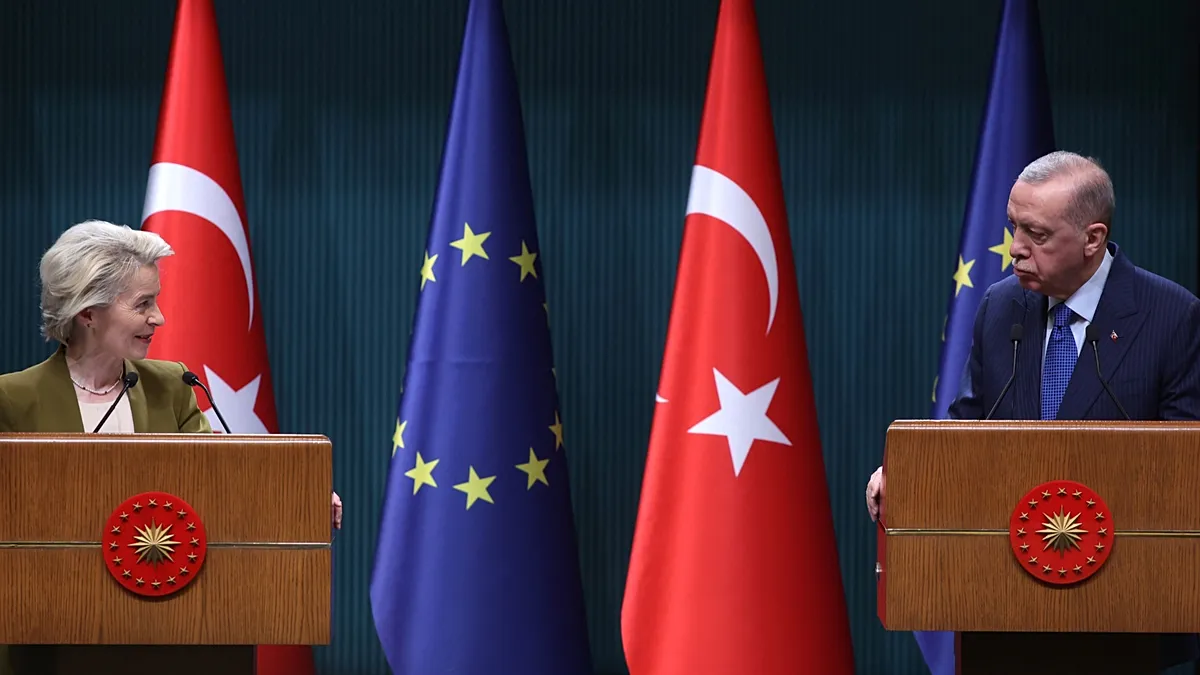
Dinner Diplomacy: EU and Turkey’s Tense Working Meal in Ankara Sparks Debate
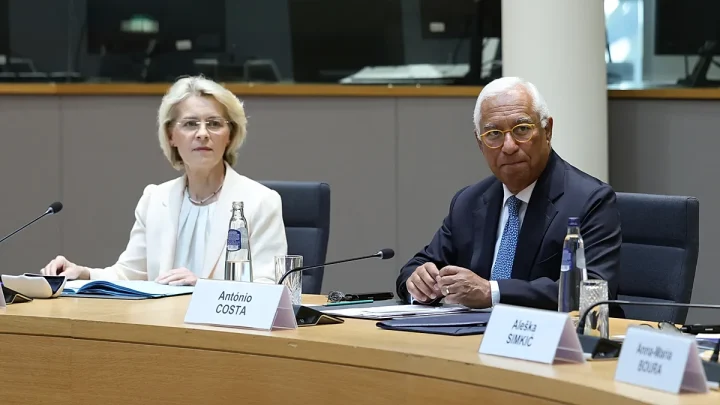
Poinews.com – In a strategic move to bridge political divides, EU Commission President Ursula von der Leyen is hosting a working dinner with Turkish President Recep Tayyip Erdoğan in Ankara on Wednesday. This gathering, themed around dinner diplomacy, aims to address pressing issues such as migration, security, and the stalled accession process. The event, however, is not without its challenges, as both nations grapple with lingering tensions over Turkey’s influence in European affairs and its ongoing alignment with EU values. With European Council President António Costa also in attendance, the dinner represents a critical opportunity to reaffirm collaboration while navigating complex geopolitical dynamics.
The Legacy of “Sofagate” and Unresolved Dynamics
The atmosphere of the meeting is shaped by historical precedents, including the 2021 “sofagate” incident that fueled European skepticism toward Turkey’s political maneuvering. At the time, von der Leyen was excluded from a major European summit, an event she described as a personal “hurt.” This past controversy has resurfaced as Erdoğan’s government seeks to reframe its relationship with the EU, positioning itself as a key partner in global challenges. Yet, the question of Turkey’s place within European institutions remains unresolved, with von der Leyen recently reclassifying the country as part of a “group of countries with major influence over Europe.” Her remarks have drawn sharp responses from some EU members, particularly those concerned about Turkey’s democratic backsliding and its stance on human rights.
Recent Diplomatic Initiatives and Shared Goals
Recent weeks have seen renewed diplomatic efforts to mend the EU-Turkey relationship, including a high-level summit led by EU foreign policy chief Kaja Kallas. Accompanied by Enlargement Commissioner Marta Kos and Migration Commissioner Magnus Brunner, the meeting produced a joint statement highlighting common interests in multilateralism and global governance. Kallas emphasized Turkey’s strategic role in security and energy corridors, while acknowledging its position as an EU candidate. This balancing act underscores the complexity of dinner diplomacy: fostering cooperation while addressing deep-seated concerns about Turkey’s political trajectory.
Polish MEP Joanna Scheuring-Wielguss, a vocal critic of Turkey’s alignment with EU values, has raised alarms about the erosion of democratic principles in Ankara. She argued that the EU must not compromise its core values in pursuit of pragmatic agreements. “Dinner diplomacy cannot be a shortcut for the European project,” Scheuring-Wielguss asserted. Her concerns echo those of other members who have pointed to the Turkish government’s suppression of press freedom and the detention of opposition figures like Istanbul Mayor Ekrem İmamoğlu in March. These issues, she warned, could undermine the credibility of the EU’s partnerships, even as the bloc seeks to leverage Turkey’s strategic location in its geopolitical strategy.
Stakeholders and the Pressure of Expectations
The working dinner has drawn significant attention from both EU and Turkish stakeholders, each with their own priorities. For the EU, the event is a chance to reaffirm its commitment to dialogue while pushing for Turkey’s reforms. For Erdoğan, it represents an opportunity to secure financial and political support for Turkey’s regional ambitions. European Council President António Costa, who is also participating, has emphasized the need for “constructive engagement” to move forward. However, the success of dinner diplomacy hinges on the ability of both leaders to navigate their differences and present a unified front.
One of the key topics on the agenda is the €150 billion SAFE defense loan program, a cornerstone of EU-Turkey cooperation. Despite Turkey’s aspirations to increase its contribution, Greek and Cypriot objections have limited its participation to 35% of the total cost. This financial constraint has sparked debates about the fairness of the EU’s enlargement process and whether Turkey is being given equitable access to European resources. Meanwhile, the discussion on migration—a long-standing issue—has gained urgency as border tensions persist and EU nations seek to align on a unified strategy. von der Leyen’s spokesperson, Olof Gill, has reiterated that “dinner diplomacy” is not just a formality but a deliberate effort to foster meaningful progress.
Contextual Challenges and the Path to Renewed Cooperation
As the meeting unfolds, the EU and Turkey face a unique set of challenges that test the limits of diplomatic engagement. Turkey’s recent actions, such as its alignment with Russian interests in Syria and its handling of Kurdish groups, have complicated its relationship with the bloc. Yet, the invitation to Erdoğan signals a willingness to engage with the country’s leadership on key issues. Analysts suggest that the dinner may serve as a platform to de-escalate tensions, particularly as both nations seek to address the refugee crisis and stabilize the Eastern Mediterranean. However, the outcome will depend on how effectively both sides can reconcile their differing priorities while maintaining a shared vision for the future.
The working dinner in Ankara is also a reflection of broader shifts in the EU’s approach to diplomacy. With internal divisions over Turkey’s candidacy, the event highlights the need for a unified European stance. Von der Leyen and Costa are under pressure to demonstrate that the EU can remain cohesive in its dealings with Ankara, even as member states push for more autonomy in bilateral negotiations. The success of this dinner diplomacy will be measured not only by the agreements reached but also by the perception of progress among European publics and international observers. As the discussion continues, the stakes for both sides have never been higher, with the potential to either strengthen or further strain their partnership.