NATO drills: France to test AI battlefield tech as alternative to US system
rance's AI Battlefield System Challenges US Tech Dominance NATO drills - France will debut its AI-powered battlefield command system during a NATO exercise

NATO Drills: France’s AI Battlefield System Challenges US Tech Dominance
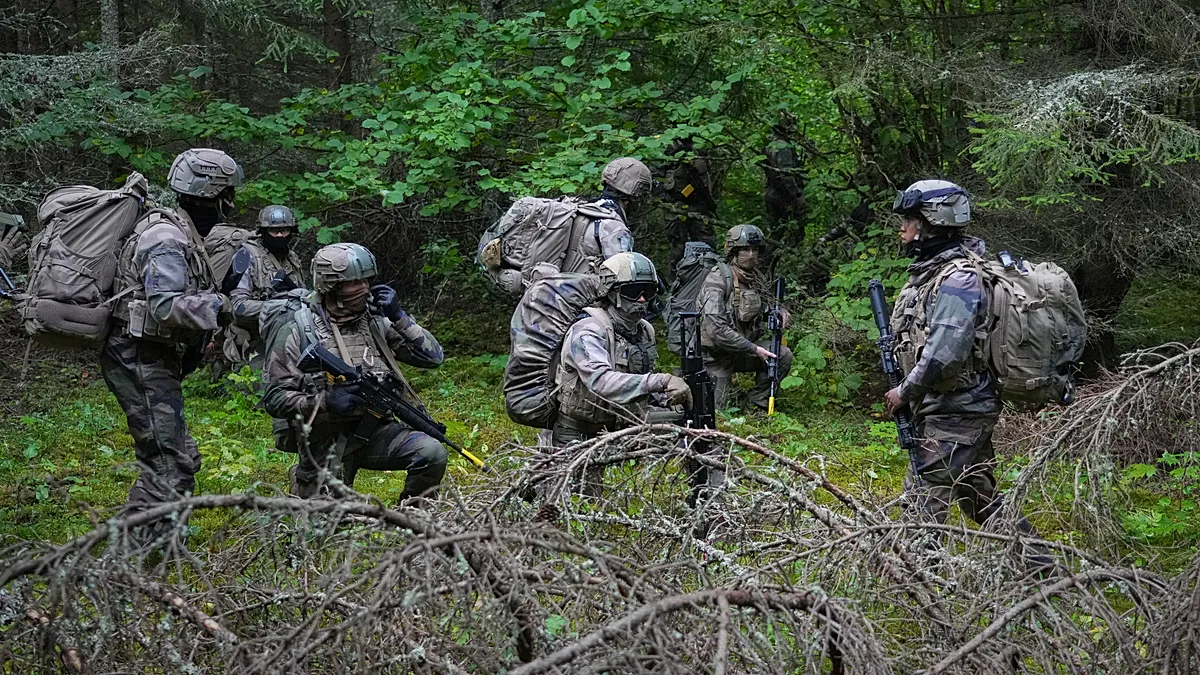
Poinews.com – France will debut its AI-powered battlefield command system during a NATO exercise starting Monday, as reported by Defense News. The initiative aims to test Arcadia, a system developed by French companies, as a potential substitute for Maven, the US-backed AI platform currently used by NATO.
European Alternative to US Innovation
Arcadia, created in collaboration with firms such as Mistral AI, Safran, Thales, and Airbus, is being promoted as a European response to Maven. The latter, derived from the Pentagon’s Project Maven, has been in use by NATO since 2025. It streamlines battlefield data analysis to accelerate strategic decisions and identify targets.
“Arcadia is our response to Maven,” said General Patrick Justel, French Army deputy chief of staff, during a briefing cited by Defense News. “The question arises whether we should adopt Maven blindly, or should we look for other solutions.”
Interoperability and Sovereignty Goals
The system will be showcased at NATO’s Coalition Warrior Interoperability Exercise in Poland, running from June 8 to June 26. France emphasizes that Arcadia adheres to NATO’s Federated Mission Networking (FMN) standards, ensuring compatibility with allied forces. This aligns with Paris’s broader strategy to enhance Europe’s technological independence in defense.
Concerns Over Non-European Systems
French officials have raised concerns about reliance on US-developed systems like Maven. They argue that such dependence risks compromising European control over critical military infrastructure. Meanwhile, Germany has announced it will avoid contracting US firms, including Palantir, for defense projects, citing national data security as a priority.
“Germany has decided not to engage with US companies for its contracts,” said Thomas Daum, head of Germany’s cyber defense. “It’s inconceivable to grant industry staff access to our national database at this stage.”
Global Shift Toward Local Solutions
European governments are rethinking their partnerships with Palantir, which has faced scrutiny for its role in military operations, surveillance, and immigration control. The Netherlands’ State Secretary for Defence, Derk Boswijk, recently stated that a “fully fledged alternative” to Palantir must be ready within two years, as part of a dual strategy to cut ties with the firm and secure self-reliance.
Testing and Design Features
France has already tested Arcadia in Romania and internally, with officials highlighting its decentralized architecture. Unlike Maven’s centralized design, Arcadia links command posts to field-based servers via a mesh network, which is said to improve system resilience during disruptions. This approach has drawn interest from other European nations, including Denmark, which is exploring local options to replace its seven-year Palantir contract.
Future of AI in NATO Operations
While Palantir maintains that its system meets FMN principles and is nearing certification, the growing appeal of European alternatives suggests a shift in how NATO nations prioritize technology development. Justel noted that European allies express similar sentiments, acknowledging Maven’s utility but expressing openness to adopting alternatives if they become viable.