How Casa Batlló is using digital technology to unlock the hidden details of Gaudí, Miró and Gomis
How Casa Batlló is using Digital Technology to Uncover Gaudí, Miró, and Gomis' Secrets Reviving Gaudí's Architectural Vision with Cutting-Edge Tools How Casa

How Casa Batlló is using Digital Technology to Uncover Gaudí, Miró, and Gomis’ Secrets
Reviving Gaudí’s Architectural Vision with Cutting-Edge Tools
Poinews.com – How Casa Batlló is using digital technology to bring to life the intricate designs of Antoni Gaudí, the artistic innovations of Joan Miró, and the visual documentation of Joaquim Gomis in a groundbreaking exhibition. The renovated third floor of this iconic Barcelona building now serves as a dynamic showcase for immersive experiences that reveal previously unseen details of their work. By integrating advanced tools such as AI, photogrammetry, and 3D scanning, the exhibition redefines how visitors engage with these three influential figures. This approach not only preserves their legacies but also demonstrates how technology can enhance our understanding of their creative processes and the evolution of modernist art.
The Intersection of Art, Architecture, and Photography
The collaboration between Gaudí, Miró, and Gomis forms the backbone of *Gaudí–Miró–Gomis: Deconstructed*, an exhibition that explores the interconnectedness of their visions. Originally, the project focused on Gomis’ role in capturing Miró’s artistic evolution, but it has since expanded to include Gaudí’s architectural masterpieces. How Casa Batlló is using digital reconstructions to bridge the gap between these disciplines, offering visitors a deeper appreciation of how Gaudí’s designs inspired Miró’s later works. The exhibition’s digital installations, created by Tomorrow Bureau, transform static art into interactive narratives, allowing audiences to explore the hidden layers of creativity that shaped their contributions to Catalan culture.
Advanced Techniques to Reveal the Unseen
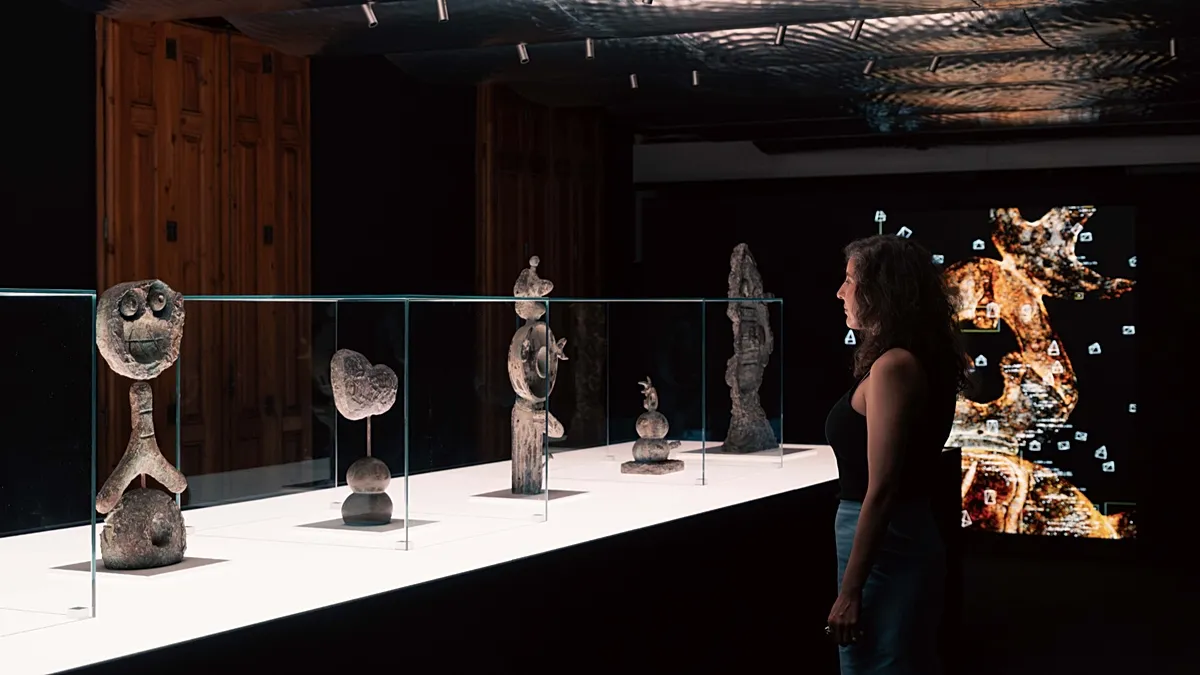
How Casa Batlló is using AI and photogrammetry to analyze Gaudí’s organic forms and Miró’s textured surfaces, uncovering details that have long been overlooked. For instance, AI algorithms help reconstruct the architectural sketches and models, revealing Gaudí’s original intent behind complex elements like the undulating roof and intricate tile work. Photogrammetry creates highly detailed 3D models of Miró’s sculptures, enabling viewers to examine minute textures and patterns that are imperceptible to the naked eye. Additionally, the exhibition incorporates scanning technologies that digitize Gomis’ archival photographs, bringing his early 20th-century documentation into the 21st century. These tools not only preserve their work but also provide new ways to interpret and appreciate their legacies.
“The challenge was to translate Gomis’ legacy into a format that resonates with today’s audiences,” says Joana Seguro, one of the exhibition’s co-curators. “By using digital technology, we can highlight how Gaudí’s architectural innovations influenced Miró’s experimentation with three-dimensional forms, while also making Gomis’ contributions more accessible.”
Transforming the Visitor Experience
The exhibition’s interactive elements are designed to immerse visitors in the world of Gaudí, Miró, and Gomis. How Casa Batlló is using augmented reality to overlay historical context onto its original structures, allowing patrons to visualize how the building evolved over time. This includes projections of Gaudí’s design sketches onto the walls, as well as Miró’s sketches that echo the building’s undulating forms. The digital audio guides, crafted in collaboration with Tomorrow Bureau, provide in-depth narratives that connect the three artists’ works, deepening the audience’s connection to the art. These innovations not only enhance the visitor experience but also ensure that the exhibition remains relevant to modern audiences.
“We wanted to create a space where visitors could see the past and present coexist,” explains Seguro. “The technology allows us to present Gomis’ photographs alongside Gaudí’s architectural details, showing how his work laid the foundation for Miró’s later experiments.”
Preserving Legacy for Future Generations
How Casa Batlló is using digital technology to ensure that the artistic contributions of Gaudí, Miró, and Gomis endure for years to come. The exhibition’s digital archives provide a lasting record of their works, accessible to scholars and enthusiasts worldwide. By combining Gomis’ photographs with modern reconstructions, the project demonstrates how historical documentation can be reimagined through contemporary tools. This approach not only honors their individual achievements but also highlights the enduring dialogue between art, architecture, and technology. The result is an exhibition that transcends time, offering fresh insights into the creative legacy of these three pivotal figures.
As the third floor of Casa Batlló continues to evolve, the integration of digital technology underscores its role as a cultural hub for innovation. The exhibition serves as a testament to how modern tools can breathe new life into the works of the past, proving that the vision of Gaudí and Miró still has the power to inspire. By how Casa Batlló is using digital advancements, it not only enhances visitor engagement but also establishes a new framework for interpreting the artistic achievements of Catalonia’s most influential creators. This marks a significant step in the ongoing preservation and celebration of their contributions to the world of art and design.