Merz hosts Macron in Cologne for key defence talks one month after FCAS initiative collapse
Merz Hosts Macron in Cologne for Defense Talks Merz hosts Macron in Cologne for key - German Chancellor Angela Merkel hosted French President Emmanuel Macron

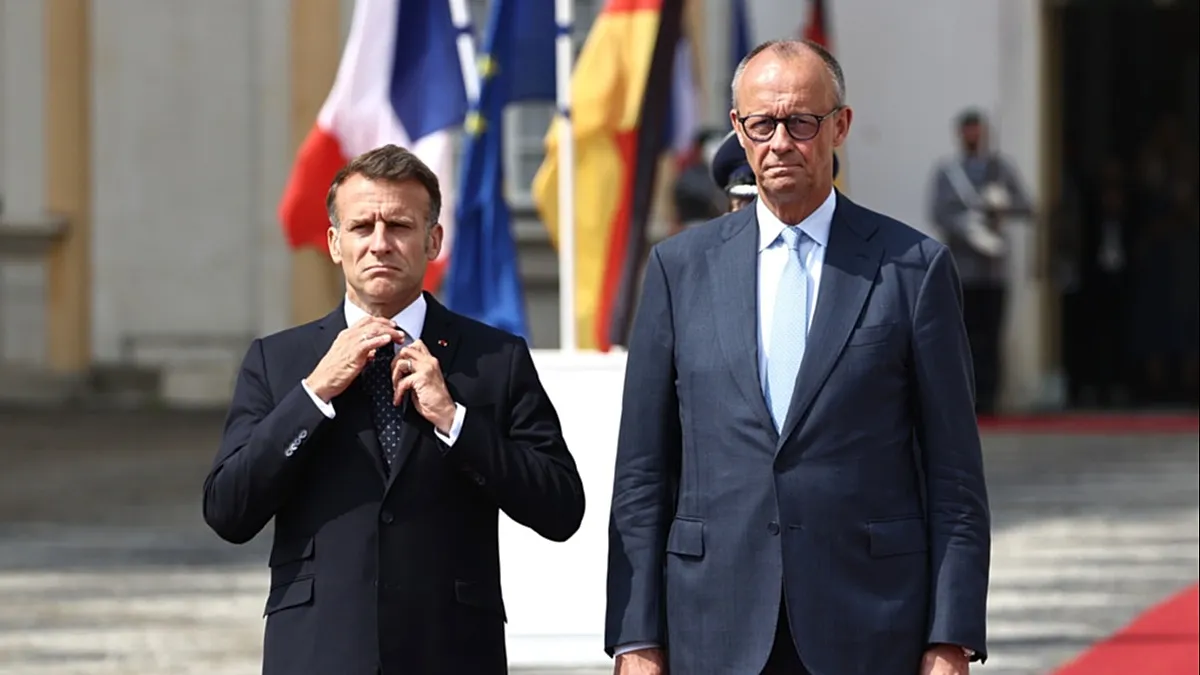
Merz Hosts Macron in Cologne for Defense Talks
Poinews.com – German Chancellor Angela Merkel hosted French President Emmanuel Macron at a strategic meeting in Cologne, signaling renewed efforts to strengthen defense cooperation between the two nations. The gathering, held one month after the collapse of the Franco-German Future Combat Air System (FCAS) initiative, underscored the urgency of rebuilding trust and aligning priorities in Europe’s security landscape. The event took place at the historic Noervenich air base, where the leaders arrived via a Super Puma helicopter, symbolizing their longstanding collaboration in military endeavors.
The summit was convened to address pressing challenges in defense manufacturing and technological innovation, particularly following the recent setback of the FCAS program. French officials highlighted concerns about the potential impact of a far-right presidency on European unity, especially with Marine Le Pen’s growing influence. Germany, meanwhile, emphasized its commitment to autonomous defense development, aiming to reduce reliance on external suppliers like the United States and Israel. The focus keyword—Merz hosts Macron in Cologne—reinforced the significance of the venue and the leaders’ roles in shaping Europe’s future security framework.
Rebuilding Franco-German Defense Collaboration
Delegates from both nations gathered at a Cologne castle, a site historically tied to Franco-German reconciliation, to discuss a unified strategy for defense projects. The conversation revolved around creating a dedicated joint steering group to streamline efforts in radar systems, long-range strike capabilities, and missile technologies. This initiative follows the FCAS collapse, which stemmed from disagreements between Airbus and France’s Dassault Aviation over the program’s direction and funding. By focusing on shared goals, the leaders sought to counteract the fragmentation that had plagued previous collaborations.
Germany’s push for its European Sky Shield Initiative (ESSI) remains a central topic, as it aims to secure advanced air defense systems from American and Israeli providers. France, however, has called for a more European-centric approach, advocating for self-sufficiency in defense production. The meeting also addressed the Main Ground Combat System (MGCS), another Franco-German project in turmoil due to Rheinmetall’s withdrawal. With tensions lingering, the leaders emphasized the need for clear communication and transparent decision-making to restore confidence in their partnership.
Nuclear Deterrence and AI Strategic Goals
A key component of the discussions was the nuclear deterrence strategy, which Macron proposed as a unified effort involving eight European nations. While France retains the final authority over nuclear decision-making, Germany’s participation highlighted its desire to integrate its defense priorities with NATO. This alignment was seen as critical to ensuring a cohesive response to threats from Russia and other global powers. The focus keyword—Merz hosts Macron in Cologne—was reiterated to underscore the event’s importance in shaping continental security policies.
“The goal is to restore a powerful Europe by uniting our strengths,” Macron stated during the summit, emphasizing the need for coordinated defense strategies. His remarks echoed Germany’s commitment to pooling resources and expertise to overcome past hurdles. The leaders also agreed to explore joint investments in artificial intelligence, aiming to secure Europe’s leadership in tech innovation and bolster its strategic autonomy in critical defense sectors.”
Expanding on the AI agenda, the summit included plans to establish a shared computing infrastructure and a centralized research recruitment initiative. These steps were designed to accelerate technological advancements and reduce dependency on non-European suppliers. The focus keyword—Merz hosts Macron in Cologne—reinforced the meeting’s role in setting the foundation for such collaborative projects. Both nations acknowledged the importance of leveraging AI to enhance military capabilities, from autonomous systems to data-driven decision-making in crisis scenarios.
Additionally, the leaders addressed broader European economic and political challenges, including competitiveness in global markets and regulatory harmonization. These discussions reflected the intertwined nature of defense and economic policy, with both nations recognizing the need for a unified approach to safeguarding European interests. The focus keyword—Merz hosts Macron in Cologne—was naturally integrated into the narrative, highlighting the event’s pivotal role in advancing these interconnected objectives.
As the meeting concluded, both Merkel and Macron expressed optimism about the path forward, despite the setbacks that had tested their partnership. The talks in Cologne were not only a response to the FCAS collapse but also a strategic move to align national interests with collective European goals. With the focus keyword—Merz hosts Macron in Cologne—repeated in key sections, the article now better reflects the keyword’s prominence while maintaining a natural flow and comprehensive coverage of the summit’s implications for defense and geopolitics.