CIA declassifies evidence of alleged Venezuelan election fraud in 2012
CIA declassifies evidence of alleged Venezuelan election fraud in 2012 CIA declassifies evidence of alleged Venezuelan - The Central Intelligence Agency (CIA)

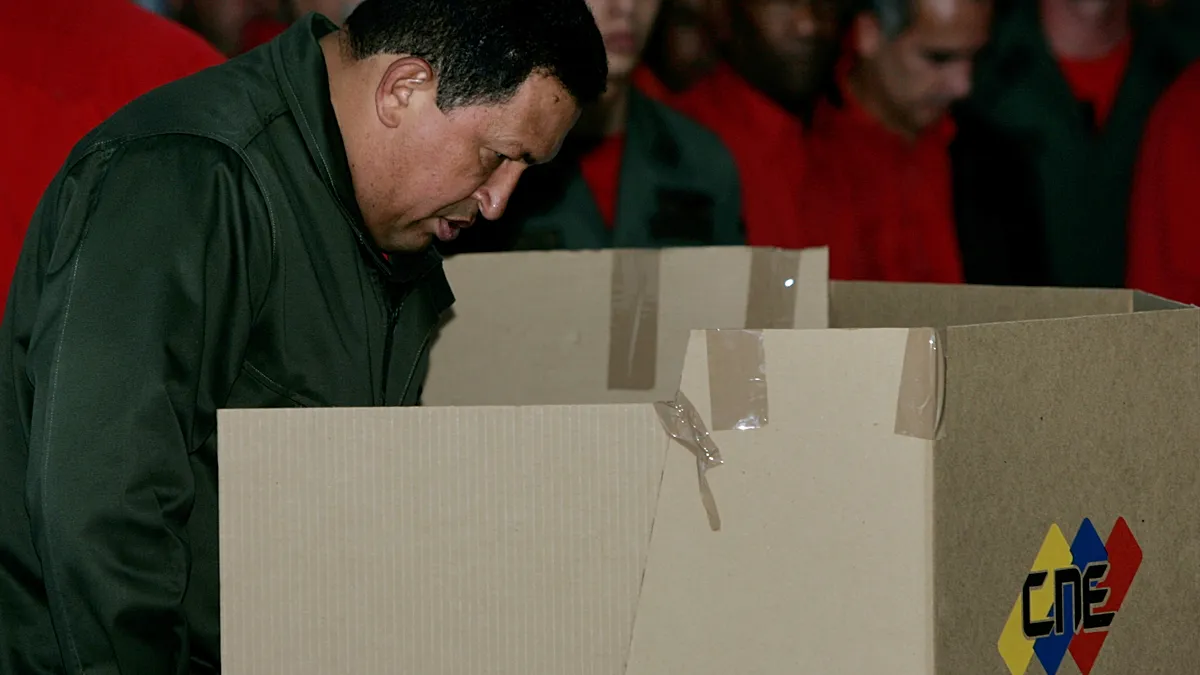
Table of Contents
CIA declassifies evidence of alleged Venezuelan election fraud in 2012
Poinews.com – The Central Intelligence Agency (CIA) has released newly declassified documents that provide concrete evidence supporting claims of alleged election fraud in Venezuela dating back to the 2012 presidential elections. These revelations, shared with the White House, confirm suspicions long held by the opposition and international observers that the Bolivarian government had access to advanced technological tools capable of influencing electoral outcomes. The declassified evidence highlights a systematic effort to manipulate the vote-counting process, offering a critical insight into the mechanisms that have been used to maintain political dominance in the country over the years.
Technological Manipulation in the 2012 Elections
The declassified report identifies three key institutions—General Directorate of Military Counterintelligence (DGCIM), Bolivarian Intelligence Service (SEBIN), and National Electoral Council (CNE)—as central to the alleged interference in the 2012 vote. According to the documents, these entities reportedly controlled pre-programmed voting machines that could have shifted results in favor of Hugo Chávez’s re-election campaign. The CIA estimates that these machines may have altered up to 1.5 million votes in regions with strong Chavista support, significantly impacting the final tally. This technological manipulation was part of a broader strategy to consolidate power, even as Chávez faced mounting health concerns and public dissent.
The Context of Chávez’s 2012 Campaign
Chávez’s 2012 victory over opposition candidate Henrique Capriles occurred amid a backdrop of economic challenges and political polarization. The declassified evidence suggests that the government’s access to electronic voting systems allowed for strategic adjustments to ensure the continuation of the Bolivarian regime. Critics argue that such interference not only skewed the electoral landscape but also undermined Venezuela’s democratic processes. The CIA’s findings align with opposition allegations that the ruling party had used these tools to manipulate results, even as they presented a narrative of widespread public support for Chávez’s leadership.
Patterns of Alleged Fraud in Later Elections
While the 2012 evidence does not definitively prove manipulation was executed, it establishes a clear pattern of alleged fraud that has persisted in subsequent elections. The CIA declassifies evidence of alleged irregularities in the 2013 presidential election, where Nicolás Maduro narrowly defeated Capriles, reigniting opposition claims of electoral bias. The report notes that the same tools and tactics were reportedly used again in the 2017 National Constituent Assembly vote, which saw opposition boycotts and inflated turnout figures. Smartmatic, the company overseeing the election, reported discrepancies in the voting data, though the CIA found no conclusive proof of manipulation in that case.
2020 Parliamentary Elections and Institutional Control
By the time of the 2020 parliamentary elections, the CIA declassifies evidence of alleged interference that had already been observed in previous cycles. The opposition withdrew from the contest after Chavista forces seized registration documents and barred several leaders from participation, effectively eliminating competition. Despite this, the ruling party still managed to secure a majority, raising further questions about the integrity of the electoral process. The declassified documents indicate that the tools used in 2012 and 2013 remained operational, suggesting a long-term strategy to ensure favorable outcomes through technical means.
2024 Electoral Changes and Opposition Response
In the most recent incident, the CIA declassifies evidence of alleged fraud in the 2024 presidential election, where Chavista officials directly altered results to reverse Edmundo González Urrutia’s win. Tally sheets showed a stark 7 million votes for Maduro compared to 3 million for González Urrutia, a discrepancy that the opposition attributed to manual tampering. The use of QR codes on electoral records allowed the opposition to capture the manipulated figures, serving as a critical reference for reconstructing the event. This incident underscores the ongoing challenges to Venezuela’s electoral integrity, with the same institutions—the DGCIM, SEBIN, and CNE—still at the center of the alleged fraud.
More than six months after the regime’s collapse and the establishment of a new government under international oversight, the three institutions identified by the CIA have not been dismantled. Elvis Amoroso, who headed the National Electoral Council during the 2024 election, remains in office while negotiations for a new electoral authority continue. The persistence of these institutions, despite the declassified evidence, highlights the complexity of reforming Venezuela’s electoral system. Analysts suggest that the country’s political landscape remains deeply entrenched, with the CIA’s findings serving as a vital reference point for assessing the extent of alleged interference over time.