‘No lasting peace’ in the Middle East without a Palestinian state, Egypt’s al-Sisi says
Al-Sisi: No Lasting Peace in the Middle East Without a Palestinian State No lasting peace in the Middle - President Abdel Fattah el-Sisi of Egypt has

Al-Sisi: No Lasting Peace in the Middle East Without a Palestinian State
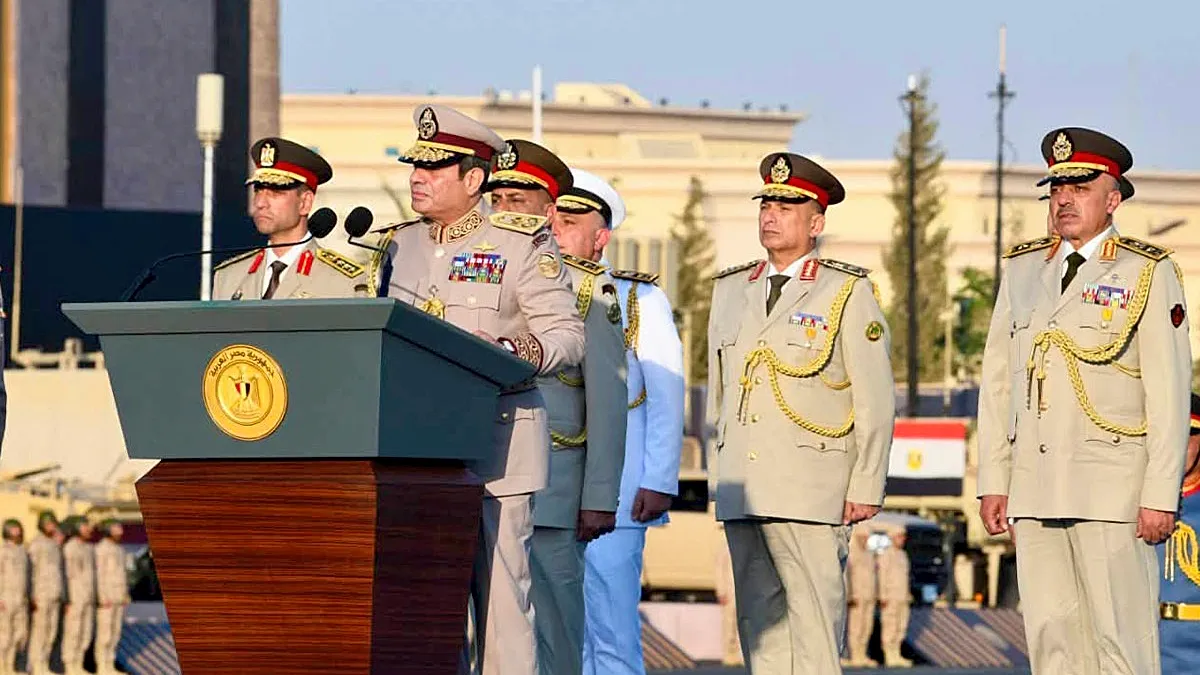
Poinews.com – President Abdel Fattah el-Sisi of Egypt has reiterated that achieving no lasting peace in the Middle East is impossible without the establishment of a Palestinian state. During the inauguration of Egypt’s new Strategic Command Headquarters in the New Administrative Capital, the leader emphasized the central role of the Palestinian cause in regional stability. “A just and comprehensive resolution to the Israeli-Palestinian conflict remains the cornerstone of peace in the Middle East,” he stated, linking the success of Egypt’s peace initiatives to the recognition of Palestinian sovereignty.
The strategic emphasis on the Palestinian state comes as part of Egypt’s broader vision to solidify its leadership in the Arab world. El-Sisi argued that the occupation of Palestinian territories by Israel continues to breed resentment and fuel cycles of violence, preventing long-term harmony in the region. He underscored that a Palestinian state would not only address historical grievances but also serve as a stabilizing force for neighboring countries. “No lasting peace in the Middle East can be secured unless we ensure the rights of the Palestinian people are fully realized,” he declared, calling for a unified approach among Arab states to advance this goal.
“There can be no lasting peace in the Middle East, no true stability, and no popular normalisation without a just peace that ends the occupation, eliminates injustice and aggression, restores rights to their rightful owners, and provides security for all,” said el-Sisi during his address.
The Strategic Command Headquarters
The new Strategic Command Headquarters, unveiled at the ceremony, represents a pivotal step in Egypt’s military modernization. Known as the Octagon, the facility consists of eight interconnected octagonal buildings, symbolizing the eight branches of the Egyptian armed forces. Officials highlighted that the Octagon is designed to streamline crisis management and enhance secure communication, enabling more efficient coordination of peacekeeping and security operations. This infrastructure, they noted, will play a critical role in supporting Egypt’s diplomatic efforts to achieve no lasting peace in the Middle East.
El-Sisi described the headquarters as a symbol of Egypt’s commitment to leading the region toward stability. The building’s advanced technology and central command capabilities are intended to bolster the country’s ability to respond to conflicts swiftly, including those involving Israel and Palestine. By integrating military and civilian coordination, the Octagon aims to strengthen Egypt’s position as a key mediator in the Israeli-Palestinian peace process. The president’s remarks underscored the need for robust institutional support to sustain long-term peace initiatives in the Middle East.
Egypt’s Regional Diplomacy and Peace Efforts
Egypt has long been a key player in the Israeli-Palestinian conflict, with its peace agreements historically shaping the region’s dynamics. El-Sisi reiterated the importance of maintaining Egypt’s role as a bridge between Israel and Palestine, while also pushing for a broader Arab consensus on the Palestinian state. He called for sustained diplomatic engagement and the full implementation of recent agreements, such as the Gaza ceasefire and the US-Iran framework deal, to prevent further escalation. “The path to no lasting peace in the Middle East requires consistent dialogue and mutual trust,” he said, highlighting the need for all parties to commit to a comprehensive resolution.
El-Sisi’s focus on the Palestinian state aligns with Egypt’s historical support for a two-state solution. Since the 1979 Egypt-Israel peace treaty, the country has played a pivotal role in brokering negotiations between Israelis and Palestinians. However, he acknowledged that the current situation remains complex, with ongoing challenges in securing land for a Palestinian state and addressing security concerns. The president stressed that Egypt’s strategic headquarters would serve as a hub for monitoring progress and ensuring that regional peace efforts are not derailed by internal or external pressures.
El-Sisi also emphasized the importance of international support for the Palestinian cause, particularly from nations like the United States and other Arab states. He praised the US for its role in facilitating recent agreements and urged continued engagement to maintain momentum. By leveraging Egypt’s military and diplomatic infrastructure, the president aims to position the country as a central actor in the no lasting peace in the Middle East initiative. His vision includes not only the creation of a Palestinian state but also the integration of regional actors to ensure its success.