Women detained in Afghanistan’s Herat in clothing crackdown, eyewitnesses say
Report Taliban Crackdown in Herat Women detained in Afghanistan s Herat have become the focus of renewed attention as the Taliban intensified its enforcement

Women Detained in Herat Over Clothing Rules, Eyewitnesses Report
Taliban Crackdown in Herat
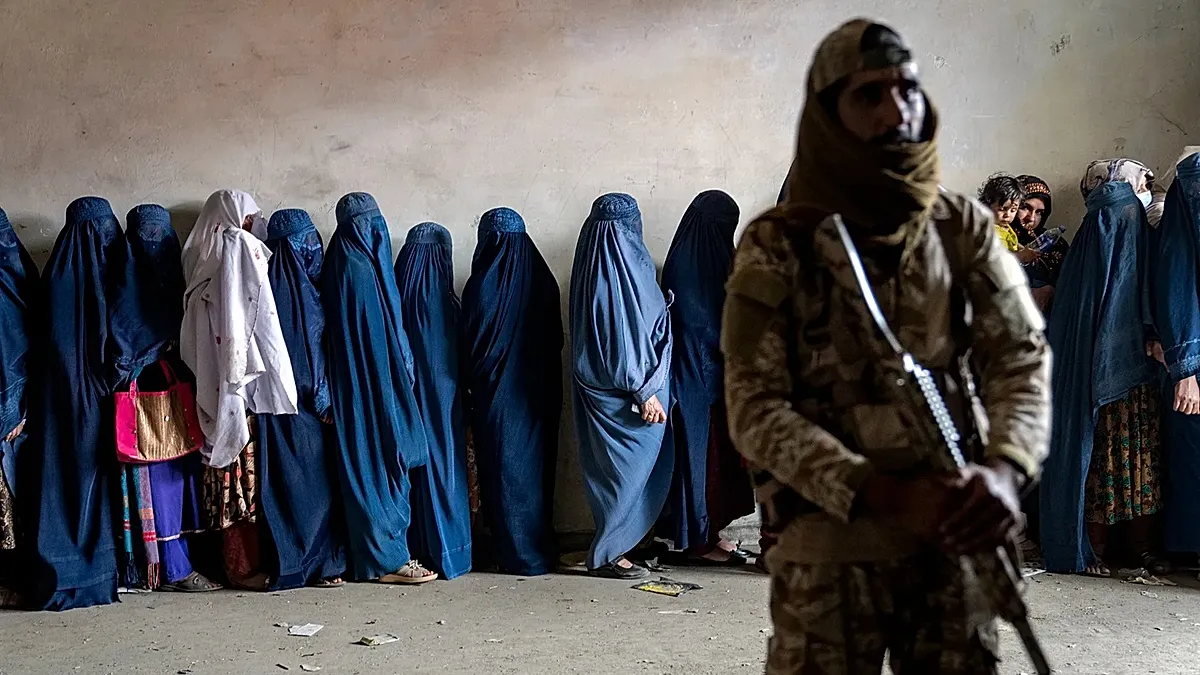
Poinews.com – Women detained in Afghanistan s Herat have become the focus of renewed attention as the Taliban intensified its enforcement of strict dress codes in the western city. Eyewitness accounts shared with AFP reveal that local authorities have detained multiple women during a recent clothing crackdown, citing non-compliance with the new regulations as the reason. These detentions, according to residents, have sparked widespread concern over the escalating restrictions on women’s freedom of expression and movement in the region.
Strict Islamic Law Enforcement
Since the Taliban’s return to power in August 2021, the enforcement of Islamic law has grown more rigorous, particularly in areas like Herat. The ministry responsible for morality and virtue, known as the Propagation of Virtue and the Prevention of Vice (PVPV), has been central to these efforts. Women are now required to cover their heads, faces, and bodies in public, often wearing an abaya and a burqa. The recent operation in Herat appears to be part of a broader campaign to ensure strict adherence to these rules.
Details from the Ground
Residents in Herat described the crackdown as abrupt and severe. A 23-year-old woman, who spoke to AFP on condition of anonymity, shared a chilling account of seeing two PVPV officials use a whip to detain women not wearing chadors. “They were dragged into a vehicle and taken away,” she said. Another witness, a 27-year-old local, added that officials stopped vehicles to inspect passengers’ attire, often detaining women for minor infractions. These reports suggest a coordinated effort to enforce the dress code across the city.
“I saw two employees of the ministry, one of whom was carrying a whip, putting two women who were not wearing chadors into a vehicle.”
“The majority of those arrested were women who were not wearing chadors,” said the 27-year-old, highlighting the targeted nature of the operation. Despite the PVPV ministry’s claim that the dress code is a divine obligation, residents argue that the crackdown has taken a harsher turn, with women facing fines, humiliation, and even detention for failing to meet the standards.
“The majority of those arrested were women who were not wearing chadors.”
Impact on Women’s Lives
The operation has significantly altered daily life in Herat, with women reporting heightened anxiety and reduced visibility in public spaces. A 20-year-old taxi driver noted that he was instructed not to transport women without the chador, further limiting their mobility. “They’re not seen in the city at all,” he said, emphasizing the psychological toll of the restrictions. Meanwhile, a 33-year-old woman described the situation as “unbearable,” stating that life has become “very difficult for us” under the new rules.
“They’re not seen in the city at all.”
“I am genuinely saddened that we don’t even have the right to breathe freely,” said the 33-year-old, illustrating the emotional weight of the enforcement. The PVPV ministry, when contacted by AFP, defended its actions, insisting that the dress code is a fundamental part of Afghan society. However, the frequency and severity of detentions have raised questions about the balance between cultural norms and individual rights.
“I am genuinely saddened that we don’t even have the right to breathe freely.”
Broader Context of the Crackdown
The clothing crackdown in Herat is not an isolated incident but part of a larger pattern of enforcement by the Taliban. Over the past year, similar operations have been reported in other cities, with women facing fines and public shaming for wearing trousers, short sleeves, or makeup. While the PVPV ministry has remained consistent in its messaging, the practical application of the rules has led to increased scrutiny of women’s attire and behavior.
Women detained in Afghanistan s Herat have also become symbols of the broader struggle for gender equality in the region. Their experiences reflect the challenges faced by women under the Taliban’s interpretation of Islamic law, which has been criticized for its strictness and lack of flexibility. Activists and human rights groups have called for immediate action to protect women’s freedoms, but the government has shown little willingness to ease the restrictions.