‘Associating Islam with violence contradicts its true nature’: Global Forum debates Islamic heritage
International Forum of Islamic Civilisation Unites Global Minds in Uzbekistan Associating Islam with violence contradicts its true - In Tashkent, Samarkand

International Forum of Islamic Civilisation Unites Global Minds in Uzbekistan
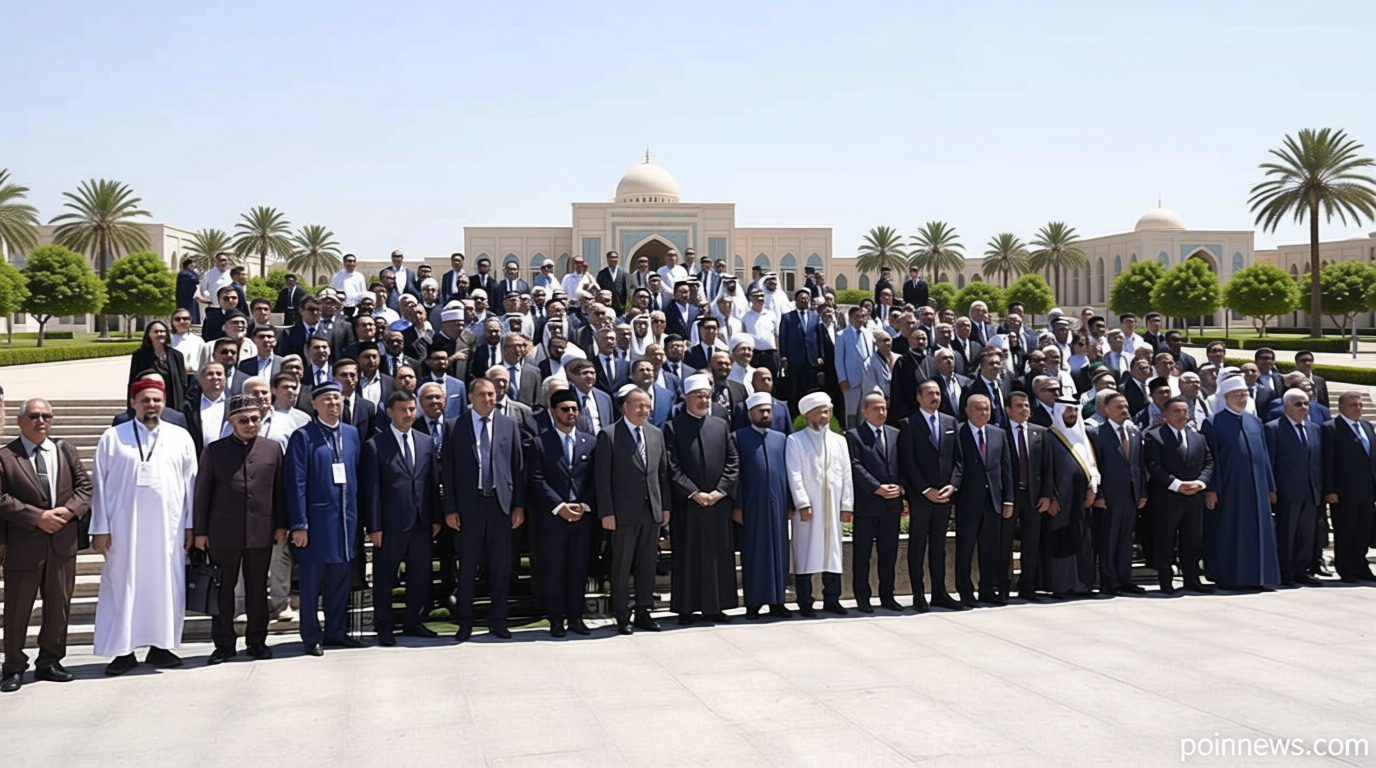
Poinews.com – In Tashkent, Samarkand, and Termez, over 450 experts, religious leaders, diplomats, and researchers from more than 50 countries are convening for the first International Forum of Islamic Civilisation. The event, hosted by the Centre of Islamic Civilisation in Uzbekistan, emphasizes the role of Islamic heritage in shaping modern scientific, educational, and cultural discourse.
President Shavkat Mirziyoyev opened the forum with a message highlighting global shifts driven by conflict, skepticism, extremism, and Islamophobia. He stressed that science, culture, and shared moral values remain vital to fostering peace, dialogue, and sustainable progress.
Challenging Stereotypes Through Historical Contributions
Organisers aim to reshape narratives by showcasing centuries of Islamic scholarly achievements. Rustam Jabborov, Scientific Secretary of the Centre, stated,
“The main purpose of this forum is to once again demonstrate the contribution of Muslim scholars to world civilisation and to show that Islam has always called for knowledge, education and humanism.”
He added,
“Linking Islam with violence or extremism contradicts its core essence.”
Central to the discussions is the legacy of Central Asian scholars who revolutionized fields such as mathematics, astronomy, medicine, and philosophy. Dr. Salem bin Mohammed Al-Malik of ICESCO noted,
“Without the foundational principles established by Al-Khwarizmi, AI as we know it today would not exist. Astronomy would not be where it is without Ulugh Beg and Al-Biruni. We have to be proud of our Islamic scholars.”
Modernizing Heritage Preservation with Technology
The forum explores how artificial intelligence can aid in preserving and studying manuscripts, alongside efforts to expand academic exchanges. Abdul-Ati Al-Sharqawi, Chairman of the Science Foundation for the Revival of Heritage and Digital Services, remarked,
“Uzbekistan once served as a hub for exporting groundbreaking science, literature, and creativity globally.”
He highlighted the discovery of nearly 100,000 manuscripts from Transoxiana, now housed in libraries worldwide, with new finds still emerging.
Uzbekistan’s Growing Influence in Islamic and Turkic Affairs
Türkìye’s Deputy Chairman of the Justice and Development Party, Kürşad Zorlu, called the forum a testament to Uzbekistan’s rising prominence in Islamic and Turkic spheres.
“Uzbekistan now hosts a vital organization for the Turkic and Islamic communities. We see that the reforms carried out over the past ten years are crowned by this important institution,”
Zorlu explained. He noted,
“With its strength from more than 3,000 years of history, Uzbekistan has become one of the key centres of Islamic civilisation. In this sense, Uzbekistan is of great importance to Türkiye.”
The event runs until 10 July, with over 70 joint projects set to be unveiled by participants. These initiatives involve universities, museums, research institutions, and international bodies. The agenda also includes the planned adoption of the Tashkent Declaration and plans for future collaborations in research, manuscript preservation, education, and digital technologies.