‘Human dignity’ and ‘international law’ sit at the core of the EU’s migration overhaul, Brunner says
EU Migration Overhaul Emphasizes Human Dignity and International Law Human dignity and international law sit at - European Commissioner for Migration Magnus

EU Migration Overhaul Emphasizes Human Dignity and International Law
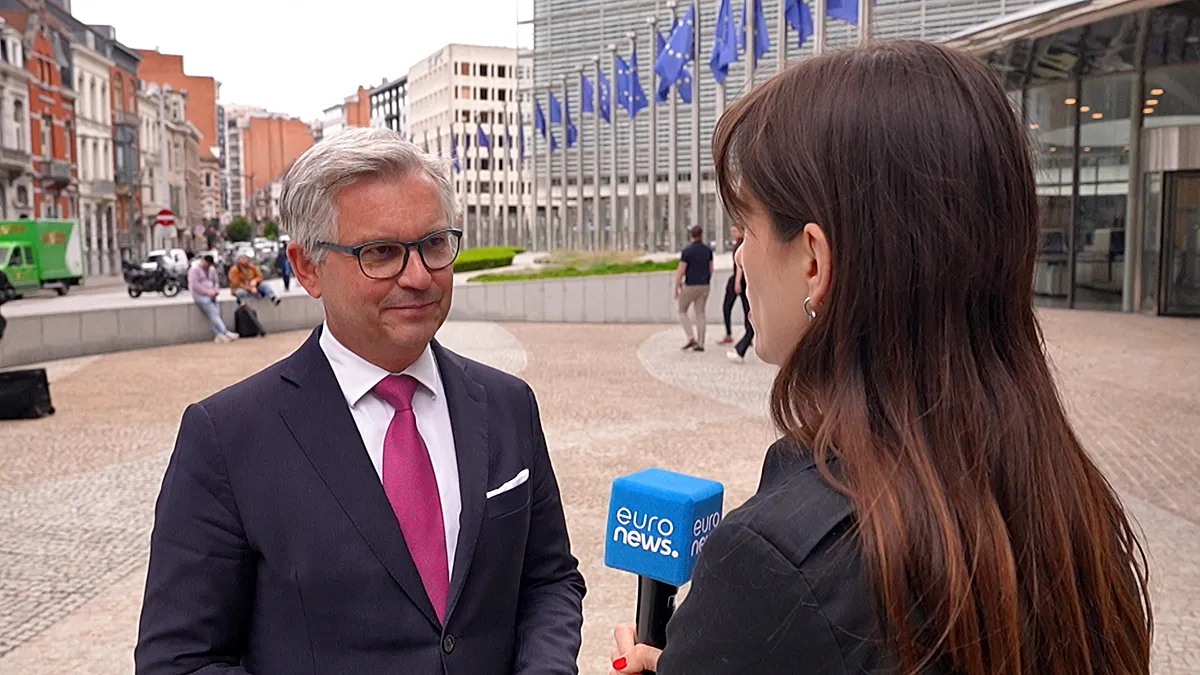
Poinews.com – European Commissioner for Migration Magnus Brunner has underscored the importance of human dignity and international law as the cornerstone of the EU’s sweeping migration reform. As the bloc prepares to implement its most transformative policy in a decade, Brunner reiterated that these principles must guide every decision, ensuring migrants are treated with respect and legal frameworks are upheld. “Human dignity has no passport and does not diminish when crossing borders,” he emphasized, highlighting the reform’s alignment with global standards. The overhaul aims to create a unified system that balances control with compassion, addressing the complex challenges of migration while safeguarding fundamental rights.
Foundational Role of Human Dignity in Migration Policies
Brunner’s focus on human dignity reflects a broader European commitment to preserving core values amid increasing pressure to manage borders. During a recent dialogue with Pope Leo XIV, the commissioner reaffirmed that migrants should not be reduced to mere statistics. The Pope, who visited the Canary Islands—a symbolic entry point for many asylum seekers—supported this view, stating, “The principles of international law must be seen as a shield against injustice.” This alignment between religious and political leaders underscores the reform’s goal to integrate moral considerations into practical measures, ensuring that no one is stripped of their rights simply for seeking refuge.
International Law as a Guiding Framework
The EU’s migration overhaul is built on the foundation of international law, which Brunner described as the “bedrock of our shared responsibility.” By incorporating legal standards such as the Geneva Convention, the reform seeks to harmonize national approaches with global obligations. This includes streamlined asylum procedures and enhanced cooperation among member states to prevent the exploitation of vulnerable populations. “International law sits at the heart of our strategy,” Brunner stated, noting that the new system would provide clarity for migrants and reduce the risk of arbitrary detentions or unfair rejections.
Legislative Proposals and Their Implications
The reform comprises ten key legislative proposals, each designed to reinforce the EU’s commitment to human dignity and international law. Among these is the establishment of “return hubs,” facilities located in non-EU countries to expedite the repatriation of rejected asylum seekers. While the UK’s earlier attempt with Rwanda faced legal challenges, Italy’s adoption of a similar model in Albania has been praised as a step toward compliance with international standards. “This framework ensures that every decision is grounded in fairness and legality,” Brunner explained, emphasizing that the system’s success depends on its adherence to these principles.
Reactions from Political and Human Rights Leaders
The EU’s new migration strategy has sparked a range of responses. Some leaders, like German Chancellor Friedrich Merz, have praised its potential to improve control and efficiency. “It offers better control, faster procedures, and a fair