Off the Record: Politics, protests and dead flamingos dominate EU-Western Balkans summit
EU-Western Balkans Summit Sparks Politics, Protests, and Symbolism Off the Record - The EU-Western Balkans summit in Porto Montenegro highlighted the tensions

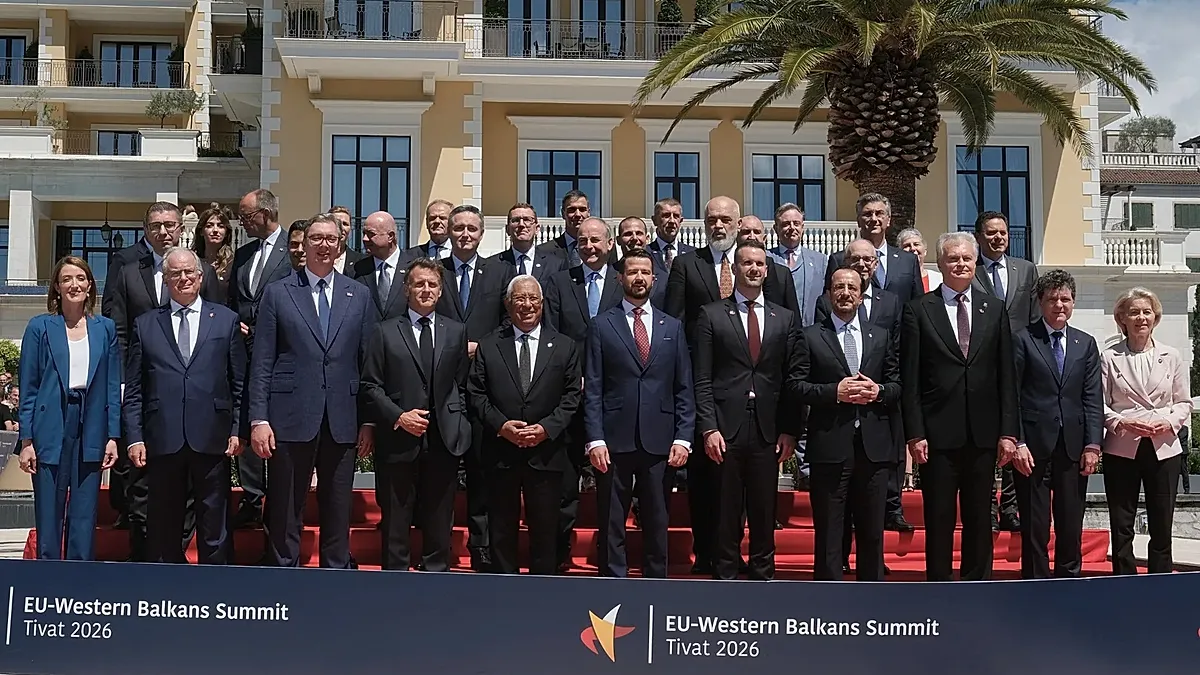
EU-Western Balkans Summit Sparks Politics, Protests, and Symbolism
Poinews.com – The EU-Western Balkans summit in Porto Montenegro highlighted the tensions and aspirations of the region, with “Off the Record” discussions revealing a mix of progress and unresolved issues. Political maneuvering, public demonstrations, and symbolic gestures such as the presence of a dead flamingo became central to the agenda, signaling the complex dynamics at play. António Costa, the European Council president, underscored the renewed momentum for EU enlargement, emphasizing the potential for accelerated integration despite historical delays in the Balkans.
Off the record talks at the summit brought to light the diverging priorities among member states and candidate nations. While some leaders pushed for faster reform timelines, others expressed concerns over the pace of negotiations. Hungary’s recent decision to lift its veto on Ukraine—alongside Moldova—was a key point of discussion, with diplomats noting its significance in fostering European unity. This development has reignited hopes for a more cohesive approach to enlargement, though challenges remain in aligning all parties’ interests.
Albania’s Protests and Geopolitical Tensions
Albania’s internal struggles took center stage during the summit, as protests erupted over a controversial luxury resort project on Sazan island. The project, linked to the Kushner-Trump family, has drawn criticism for its environmental and economic implications, with demonstrators arguing it endangers the natural coastline. Off the record conversations revealed fears that external forces, including digital manipulation, are intensifying the crisis, complicating Albania’s path toward EU membership.
“We are under a hybrid attack,” said Edi Rama, Albania’s prime minister, during off the record briefings. “This isn’t just about the resort—it’s about preserving our sovereignty and democratic values.” His remarks echoed concerns that the project represents a broader strategy to influence the Balkans’ political direction, even as the summit aimed to advance regional cooperation.
The unrest in Tirana underscored the delicate balance between economic development and public sentiment. While the EU has long viewed Albania as a model for reform, the protests revealed lingering distrust in the bloc’s commitment. Diplomats acknowledged the need to address these concerns, with discussions on the remaining reform clusters suggesting that negotiations might extend beyond July—though the European Commission remains optimistic about a swift conclusion.
Montenegro’s Strategic Role in EU Expansion
Montenegro’s progress toward EU membership was a key topic, with officials highlighting its alignment with European values and NATO status as assets in the enlargement process. The country’s 2028 accession timeline appears achievable, according to off the record assessments, as it continues to meet reform criteria. António Costa emphasized that Montenegro’s inclusion would demonstrate the viability of EU expansion, even amid the region’s political fragmentation.
Off the record discussions also explored the concept of “structured gradual integration,” a proposal by France and Germany to ease the path for candidate nations. This approach aims to streamline procedures and provide incremental benefits, potentially addressing concerns about the rigidity of EU membership requirements. While some leaders welcomed the idea, others cautioned that it must not compromise the integrity of the enlargement process.
Symbolism and Unspoken Agendas
The presence of a dead flamingo at the summit became a striking symbol of the challenges facing the EU-Western Balkans relationship. While the exact significance of the gesture remained unspoken, it was interpreted as a metaphor for stalled progress and unmet promises. Off the record exchanges suggested that the dead flamingo represented a warning to leaders about the urgency of reform, as well as the potential consequences of inaction.
Political maneuvering during the summit revealed deeper tensions, with some nations prioritizing immediate economic gains over long-term integration. The co-authored op-ed by Edi Rama and Serbian President Aleksandar Vučić highlighted their shared vision for a quicker EU association, though critics argue this could dilute the region’s democratic aspirations. Off the record analyses indicated that the summit’s outcomes would hinge on balancing these competing interests and maintaining public trust in the EU’s promises.
As the EU-Western Balkans summit concluded, the themes of “Off the Record” discussions—politics, protests, and symbolic gestures—remained critical to shaping the region’s future. The next steps will depend on how effectively leaders address these issues, ensuring that the path to enlargement remains both realistic and resilient. The summit served as a reminder that the Balkans’ journey toward Europe is as much about internal cohesion as it is about external diplomacy.