‘Partners and friends’: Trade and defence top of agenda at EU-South Korea summit
EU-South Korea Summit: Partners and Friends Strengthen Ties on Trade and Defense Partners and friends - As partners and friends, the European Union and South

EU-South Korea Summit: Partners and Friends Strengthen Ties on Trade and Defense
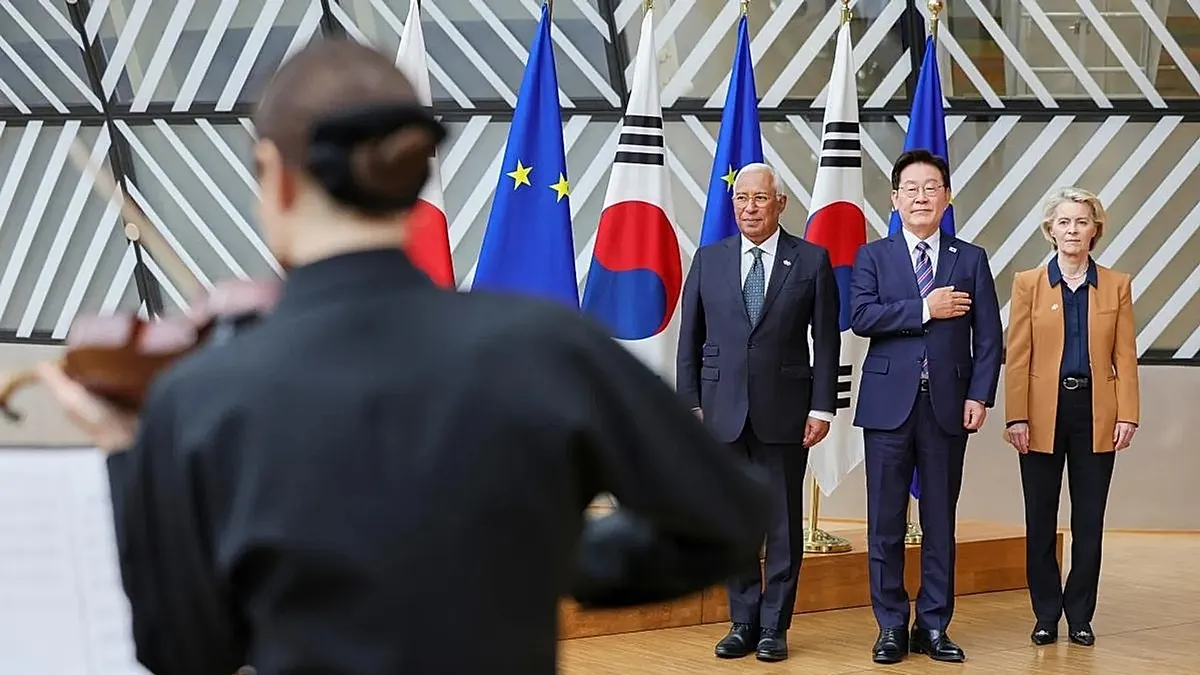
Poinews.com – As partners and friends, the European Union and South Korea have convened in Brussels to address critical areas of collaboration, including trade, defense, and economic security. The 11th EU-South Korea summit, held on Wednesday, saw European Commission President Ursula von der Leyen and South Korean President Lee Jae-myung sign a landmark digital trade agreement, underscoring the strategic alliance between the two regions. This agreement builds on a free trade deal signed over a decade ago, which has already transformed bilateral economic ties and solidified their role as key partners in global commerce.
“South Korea is a vital partner and friend of the EU, particularly in the Indo-Pacific and on the world stage,” von der Leyen emphasized. “In an era of increasing uncertainty, our shared values and reliable partnerships are more important than ever.”
The summit’s joint declaration reaffirmed the mutual dedication to fostering a resilient, rules-based economic system. Officials highlighted the importance of multilateral cooperation in maintaining fair trade practices and addressing emerging challenges in the global marketplace. This partnership, which has grown significantly since the early 2010s, now spans not only trade but also strategic defense alliances, reflecting a broader vision of collaboration that transcends economic interests.
Boosting Economic Resilience and Technological Leadership
With the backdrop of geopolitical tensions between China and the U.S., the EU and South Korea have prioritized diversifying their trade relationships to reduce vulnerabilities. South Korea’s investment in European industries—particularly in batteries, electric vehicles, and semiconductors—has become a cornerstone of this partnership. EU officials noted that securing these supply chains is essential for both regions to thrive in the next phase of global economic competition.
The newly signed digital trade agreement is expected to enhance cross-border data flows and streamline e-commerce regulations. By eliminating forced source code transfers and aligning consumer protection standards, the pact aims to create a more stable environment for businesses. This development comes amid growing concerns about information security, as both parties seek to protect critical data while fostering innovation and digital growth.
As partners and friends, the EU and South Korea also emphasized the need for stronger collaboration in emerging technologies. South Korea’s leadership in semiconductors and artificial intelligence was highlighted as a key strength, with officials calling for joint research initiatives to advance Europe’s industrial capabilities. The agreement is seen as a step toward deepening this partnership and ensuring mutual benefits in the digital age.
Geopolitical Solidarity and Strategic Defense
Defense cooperation has emerged as a central theme of the summit, with both parties pledging to enhance their security partnerships. The agreement builds on the 2024 Security and Defence Partnership, which focuses on maritime security, hybrid threats, and foreign information interference. South Korean President Lee Jae-myung reiterated the importance of these efforts, stating, “As partners and friends, we must work together to safeguard our shared interests in a rapidly changing security landscape.”
North Korea’s nuclear ambitions and Russia’s influence in Ukraine remain key concerns for the EU and South Korea. The summit addressed these issues, with officials stressing the need for a unified approach to counter nuclear proliferation and support international peace. Additionally, the collaboration aims to strengthen the EU’s position in global defense alliances, particularly in the Indo-Pacific region.
Looking ahead, the summit laid the groundwork for future cooperation in critical sectors. The EU and South Korea plan to establish a high-level dialogue on supply chain resilience, which will focus on mitigating risks from disruptions caused by events like China’s rare earth exports. This initiative is expected to bolster both regions’ economies and enhance their strategic autonomy in key industries. As partners and friends, the two sides are also exploring opportunities to expand joint ventures in green technologies and renewable energy.