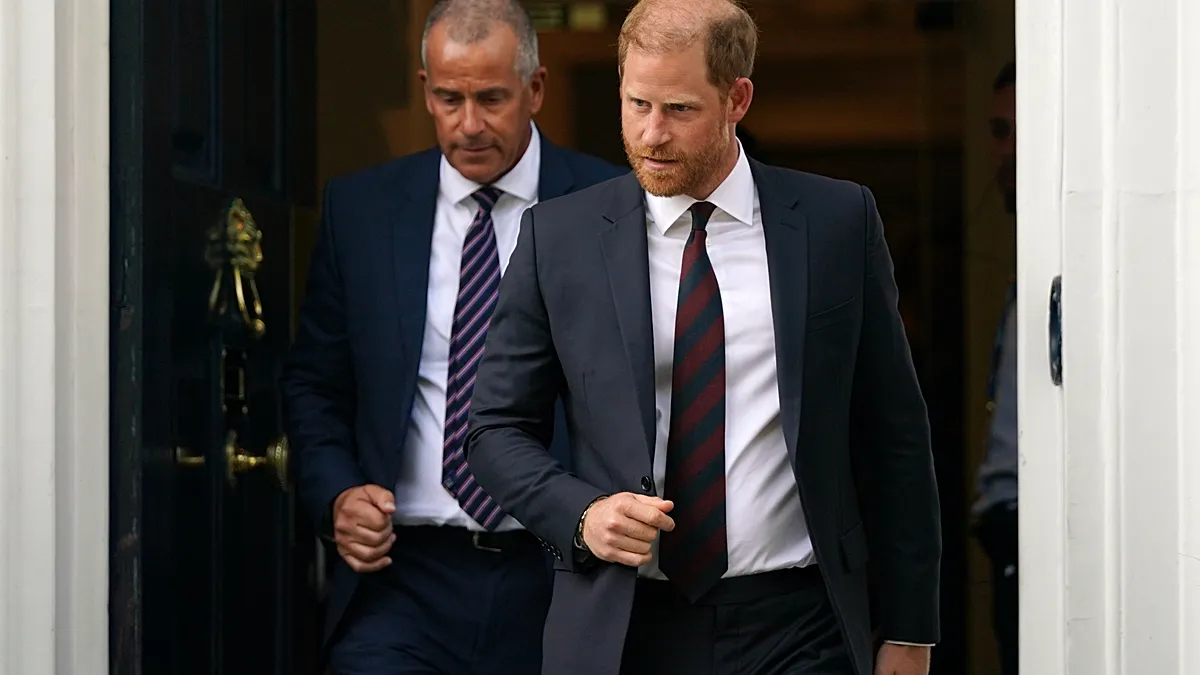
Prince Harry loses London High Court privacy case against Associated Newspapers
Prince Harry Loses London High Court Privacy Case Against Associated Newspapers Prince Harry loses London High Court - In a landmark ruling, the London High

Prince Harry Loses London High Court Privacy Case Against Associated Newspapers
Poinews.com – In a landmark ruling, the London High Court dismissed Prince Harry’s privacy claim against Associated Newspapers, the publisher of the Daily Mail. The decision, handed down on Tuesday, marked a significant shift in the ongoing legal battle between the royal family and the media outlet, as the court determined that Harry and his co-plaintiffs had not adequately proven their case. This outcome allows Associated Newspapers to recover over £50 million in legal costs, a key victory for the publisher in its defense of investigative journalism practices. The ruling underscores the court’s emphasis on the need for concrete evidence to support allegations of privacy breaches, rather than relying on suspicion alone.
Details of the Legal Battle
The case hinged on claims that Associated Newspapers had used invasive methods, including phone hacking and covert surveillance, to obtain personal information about Prince Harry and others. These methods were alleged to have violated their right to privacy, particularly in relation to the publication of sensitive details about their private lives. However, the court found that the evidence presented by the claimants was insufficient to establish that the information was unlawfully gathered. Mr Justice Nicklin highlighted that the publication had provided “lawful explanations for the sourcing of the disputed articles and incidents,” which were deemed credible by the court.
“The Court rejected the argument that, simply because information was private, and because Associated could not positively explain how it had been sourced, the relevant article must have been unlawfully sourced.”
Key to the judgment was the court’s evaluation of the sources used in the reporting. While Harry’s team argued that certain details were obtained without consent, the judge concluded that the media outlet had met the legal threshold for justifying the use of such methods. The case also addressed claims that three senior executives of Associated Newspapers had misled the Leveson Inquiry, a 2011-2012 investigation into press ethics. These allegations were dismissed, reinforcing the court’s belief in the publisher’s transparency and accountability.
Reactions from the Royal Family and Media
Prince Harry, alongside co-plaintiff Doreen Lawrence, expressed disappointment with the ruling, calling it “totally unwarranted” and “a setback for privacy rights.” They argued that the court’s decision would embolden media outlets to continue invasive practices, particularly when reporting on high-profile individuals. Meanwhile, Associated Newspapers celebrated the verdict, describing it as a “magnificent vindication of the paper’s journalism” and a “complete and obvious whitewash” of the accusations.
“It is a complete and obvious whitewash, but sadly not altogether unexpected.”
The legal battle had been a long and costly one, with Harry’s team investing significant resources into proving the media’s misconduct. The ruling not only allows the publisher to reclaim legal fees but also sets a precedent for future privacy claims against media organizations. Critics argue that the decision may undermine the accountability of journalists, while supporters claim it protects the freedom of the press to investigate and report on public figures without fear of excessive litigation.
Background and Context
This case is part of a broader trend of privacy disputes involving the royal family and the media. Prince Harry’s privacy claim was linked to a series of articles published by the Daily Mail, which detailed aspects of his personal life and relationships. The lawsuit was filed after the newspaper was accused of using techniques such as car bugging and accessing private communications without consent. These accusations were reminiscent of the phone-hacking scandal that rocked the UK media in 2011, which led to the Leveson Inquiry and significant reforms in press ethics.
The London High Court’s decision to dismiss the case highlights the legal standards required to prove privacy violations. While the royal family had sought to hold the media accountable for intrusive reporting, the court emphasized that the burden of proof lies with the claimant. This means that unless there is clear evidence of wrongdoing, such as direct proof of unauthorized access or fabrication of information, the media can continue its practices with legal protection.
Additionally, the ruling reflects the court’s focus on balancing privacy rights with the public’s right to know. In an era where celebrities and public figures are often scrutinized for their personal lives, the decision may signal a shift toward prioritizing journalistic freedom. However, it also raises questions about the extent to which individuals can protect their personal information from being used in news coverage. The case serves as a reminder of the legal complexities involved in privacy disputes and the importance of evidence in shaping judicial outcomes.
Implications for the Royal Family and Media
For Prince Harry and his co-claimants, the loss of the case may have long-term consequences. The ruling could impact their ability to challenge media coverage in the future, especially if the methods used are deemed lawful under current standards. This is particularly relevant for the royal family, which has often been at the center of privacy debates due to its public role and personal lives being scrutinized extensively.
“The judgment reinforces the idea that privacy claims must be backed by solid evidence, not just the perception of invasiveness.”
On the other hand, the victory for Associated Newspapers may bolster the confidence of media organizations in their reporting practices. The court’s emphasis on the need for credible evidence could deter future lawsuits against the press, as it sets a high bar for proving misconduct. This is especially important for outlets that rely on investigative journalism to uncover stories that may have broader public interest.
The case also has implications for the legal landscape surrounding privacy and media. As the UK continues to grapple with the balance between freedom of speech and individual privacy rights, this decision provides a framework for evaluating similar cases. It may influence how courts handle future privacy disputes, potentially leading to a more favorable environment for media organizations seeking to report on high-profile individuals.