Trump tells Netanyahu ‘be responsible with Lebanon, let Syria handle Hezbollah’ at G7
Trump tells Netanyahu 'be responsible with Lebanon, let Syria handle Hezbollah' at G7 G7 Summit in Évian, France Trump tells Netanyahu be responsible - During

Trump tells Netanyahu ‘be responsible with Lebanon, let Syria handle Hezbollah’ at G7
G7 Summit in Évian, France
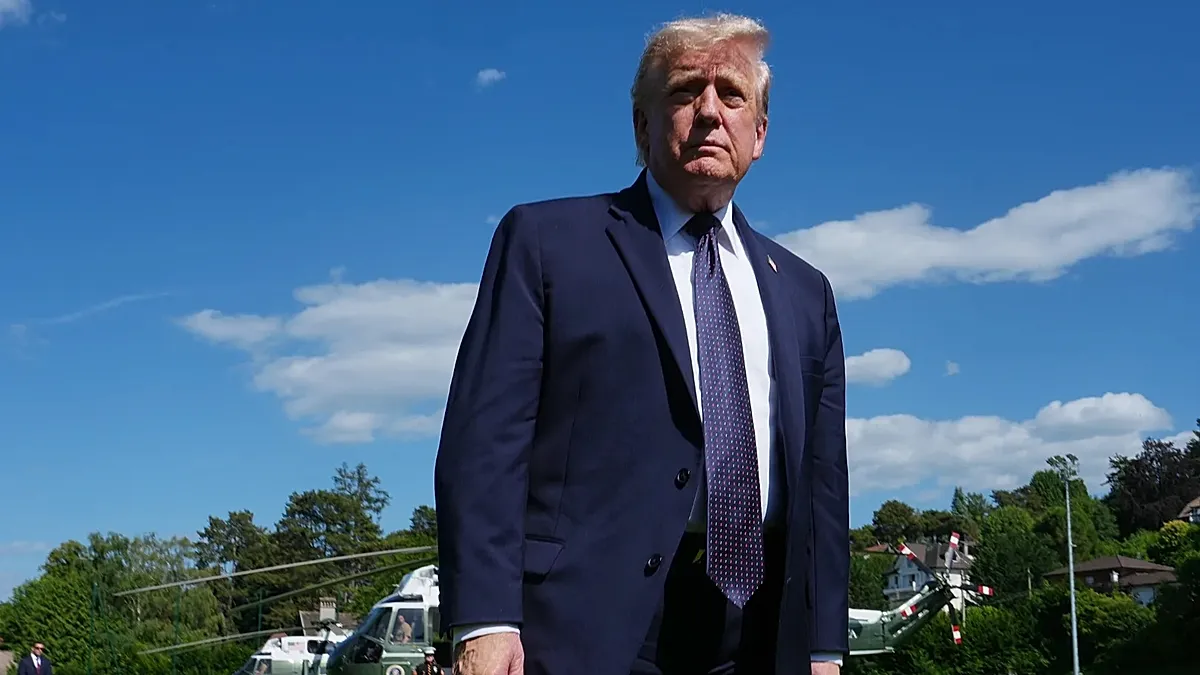
Poinews.com – During the G7 summit in Évian, France, US President Donald Trump emphasized the need for Israeli Prime Minister Benjamin Netanyahu to be responsible with Lebanon, urging him to let Syria manage Hezbollah operations. The remark came as part of a broader strategy to ease tensions in the Middle East, with Trump positioning himself as a mediator between conflicting parties. His comments during a private meeting with Qatar’s Emir Tamim bin Hamad Al Thani reflected a shift in approach, suggesting that Israel’s current tactics in Lebanon may be excessive and that Syria could serve as a more effective partner in dealing with Hezbollah.
“Israel has been fighting Hezbollah for too long, and too many people are being killed,” Trump stated. “You don’t have to knock down an entire apartment building every time you’re looking for somebody, because there are a lot of people who live in those apartments and they are not all Hezbollah.”
The G7 summit provided a platform for Trump to address regional conflicts, including the ongoing Israel-Hezbollah standoff. He highlighted the importance of proportionality in military actions, suggesting that Netanyahu should adopt a more measured strategy to avoid unnecessary civilian casualties. This sentiment was echoed by several European leaders, who have been advocating for a balanced approach to Middle Eastern peace efforts. Trump’s remarks also underscored his desire to leverage the summit for diplomatic gains, particularly in his efforts to broker a deal with Iran.
Strategic Implications for the Region
Trump’s call for Netanyahu to be responsible with Lebanon has sparked discussions about the role of regional alliances in conflict resolution. By entrusting Syria with Hezbollah, Trump appears to be positioning the Arab nation as a key player in stabilizing the situation. This move aligns with his long-standing efforts to reduce US involvement in the region while encouraging local actors to take on greater responsibilities. Analysts note that this approach could influence future military decisions, particularly as the Israel Defense Forces (IDF) continues operations in Lebanon.
On Sunday, the IDF carried out an airstrike targeting a Hezbollah command center in Beirut, resulting in multiple casualties. Trump’s remarks come amid rising tensions, as the attack highlighted the risk of collateral damage in the conflict. The operation, which occurred just days before the G7 summit, has been scrutinized for its impact on civilians and its potential to escalate the situation. Trump’s focus on responsibility with Lebanon suggests he sees the strike as an example of overreach, prompting him to advise Netanyahu to refine his strategies.
Context of the Conflict
The conflict between Israel and Hezbollah has been a persistent issue for years, with both sides exchanging attacks and accusations of aggression. Trump’s intervention at the G7 summit marks a significant moment in the diplomatic discourse, as he seeks to balance the interests of Israel, Syria, and Iran. By advocating for Syria’s involvement, Trump aims to address the complexities of the conflict and create a more sustainable peace framework. His remarks also reflect a growing concern about the humanitarian toll of the ongoing war, particularly on Lebanese civilians.
“We have a great relationship. I didn’t like that he carried out an attack based on minor drones (on Lebanon)… it was vicious. That was too much,” Trump said. “Now Bibi has to be more responsible with respect to Lebanon.”
This quote reinforces Trump’s stance on the need for measured military actions. He emphasized that while Israel’s military capabilities are undeniable, the current approach may be undermining diplomatic progress. Trump’s comments also hint at his broader vision for the region, where he believes the involvement of multiple actors can lead to a more stable resolution.
Earlier this week, Axios reported that Trump criticized Netanyahu following the Beirut strike, stating he had “no fu*ing judgement.” The president’s frustration with the attack’s impact on Lebanese civilians highlights the urgency of his message. Trump’s call for responsibility with Lebanon is part of a larger narrative that seeks to realign regional powers and reduce the immediate threat posed by Hezbollah. By suggesting Syria as a more suitable partner, he positions the Arab nation as a key player in the conflict’s resolution, potentially reshaping the dynamics of Middle Eastern politics.
As the G7 summit progresses, Trump’s remarks on Netanyahu’s responsibility with Lebanon are likely to influence the discussions. His strategy of delegating Hezbollah operations to Syria may gain traction, particularly if it leads to a reduction in Israeli military actions. However, the effectiveness of this approach depends on Syria’s willingness to assume a greater role in the conflict. Trump’s emphasis on responsibility with Lebanon also reflects a desire to align with European allies, who have been pushing for more diplomatic solutions to the region’s crises. With the summit concluding, the next steps in this strategy will be closely watched by global stakeholders.