Wars, tariffs and AI: What to expect from the G7 summit in Évian
vian Amid Geopolitical Tensions Wars tariffs and AI - The serene alpine town of Évian-les-Bains, renowned for its mineral springs, will transform into a hub

Global Leaders Converge in Évian Amid Geopolitical Tensions
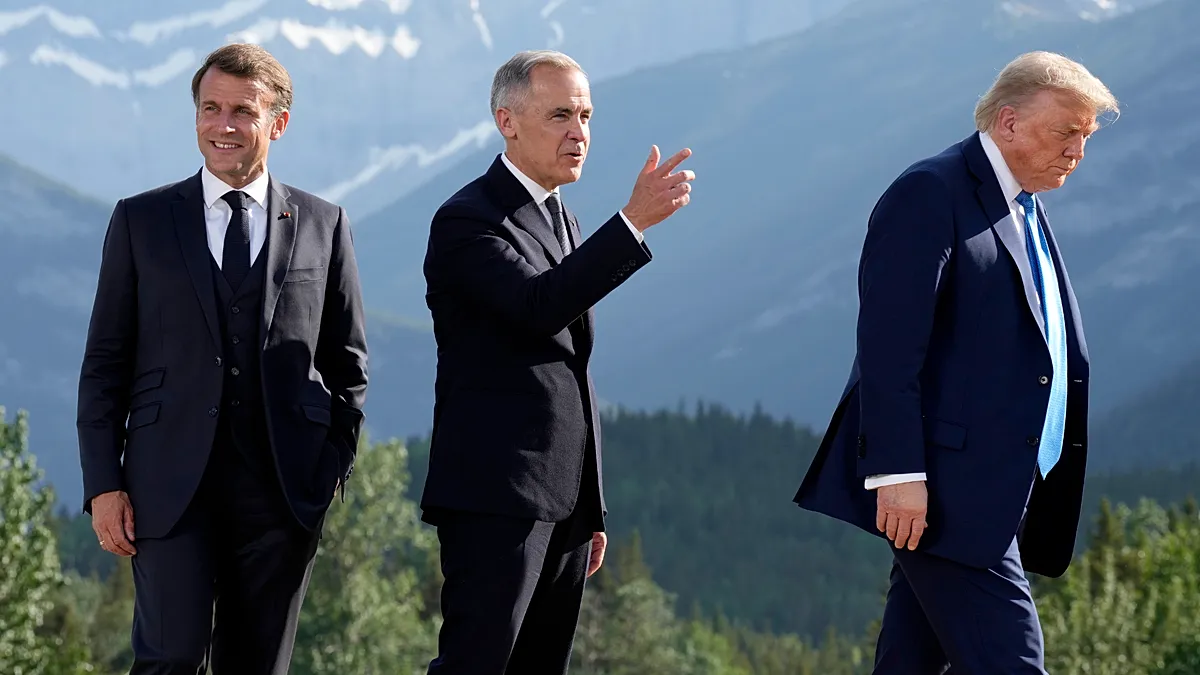
Poinews.com – The serene alpine town of Évian-les-Bains, renowned for its mineral springs, will transform into a hub for international diplomacy starting Monday. Leaders from the world’s seven largest advanced economies are set to meet for their annual summit, which runs until Wednesday on the French shore of Lake Geneva. This gathering occurs at a pivotal moment, with tensions simmering over conflicts, trade disputes, and emerging technological frontiers.
Trump’s Delayed Entry Sparks Shift in Schedule
Donald Trump’s delayed arrival in France—pushing the summit back by a day—has drawn attention. The American president is expected to land late Sunday after watching a mixed-martial arts bout on the White House South Lawn, coinciding with his 80th birthday. His itinerary includes a private meeting with Macron at 17:00 on Monday, followed by a formal welcome dinner billed as “Responding Together to Global Challenges.”
Peace Talks with Iran Take Center Stage
World leaders will closely monitor negotiations between Washington and Tehran, as a breakthrough appears more imminent than ever. Since Trump’s decision to escalate the war against Iran in February, the situation has shifted. A senior U.S. official hinted that a resolution might emerge within days, though certainty remains elusive. Pakistan, a key mediator, noted the talks are nearing a “critical juncture.”
The economic implications are profound. The Strait of Hormuz, once a vital corridor for 25% of the world’s seaborne oil trade, has been a flashpoint since early March. By closing the strait to “unfriendly nations,” Iran triggered a spike in energy prices. Even if a peace deal is reached, clearing mines from the waterway will require a major military operation. The UK and France have proposed a rapid mine-clearing plan, supported by over 15 countries’ military experts.
European Concerns and Strategic Shifts
European leaders bring unresolved frustrations to the summit. US tariffs on EU goods, NATO uncertainties, and the economic strain from the Hormuz closure have fueled tensions. “In 2025, Europeans were willing to accept the bend-the-knee strategy,” said Max Bergmann of the Centre for Strategic and International Studies. “They’re less accepting of it in 2026.”
Canadian Prime Minister Mark Carney arrived in Évian after delivering a sharp address in Dublin, framing the current era as a “global rupture” rather than a smooth transition. “The post-Cold War order is collapsing,” he remarked at Trinity College, signaling a broader realignment in international relations.
Key Agendas and Leadership Dynamics
Volodymyr Zelenskyy will participate in a working session titled “Building Peace and Security for Ukraine and Europe” on Tuesday but will not meet with Trump bilaterally, reflecting Kyiv’s reduced influence in Washington. Meanwhile, Trump’s schedule includes one-on-one discussions with French, Qatari, Emirati, Egyptian, and Indian leaders.
The summit also marks a historic moment for artificial intelligence. Industry leaders from OpenAI, Google DeepMind, and Anthropic—Sam Altman, Demis Hassabis, and Dario Amodei—have confirmed attendance, making it the first G7 to feature all three leading AI firms. Macron personally extended invitations to Altman, underscoring the event’s significance.
“The bromance is gone but there’s a level of something like grudging mutual respect between them in the room,” said a European official, per the Financial Times.
As the summit unfolds, it will test the resilience of alliances and the ability to address multifaceted crises—from war to trade to tech innovation—while navigating shifting diplomatic landscapes.