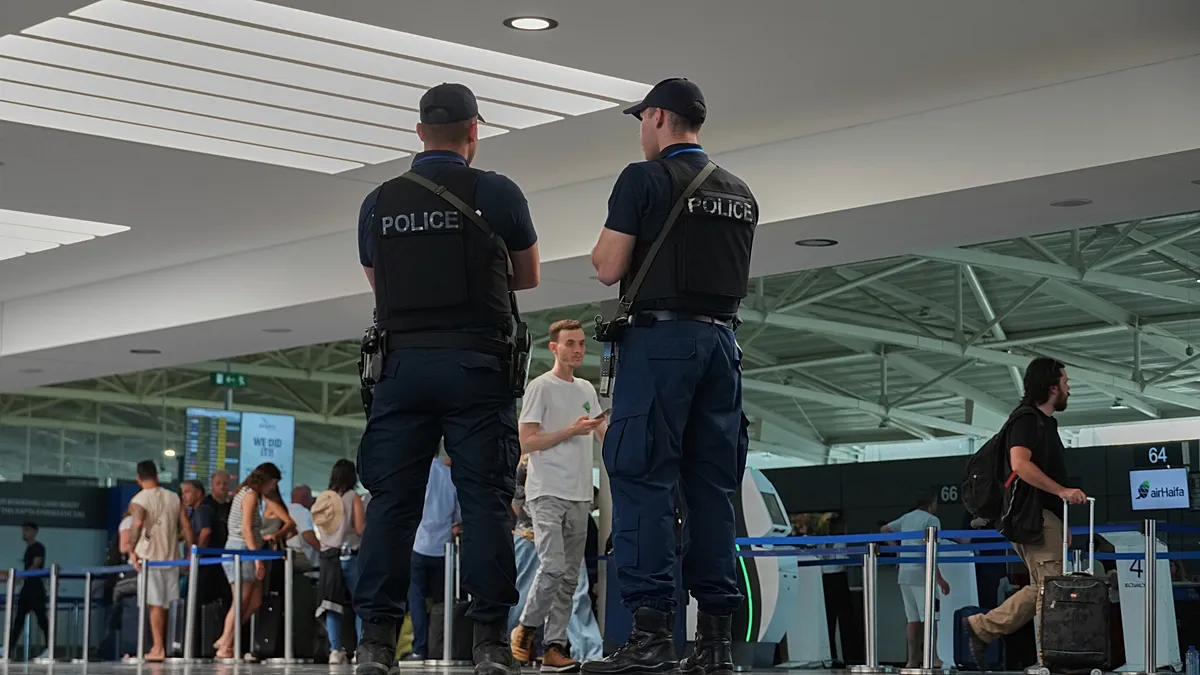
‘Very worried’: Rome airports could suspend new EES border checks over fears of summer travel chaos
Rome Airports 'Very Worried' Over EES Summer Travel Challenges Rome’s Airports Face Potential EES Suspension Amid Summer Concerns Very worried - Rome’s


Rome Airports ‘Very Worried’ Over EES Summer Travel Challenges
Rome’s Airports Face Potential EES Suspension Amid Summer Concerns
Poinews.com – Rome’s airport authorities are very worried about the risk of halting the EU’s Entry/Exit System (EES) during the peak summer travel season. Marco Troncone, CEO of Aeroporti di Roma, has warned that Fiumicino and Ciampino airports may need to allow travelers to bypass biometric checks to prevent a potential crisis. This concern was highlighted in an interview with The Financial Times, where Troncone described the current situation as “a disaster” in the making, citing the system’s inability to handle high passenger volumes.
“The process proves to be incompatible with the peak volumes we are going to face. So the only way is to open up the valve. There is no way that we can deliver 100% of the enrolment,” Troncone stated.
EES Implementation Struggles and Rising Passenger Pressure
The EES was launched on 10 April, replacing traditional passport stamps with digital entries and exits. Despite its intended efficiency, the system has faced persistent technical and logistical hurdles, prompting calls for temporary pauses in its operation. These challenges include delays in processing travelers, longer queues, and increased reliance on additional security staff to manage the backlog. The new procedure also captures biometric data, such as facial images and fingerprints, which has added complexity to the process.
With summer travel expected to surge, concerns over the EES’s reliability have intensified. Troncone’s worries, which he rated as “eight or nine” on a scale of one to 10, underscore the urgency of the situation. Airport operators across Europe are closely monitoring the rollout, fearing similar disruptions could affect their operations and visitor experiences.
Broader European Challenges and Responses
Rome is not alone in its concerns. Across the continent, other airports are bracing for similar issues as they navigate the EES’s implementation. In Portugal, hundreds of public security police officers (PSP) are set to be deployed at national airports starting in July to assist with smoother border controls. Meanwhile, Greece temporarily paused EES checks for British citizens before reversing the decision, stating there was insufficient evidence to justify exemptions.
Stefan Schulte, President of Airports Council International Europe (ACI Europe), echoed these anxieties, noting that the EES remains a major headache for airport executives. “What keeps me and many other airport CEOs across Europe awake at night is the EES,” he said, highlighting the system’s impact on daily operations and traveler satisfaction.
Frontex Acknowledges Biometric Data Collection Hurdles
Frontex, the European Border and Coast Guard Agency, has admitted that biometric data collection is a primary challenge during the EES rollout. Uku Särekanno, a deputy executive director at Frontex, noted that gathering fingerprints from non-EU travelers on their first entry into the Schengen Area is “probably the most challenging part” of the process. This issue has contributed to delays and operational bottlenecks, particularly during high-traffic periods.
“We expect the situation will stabilise in one or two years because the most challenging part is the first enrolment,” Särekanno said, addressing an audience at an ABTA event in London.
Industry Calls for Immediate Adjustments
Industry leaders have urged swift action to address the EES’s shortcomings before the summer rush. ABTA’s chief executive Mark Tanzer described the warnings as “very painful,” emphasizing the system’s delays are causing significant strain on the travel sector. With airlines and tour operators already adjusting schedules and expectations, the need for a stable and efficient EES has never been more pressing.
Meanwhile, officials are exploring ways to streamline the process. This includes increasing the number of scanners, training more staff, and possibly implementing temporary workarounds to alleviate pressure. However, these measures may only provide short-term relief, as the long-term success of the EES hinges on its ability to scale effectively and adapt to the demands of peak travel seasons.
Long-Term Implications for EU Travel Infrastructure
The potential suspension of EES checks in Rome highlights broader concerns about the EU’s ability to manage its travel infrastructure efficiently. As more countries adopt the system, the risk of localized disruptions grows, which could ripple across the entire Schengen Area. This situation raises questions about whether the EES is prepared for the scale of summer travel, which typically sees millions of passengers crossing borders daily.
Experts warn that without significant improvements, the EES may fail to meet its goals of enhancing security and reducing wait times. The system’s success depends on seamless integration of technology with human resources, and the current strain suggests that further investment and coordination will be essential to prevent a wider crisis in the coming months.