First group of Nigerians returns home after anti-immigration protests in South Africa
Nigerians Begin Return Home Amid South African Immigration Protests First group of Nigerians returns home - Following months of escalating anti-immigrant

Nigerians Begin Return Home Amid South African Immigration Protests
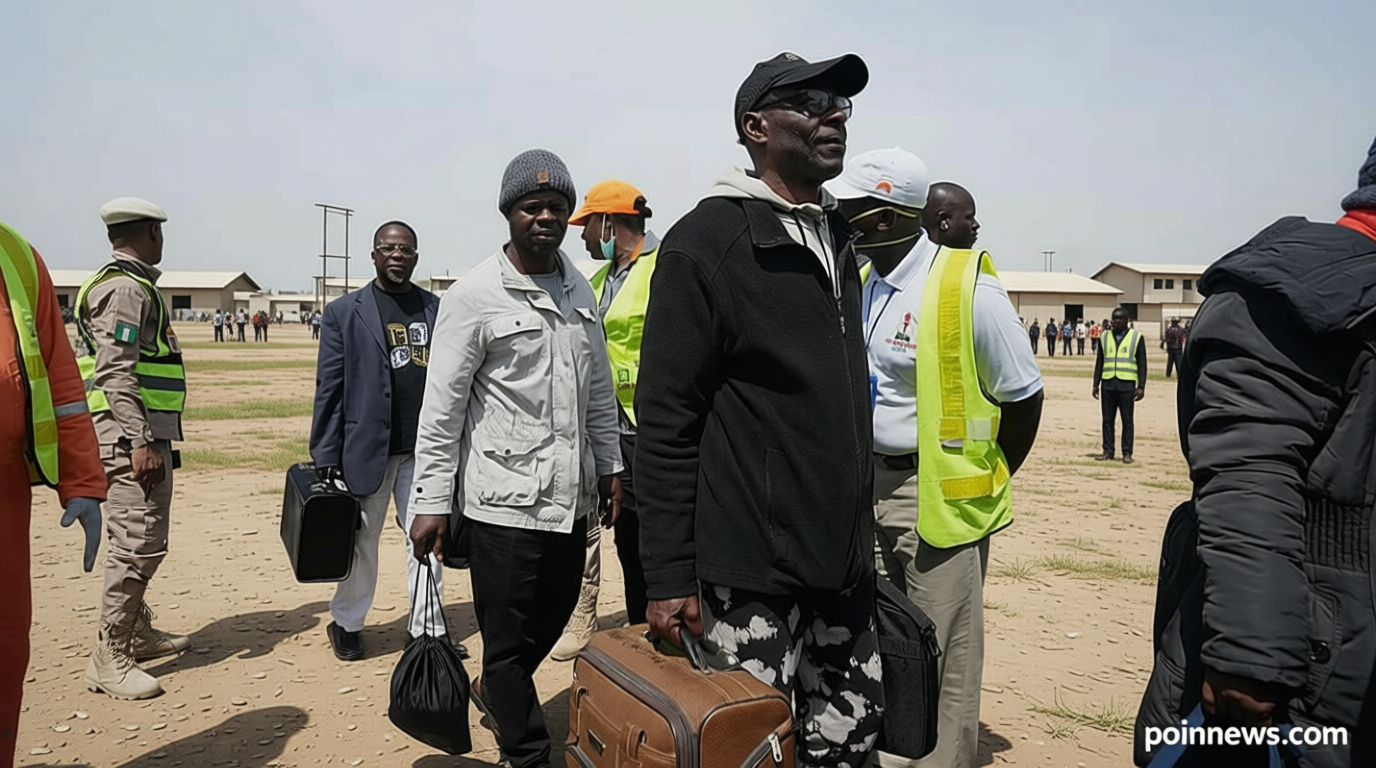
Poinews.com – Following months of escalating anti-immigrant tensions in South Africa, a significant number of Nigerian citizens have started their journey back to their home country. This marks the beginning of a coordinated government initiative to repatriate individuals impacted by xenophobic violence. The first group, comprising 262 passengers and three embassy officials, departed on Thursday via a direct flight to Lagos, as confirmed by Nigeria’s Ministry of Foreign Affairs. The move comes after the South African government labeled these returning Nigerians as undocumented migrants, raising questions about the legality of their stay. The Nigerian officials highlighted that the repatriation effort is voluntary, with over 1,000 Nigerians initially signed up to leave the country.
Context of the Anti-Immigration Protests
The anti-immigration protests, which began in April, have led to widespread unrest, particularly in urban areas where migrant communities are concentrated. Local South Africans have expressed frustration over job competition and perceived cultural displacement, prompting violent demonstrations that have targeted Nigerian and other foreign nationals. These protests have forced the South African government to take decisive action, including the issuance of emergency travel documents for those wishing to return to Nigeria. The Nigerian Foreign Minister, Bianca Odumegwu-Ojukwu, reiterated that the president had prioritized the safety of citizens, emphasizing that their departure was a necessary response to the volatile conditions.
“The well-being of our people and the safety of their families are paramount. We are taking steps to ensure they are protected from the dangers posed by xenophobic attacks,” said the Nigerian Foreign Minister in a recent statement.
Meanwhile, the South African Home Affairs Department has confirmed that 586 Nigerians have been processed for return, with a second group expected to depart on Monday. Officials have urged foreign nationals to regularize their status under South African law, warning that those who remain in the country without proper documentation may face prolonged restrictions. This has sparked debates about the effectiveness of the government’s approach in addressing both public discontent and the legal status of migrants.
Regional Repatriation Efforts and Community Impact
The repatriation of Nigerians follows similar actions taken by Ghana, which had already evacuated approximately 1,000 citizens from South Africa earlier this year. This indicates a growing regional concern over the safety of African expatriates in the country. The Nigerian government’s decision to facilitate the return of its citizens has also raised awareness about the broader implications of the protests on the African diaspora in South Africa. Local Nigerian communities, often concentrated in areas like Johannesburg and Cape Town, have faced targeted attacks, leading to the displacement of families and businesses.
“Our communities in South Africa are not just vulnerable to violence—they are also experiencing economic strain due to the disruptions caused by these protests,” stated a spokesperson for the Nigerian diaspora in Johannesburg.
As the first group of Nigerians returns home, the focus remains on ensuring a smooth transition for those leaving. The Nigerian High Commission in South Africa has issued travel documents to eligible citizens, while the Ministry of Foreign Affairs continues to coordinate with South African officials to streamline the process. This effort reflects a strategic response to the crisis, aiming to restore stability for both the returning migrants and the communities they left behind.
Future Plans and Long-Term Implications
The ongoing repatriation effort is expected to continue as more Nigerians seek to return to their home country. Officials have indicated that the government will monitor the situation closely and may expand the initiative if the protests persist. In addition to Nigeria, other African nations such as Liberia have expressed concerns about the safety of their citizens in South Africa, with President Joseph Boakai pledging to support similar measures if needed. This regional solidarity underscores the shared challenges faced by African migrants in South Africa and the need for a unified approach to address the crisis.
“We are committed to protecting our citizens wherever they may be. If the conditions in South Africa remain unstable, we will not hesitate to take further action,” said President Boakai in a recent address.
As the first group of Nigerians returns home, the international community has taken note of the situation. Human rights organizations and diplomatic bodies are monitoring the repatriation process to assess its impact on the broader migrant population. The event also highlights the importance of diplomatic cooperation in managing large-scale displacement crises. For the returning Nigerians, the journey home represents both a relief from immediate dangers and a step toward rebuilding their lives in a more stable environment.
Public Reaction and Diplomatic Response
The departure of the first group of Nigerians has elicited mixed reactions from the public in South Africa. While some locals have welcomed the reduction in the number of foreign workers, others have criticized the government for not doing enough to address the root causes of the protests. Meanwhile, Nigerian officials have praised the initiative as a proactive measure to safeguard their citizens. The Ministry of Foreign Affairs has also announced that the returning migrants will be granted temporary residence permits in Nigeria, allowing them to re-enter the country if conditions improve in South Africa.
“This is a positive step for our citizens, but it is equally important that we work with South Africa to create long-term solutions for all migrants,” added a senior Nigerian official.
As the repatriation continues, the focus is shifting to diplomatic dialogue and policy reforms. South African officials are now under pressure to address the economic and social grievances that fueled the protests, ensuring that future conflicts do not escalate further. The return of Nigerians serves as a reminder of the interconnectedness of migration issues and the need for balanced policies that protect both local and foreign communities.