Glow-in-the-dark plants warn of crop pests
Glow-in-the-dark plants warn of crop pests Glow in the dark plants warn - Spanish scientists have unveiled a groundbreaking innovation that allows early

Glow-in-the-dark plants warn of crop pests
Poinews.com – Spanish scientists have unveiled a groundbreaking innovation that allows early detection of pests and diseases in crops. This breakthrough relies on plants engineered to emit light and alter their color when exposed to viruses. The development stems from research conducted by the Instituto de Biología Molecular y Celular de Plantas (IBMCP), a joint venture between the CSIC and the Universitat Politècnica de València (UPV).
Bio-luminescent system for disease monitoring
The system works by modifying a natural plant compound called caffeic acid with four enzymes, enabling it to produce a glowing molecule. As this molecule oxidizes, it emits a steady green light, serving as a biological indicator of the plant’s health. When infected by viruses, the light shifts in color, signaling the presence of pathogens before visible symptoms emerge. This change can be observed using standard cameras, simplifying early identification.
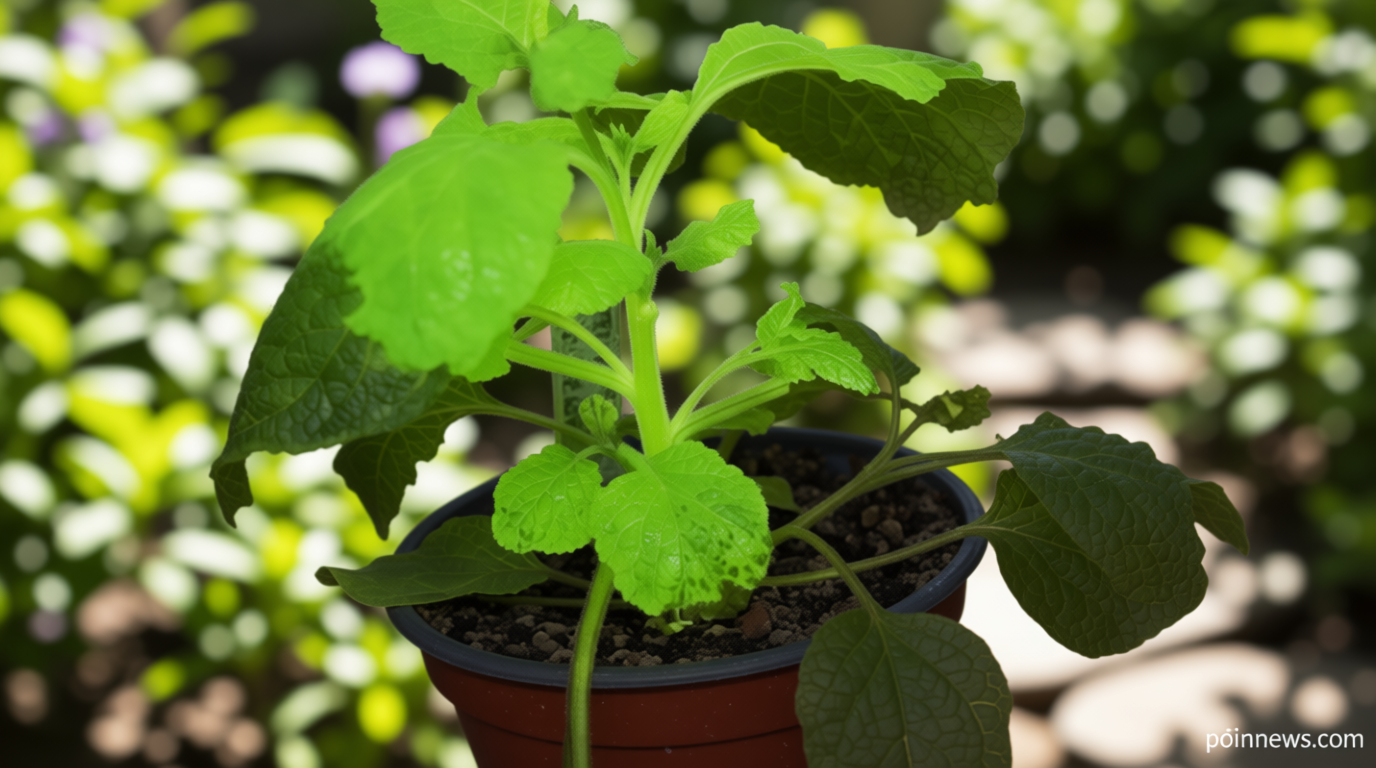
Researchers tested the technology on transgenic Nicotiana benthamiana, a relative of tobacco frequently used in agricultural experiments. They introduced fungal bioluminescence genes via modified viruses, allowing them to track the progression of infection in real time. The resulting “sentinel” system detects potyvirus through a distinct alteration in the plant’s emitted light, distinguishing infected areas from healthy ones.
Advantages over traditional methods
Conventional diagnostic techniques, such as PCR or ELISA, are highly precise but often require specialized equipment, trained personnel, and considerable time. The new method offers a more accessible alternative, using low-cost devices to monitor viral activity. It could first be deployed in controlled environments like greenhouses, providing early warnings for outbreaks in crops.
In the long term, this technology may expand to identify bacterial and fungal threats, addressing growing agricultural challenges tied to climate change. The project also benefits from collaboration with the Centro de Investigaciones Biológicas Margarita Salas (CIB-CSIC), the Central Research Unit in Medicine at the Universitat de València, and the MRC Laboratory of Medical Sciences in London.
Future implications
The ability to transform plants into self-monitoring systems represents a significant leap in agricultural science. By harnessing bioluminescence, researchers aim to create a scalable tool for combating emerging crop threats. This approach could revolutionize early disease detection, offering farmers a visual and efficient way to respond to infestations before they cause widespread damage.