Rescuers search for five missing people after deadly landslide in India’s Kerala state
India Rescuers search for five missing people - Heavy monsoon rains have triggered a devastating landslide in Kerala, India, leaving at least three

Five Missing After Landslide in Kerala, India
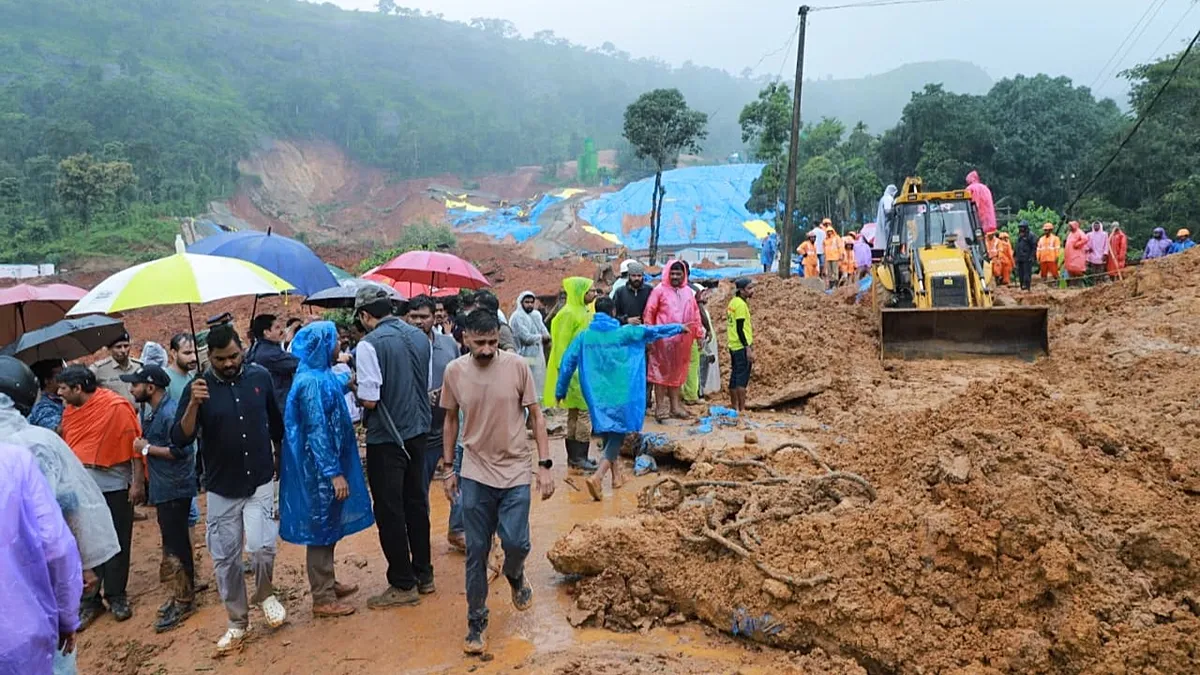
Poinews.com – Heavy monsoon rains have triggered a devastating landslide in Kerala, India, leaving at least three construction workers dead and seven others injured. Search and rescue teams are actively working to locate five individuals still unaccounted for, as the disaster struck the Wayanad district, known for its lush forests and rugged terrain. The incident occurred near a tunnel project site, where a section of land collapsed, sending a torrent of mud and debris sweeping through the area. Officials report that the search is ongoing, with emergency responders navigating the treacherous conditions to save lives and assess the damage.
The landslide has drawn significant attention to the role of human activity in exacerbating natural disasters. Kerala’s agriculture minister, T. Siddique, has claimed the event was “not natural but man-made,” citing unscientific earth disposal as a primary cause. He emphasized that construction debris had not been cleared despite earlier warnings, suggesting that the accumulation of soil and rocks on the slopes may have contributed to the collapse. However, the construction firm involved has disputed this, arguing that the landslide originated far above the work site and was not directly linked to their operations. This debate has intensified as investigators work to determine the exact causes.
Rescue Operations and Challenges
Emergency responders have mobilized a coordinated effort to search for the five missing individuals, with teams dividing the affected area into manageable zones. Rescue crews, including specialized units and trained dogs, are operating in the challenging conditions caused by continuous rainfall. The operation has been complicated by the unstable terrain, which has led to the closure of several roads and the evacuation of nearby villages. Local authorities have also deployed drones and heavy machinery to assist in the search, as the debris field has become a maze of uprooted trees and fragmented structures.
Residents in the region have expressed fear and concern as the search continues. “We never thought something like this could happen in our village,” said one local, who had lived in the area for over two decades. The emotional toll on the community has been immense, with families waiting anxiously for news of their loved ones. Meanwhile, the weather conditions have not eased, with forecasters warning of further heavy downpours that could complicate the rescue mission. The situation highlights the need for improved infrastructure and disaster preparedness in mountainous regions prone to such events.
Monsoon Intensity and Climate Change
The intensity of the monsoon season has reached unprecedented levels this year, with rainfall patterns becoming increasingly erratic. Experts have linked these extreme weather events to human-driven climate change, which is intensifying the frequency and severity of South Asia’s seasonal storms. The monsoon, traditionally spanning June to September and October to December, has delivered sudden, heavy downpours that have overwhelmed drainage systems and destabilized slopes. This pattern has already caused floods and landslides across western and northern India, raising concerns about the region’s vulnerability to such disasters.
Scientists warn that rising temperatures and changing precipitation trends are making monsoons more unpredictable, with some areas experiencing prolonged droughts followed by intense rainfall. In Kerala, the state has seen a 20% increase in annual rainfall compared to the past decade, according to climate data. This has placed additional stress on the region’s infrastructure, particularly in areas with ongoing construction projects. The landslide serves as a stark reminder of how climate change can amplify the risks of natural disasters, even in regions with historically stable weather patterns.
Authorities have launched a comprehensive investigation to determine the full scope of the landslide’s causes. The report will likely examine both natural and human factors, including the condition of the slopes, the construction activities, and the impact of recent rainfall. This probe is expected to take several weeks, as teams gather evidence and analyze the disaster’s aftermath. The findings could influence future policies on land use and construction practices in Kerala, where similar incidents have occurred in the past.