How a quiz show and a dream took Azerbaijan’s Sabah to the Champions League
Sabah FC of Baku will face Barcelona, Arsenal, Manchester United, Borussia Dortmund, Napoli, Slavia Prague, Villarreal and Viking in the Champions League main

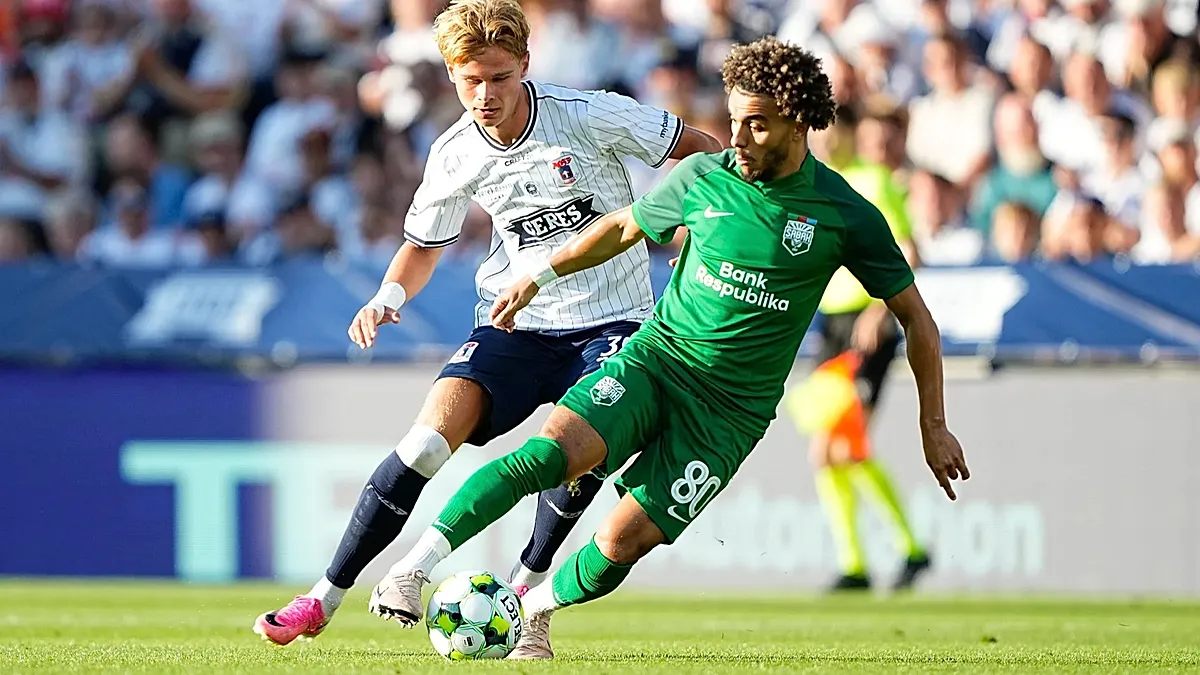
Table of Contents
Azərbaycan’s Sabah FC Storm Into Europe’s Elite After a Nine-Year Climb
Poinews.com – Sabah FC of Baku will face Barcelona, Arsenal, Manchester United, Borussia Dortmund, Napoli, Slavia Prague, Villarreal and Viking in the Champions League main round — a fixture list that would have seemed fantastical when the club was founded in 2017. The qualification came after a 5-2 home victory over Hapoel Beer Sheva last Tuesday, completing a 6-4 aggregate that sealed the last available spot in Europe’s premier club competition.
At the helm of this improbable ascent stands Valdas Dambrauskas, a Lithuanian who became the first coach from the Baltic region to guide a side into the Champions League main round. His path to the dugout bears no resemblance to the conventional trajectory of European football management. Nine years ago, the club he now leads did not exist. Before that, he had never coached a professional team.
From Quiz Show Prize to Coaching Badges
In 2002, Dambrauskas won the jackpot on the Lithuanian broadcast of Who Wants to Be a Millionaire? He channelled the prize money into relocating to England, where he pursued UEFA coaching qualifications. With no prior professional football credentials, he funded his studies through odd jobs — babysitting, sales work, and newspaper delivery. Those efforts eventually earned him placements in the youth departments of Fulham, Brentford and Manchester United.
“Sometimes it was difficult. I had to work hard, and sometimes to believe when myself and those around me were doubting,” Dambrauskas recalled. “I take this achievement as a milestone and believe that journey is more important. There are other dreams ahead and I really don’t want to stop.”
Sabah FC represents his tenth club in a career built almost entirely from scratch. The contrast between his origin story and the scale of the task now before him — eight matches against some of the wealthiest institutions in world football — has drawn widespread attention across the continent.
A Squad Built on Data, Not Dollars
Club president Magsud Adigozalov has been candid about the financial realities shaping Sabah’s approach. The squad’s aggregate market value sits at approximately €16.65 million, a figure that pales beside Barcelona’s estimated €1.1 billion or Manchester United’s roughly €900 million. Napoli’s newly arrived centre-back Benoît Badiashile, who completed a transfer from Chelsea, is individually worth close to the entire Sabah roster.
“We could not compete financially with many established European clubs, so we had to find our own competitive advantages,” Adigozalov explained. “We were inspired by the Moneyball philosophy, which demonstrated that intelligent use of data and recruitment can help a club compete far beyond what its financial size might suggest.”
That analytical framework extends to the coaching staff. Valerio Zuddas, a 37-year-old Italian who has accumulated experience across ten countries, handles defensive structure and the breakdown of European opponents. His role sits alongside Dambrauskas in translating tactical intent into match-day execution.
“The biggest satisfaction for Valdas as head coach and for us as coaching staff is that we can clearly see how the players are into our team principles and how they believe in them,” Zuddas said. “Sometimes they find solutions by themselves inside our structure, their level of understanding of the game allows us to propose always different strategies and variations that help us to be more and more competitive.”
Domestic Dominance as Launchpad
The European breakthrough did not arrive in a vacuum. Sabah captured the Azerbaijan Cup during the 2024-25 campaign and followed it with the Azerbaijan Premier League title the next season, breaking the long-standing domestic stranglehold of Qarabağ FK. That domestic success generated the UEFA coefficient points and competitive confidence necessary to navigate the qualifying rounds through Denmark, England, Finland and Romania.
The squad’s international character is itself a product of the club’s recruitment model. Adigozalov noted that the starting eleven frequently features players from as many as eleven different nations.
“We have a fantastic international environment where a lot of times we select eleven different nationalities in the starting line-up. In this kind of environment the main word we base our philosophy on is respect,” he said. “Footballers are people before they are assets or statistics. We try to provide players with excellent training and living conditions and treat them and their families with respect.”
Players Grounded in Purpose
For Tellur Mutallimov, who operates as both right-back and right-winger, the scale of the upcoming fixtures registers as obligation rather than spectacle.
“Playing against clubs of this stature gives me a greater sense of responsibility and extra motivation rather than excitement,” Mutallimov said. “The celebrations are now behind us. It is time to focus all our attention on the important and difficult matches ahead.”
He also acknowledged the diaspora supporters who travelled to away qualifiers in Denmark, England, Finland and Romania.
“Even when we played far away from home in Denmark, England, Finland and Romania, we were not alone. We are grateful to our compatriots living abroad, who came to the stadiums and supported us during those matches.”
The Road Ahead
The main-round schedule splits between home and away. Barcelona, Borussia Dortmund, Napoli and Slavia Prague will arrive in Baku, while Dambrauskas and his players travel to north London and Manchester in England, to Villarreal in Spain, and to Viking in Norway.
Dambrauskas himself has insisted that the domestic league remains the foundation upon which European participation rests.
“Everyone is speaking about the Champions League, but the Azerbaijan championship is what allows you to play there. It is very important we keep the focus and prepare for every game that we are going to play,” he said.
For a club that did not exist nine years ago, and a coach whose football education began with a television quiz prize and a newspaper route, the next eight weeks will test whether analytical ingenuity and squad cohesion can hold their own against the deepest resources in world football. The answer, by any measure, will reshape the conversation about what smaller clubs can achieve in Europe’s top flight.
Related Reading
Frequently Asked Questions
What is How a quiz show and a dream?
How a quiz show and a dream is the main topic of this guide. The article explains the context, practical details, and next steps readers should understand.
Why does How a quiz show and a dream matter?
How a quiz show and a dream matters because readers are looking for a useful answer, not just a short summary. Good content should match search intent and help them decide what to do next.