Two US troops killed in Jordan by Iranian attacks, US military says
Two US Troops Killed in Jordan by Iranian Attacks, US Military Says Initial Casualties and Context of Conflict Two US troops killed in Jordan - US military

Two US Troops Killed in Jordan by Iranian Attacks, US Military Says
Initial Casualties and Context of Conflict
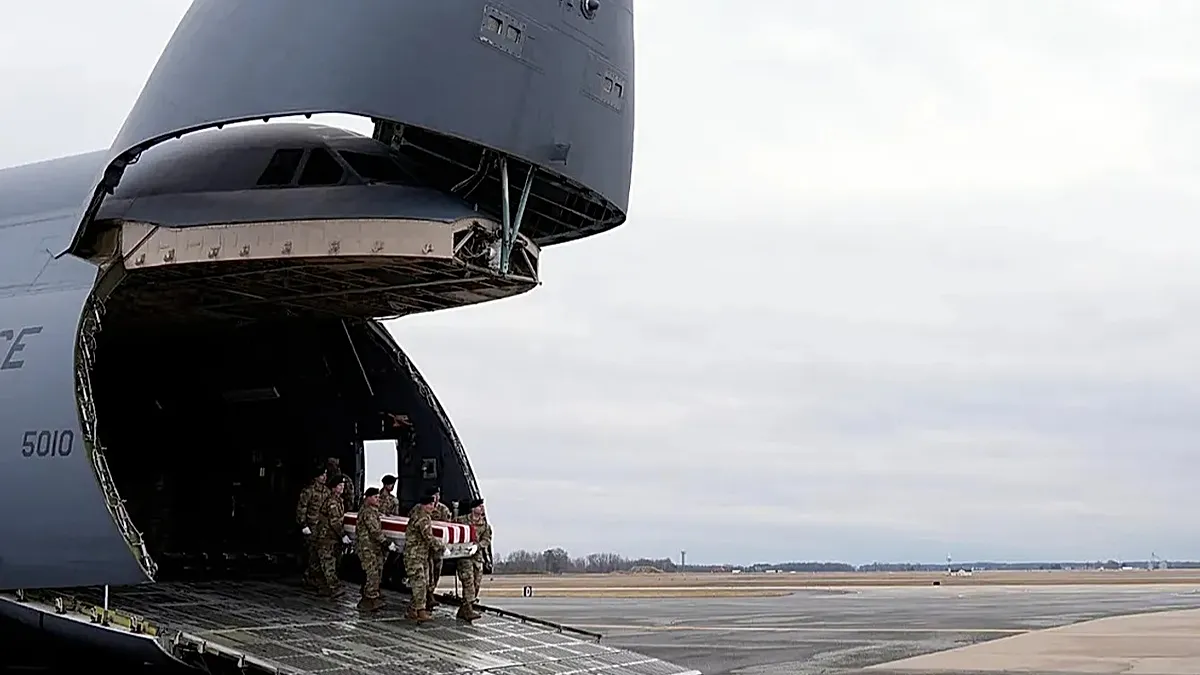
Poinews.com – US military officials revealed on Saturday that two American soldiers have died and one remains unaccounted for following Iranian missile strikes on a Jordanian military facility. This marks the first fatalities attributed to direct Iranian fire since the war began. The incident occurred during Friday’s counterattacks by US and allied forces against Iranian ballistic missiles and drones, according to a statement from the US military.
Additionally, four service members who were injured in the assault were medically evacuated and later released from Jordanian hospitals. The total number of US casualties in the conflict now stands at 16, with over 430 wounded.
Iranian Retaliation and Strategic Implications
Iranian authorities reported on Saturday that at least 50 people were killed and more than 500 injured in US strikes over the past three weeks, including eight casualties from an attack on a bridge. The recent strikes have intensified the struggle between the two sides over control of the Strait of Hormuz, a vital maritime route through which 20% of global oil traffic passes.
Tehran has claimed the strait must be under its exclusive command, demanding fees from vessels traversing it. This stance has led to a sharp rise in oil prices since the war began, providing Iran with significant leverage in negotiations with the US.
US Actions and Iranian Responses
US Central Command stated that its seventh consecutive night of strikes targeted surveillance sites, logistics hubs, underground weapon storage, and maritime infrastructure. Iranian state media reported that the Bonji desalination plant in Hormozgan province was destroyed, disrupting water access for approximately 10,000 residents. A desalination facility on Qeshm Island, located within the strait, also sustained damage.
On Saturday, three bridges were hit, including one near Bandar Abbas, Iran’s primary port adjacent to the strait’s narrowest point. In retaliation, Iranian forces launched attacks on US bases in Gulf-Arab nations, with notable damage reported in Kuwait. The country’s aviation authorities briefly closed its airspace, and most flights were rerouted.
Regional Impact and Ceasefire Developments
According to the Kuwait Petroleum Corporation, the strikes caused a fire at a desalination plant and forced several power units offline. This was the second attack on a desalination facility in two days, as Kuwait relies heavily on such plants for 90% of its drinking water. Firefighters and a worker were also injured while managing the resulting fires.
Meanwhile, Iraq claimed it downed attack drones over Irbil. Jordan’s Petra news agency noted that its air defense systems intercepted Iranian missiles, while air sirens were heard in Bahrain and Saudi Arabia throughout the day and morning, respectively.
“Unforgettable lessons” will be learned if the United States continues its attacks on the Islamic Republic, warned Iran’s Supreme Leader Mojtaba Khamenei, as stated on State Television. Khamenei, who has not appeared publicly since the conflict began, criticized the interim ceasefire signed a month prior, calling it “worthless and invalid.” His remarks followed reports that Tehran had suspended its obligations under the agreement.
US President Donald Trump had previously threatened to strike power stations and bridges to pressure Iran into easing its control. In parallel, Washington reimposed a naval blockade on Iranian ports to disrupt oil exports.