Video. China achieves first-ever controlled rocket booster recovery
China's Groundbreaking Rocket Booster Recovery Marks a New Era in Space Exploration China achieves first ever controlled rocket - China has made history by

China’s Groundbreaking Rocket Booster Recovery Marks a New Era in Space Exploration
Poinews.com – China has made history by achieving the first-ever controlled recovery of a rocket booster, a milestone that underscores its growing prowess in space technology. This landmark accomplishment, reported by state broadcaster CCTV, signifies a major leap forward in the country’s efforts to develop sustainable and cost-effective launch systems. The successful retrieval of the Long March-10B rocket’s first-stage booster not only demonstrates technical mastery but also positions China as a key player in the global race for reusable spacecraft technology. By mastering this process, the nation aims to reduce the environmental footprint of space missions while enhancing the efficiency of future launches.
The Significance of Controlled Rocket Booster Recovery
The ability to recover and reuse rocket boosters is a game-changer for space agencies worldwide. Traditionally, rocket boosters are discarded after launch, contributing to significant costs and waste. China’s achievement in this area marks a pivotal shift toward a more sustainable model, aligning with global trends in space exploration. This breakthrough is part of China’s broader strategy to reduce reliance on single-use launch systems and improve the economics of space travel. The mission’s success also highlights the country’s commitment to innovation, as it continues to refine its technologies to match or surpass those of other leading spacefaring nations.
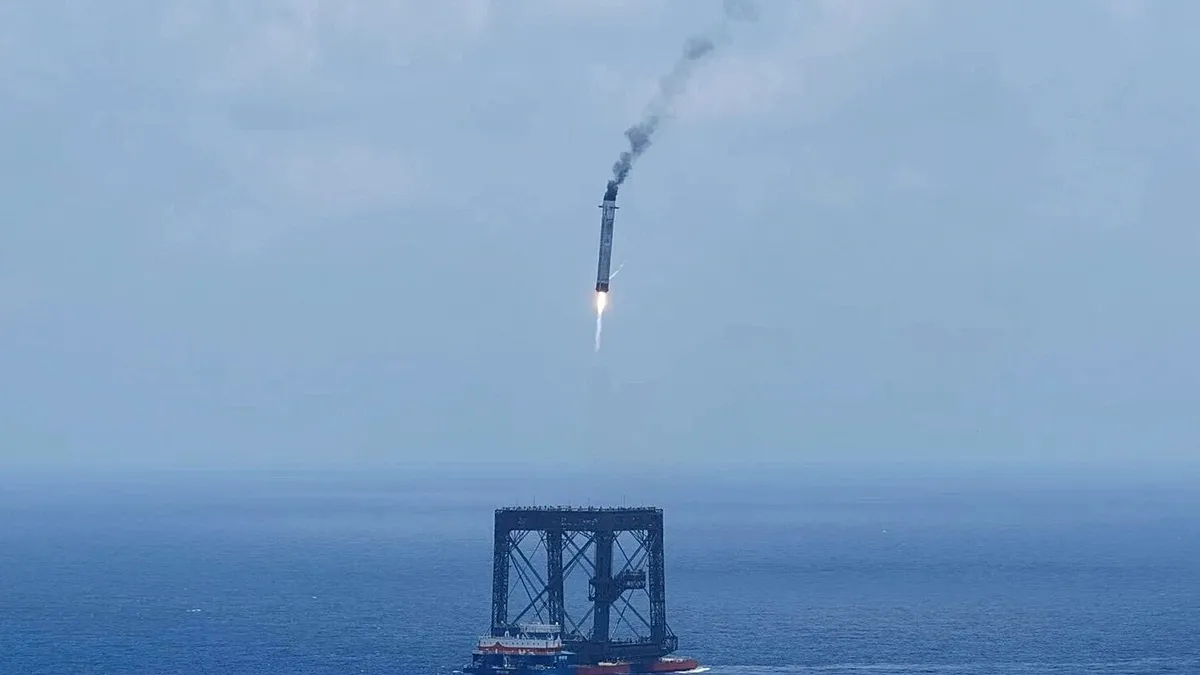
While the United States and Europe have made strides in reusable rocket technology, China’s controlled recovery of the Long March-10B’s first-stage booster represents a unique advancement. The mission involved precise engineering and advanced guidance systems to ensure the booster landed safely on a mobile platform off the coast of Hainan province. This approach allows for greater flexibility in recovery operations compared to fixed landing zones, which is a critical advantage for future missions. The technical challenges of achieving such accuracy include managing the booster’s descent speed, ensuring stability during reentry, and coordinating the platform’s movement to match the landing trajectory.
How China’s Innovation Sets a New Standard
The controlled recovery process is not just about landing the booster—it’s about redefining the way space missions are planned and executed. China’s team utilized a combination of onboard sensors, real-time data analytics, and advanced propulsion systems to achieve this feat. The mobile platform, a specialized vessel equipped with landing gear and recovery equipment, was deployed strategically to intercept the booster’s descent. This method minimizes the need for extensive ground infrastructure, making it more adaptable for launches in diverse environments. The success of this mission could influence the design of future rocket systems, encouraging other countries to explore similar approaches.
Experts have praised the implications of this achievement for the future of space exploration. “China’s controlled recovery of the Long March-10B booster represents a crucial step toward reusable launch technology,” stated a Chinese aerospace official, emphasizing the mission’s role in advancing the country’s space ambitions. The recovery of rocket components reduces the cost of space missions by up to 50%, according to industry estimates, and could lead to more frequent launches without the need for constant production of new boosters. This innovation also aligns with China’s goal of becoming a leading space power, with plans to expand its lunar and Mars exploration programs in the coming years.
As China continues to push the boundaries of aerospace engineering, its controlled rocket booster recovery sets a new benchmark for sustainability and efficiency. The Long March-10B is part of the nation’s broader development of next-generation launch vehicles, which are designed to support ambitious missions such as crewed lunar landings and interplanetary travel. The successful execution of this recovery operation demonstrates China’s ability to integrate cutting-edge technology with practical applications, ensuring that its space program remains at the forefront of global innovation. With further refinements, this technique could revolutionize the industry, making space exploration more accessible and environmentally friendly for the future.