Video. Clashes erupt as police use water cannon near Belfast
Clashes Erupt as Police Use Water Cannon Near Belfast Clashes erupt as police use water - Clashes erupted as police used water cannon near Belfast, marking a

Clashes Erupt as Police Use Water Cannon Near Belfast
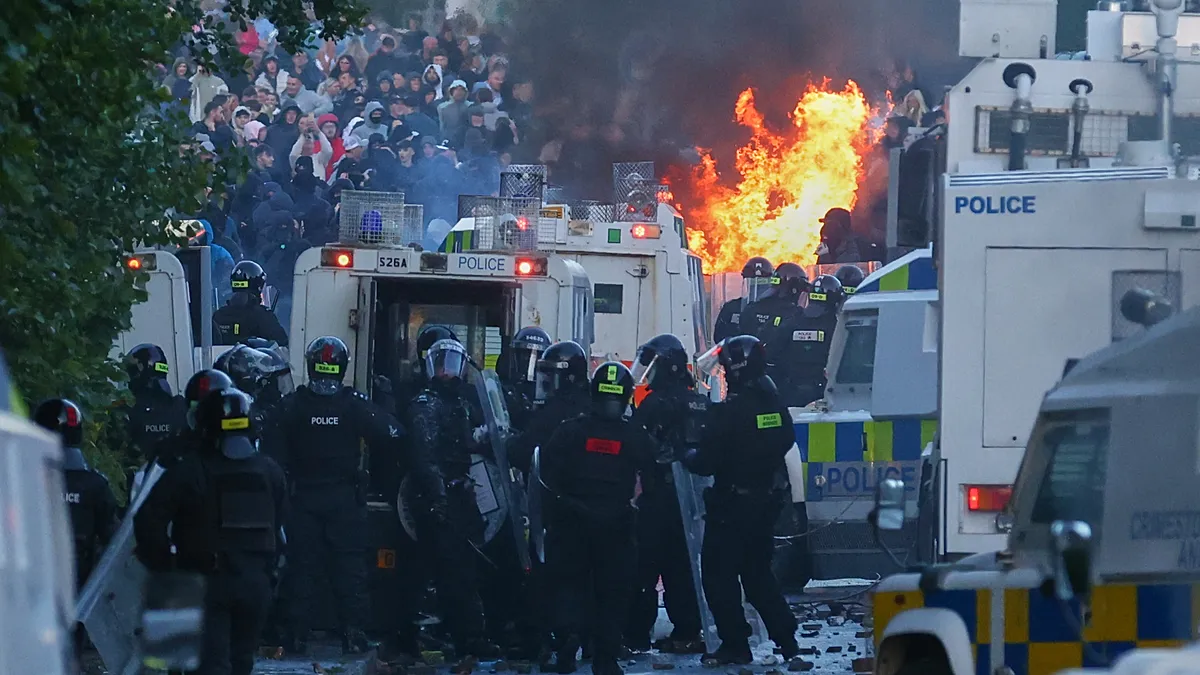
Poinews.com – Clashes erupted as police used water cannon near Belfast, marking a significant escalation in tensions following a knife attack that left a man severely injured and with partial vision loss. The incident, which occurred on Monday, sparked widespread unrest in Northern Ireland, culminating in violent demonstrations in Newtownabbey, a town just north of Belfast, on Wednesday night. Witnesses described chaotic scenes as protesters gathered in large numbers, confronting law enforcement with a mix of aggression and organized tactics. The deployment of water cannons by police became a focal point of the event, drawing attention to the use of force in managing the growing crowd. This moment of civil unrest was not only a reflection of the immediate anger but also highlighted the deeper socio-political divisions that have been simmering in the region.
The Spark of Protests: A Knife Attack and Anti-Migrant Tensions
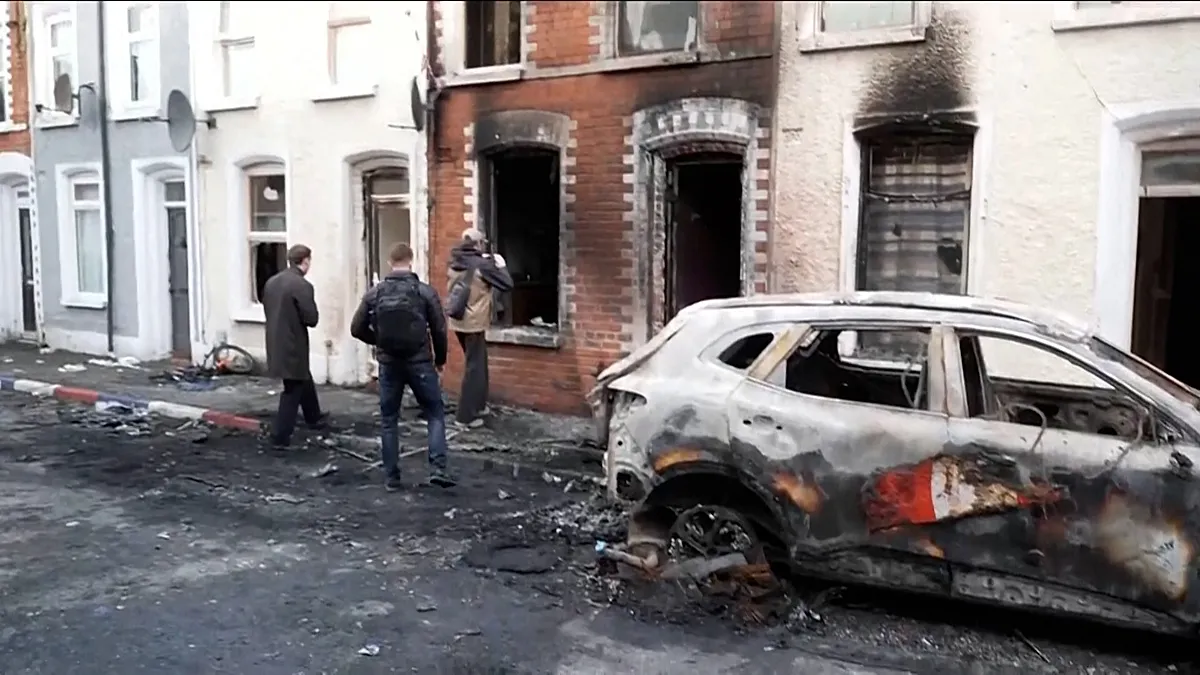
The knife attack, which targeted a local individual, was a catalyst for the broader protests that unfolded in the following days. While the exact details of the incident remain under investigation, the aftermath saw increased anxiety among the community, particularly around issues of immigration and perceived security threats. Anti-migrant sentiment, long a contentious topic in Northern Ireland, became more pronounced as protesters expressed their frustrations through acts of vandalism and confrontational behavior. The presence of masked demonstrators, some of whom carried bricks, bottles, and rocks, underscored the intensity of the unrest. The police, faced with a rapidly evolving situation, opted for a heavy-handed approach, using water cannons to create a barrier between the protesters and the officers. This strategy, while effective in dispersing crowds, also raised questions about the proportionality of the response and its impact on public perception.
Footage captured from the air revealed a dramatic scene as groups of protesters gathered debris and coordinated their efforts to challenge the police presence. The visuals showed a town under siege, with streets filled with smoke from fires set by the demonstrators and the sound of water cannons echoing through the night. The confrontation between law enforcement and civilians was intense, with reports of several arrests and property damage. Despite the forceful measures, some protesters managed to breach the lines, leading to a brief but fierce exchange of blows. The use of water cannons, which have been a recurring tool in Northern Ireland’s policing strategy, was met with mixed reactions from the public—some viewed it as necessary to restore order, while others criticized it as excessive and intimidating.
The Asylum Seeker: A Central Figure in the Conflict
A key development in the unfolding crisis was the arrest of a 30-year-old Sudanese asylum seeker, who was charged with attempted murder, knife possession, and issuing threats to kill. The individual, whose name was not disclosed, was apprehended days after the initial attack, raising concerns about the role of immigrants in the region’s tensions. Legal experts noted that the case has become a symbol of the broader debate on migration, with the prosecution arguing that the asylum seeker’s actions were motivated by a desire to harm. The trial, expected to be a major event, will likely draw attention to the intersection of personal grievances and collective fears about immigration. This case has also prompted discussions on the treatment of asylum seekers in Northern Ireland, with some activists calling for more humane policies.
The protests, which drew participants from various parts of Belfast and Newtownabbey, were fueled by a combination of anger and fear. While the knife attack was a direct trigger, it resonated with long-standing concerns about safety and cultural identity. Community leaders emphasized that the demonstrations were not just about the specific incident but also about addressing systemic issues that have contributed to the unrest. The use of water cannons by police, which have been employed in similar situations before, has sparked debates about the effectiveness of such tactics in de-escalating conflicts. Some argue that the visual impact of water cannons can deter further violence, while others contend that they may inflame tensions and lead to more aggressive behavior.
Public Reaction and the Broader Implications
The public reaction to the clashes and police use of water cannons has been polarized, reflecting the deep divisions within Northern Ireland. Social media platforms have become a battleground for opinions, with some users condemning the police for their aggressive tactics and others supporting their efforts to maintain order. Local residents expressed a mix of emotions, with some praising the quick response to protect infrastructure and others criticizing the lack of dialogue with the protesters. The incident has also reignited discussions about the balance between security and civil liberties, as concerns grow over the potential for increased use of force in public spaces.
Looking ahead, the events near Belfast may have lasting implications for the region’s social and political landscape. The police’s decision to deploy water cannons in response to the clashes has set a precedent for future protests, and it remains to be seen whether this approach will be repeated or adjusted. Meanwhile, the asylum seeker’s case is expected to influence public discourse on immigration policies and the integration of asylum seekers into Northern Irish society. As the situation continues to evolve, the focus on clashes erupting as police use water cannon near Belfast will likely remain a central topic in news coverage and community conversations, underscoring the complex interplay of local issues and national concerns. The events of this week serve as a reminder of the fragile nature of social harmony in areas marked by historical tensions and ongoing debates over identity and belonging.