‘No cherry-picking’: Pressure mounts on Ireland to stop alumina sales to Russia
Ireland Pressured to Cease Alumina Sales to Russia: No Cherry-Picking No cherry picking - Ireland faces mounting pressure to halt its alumina exports to

Ireland Pressured to Cease Alumina Sales to Russia: No Cherry-Picking
Poinews.com – Ireland faces mounting pressure to halt its alumina exports to Russia, with no cherry-picking in the EU’s sanctions strategy as concerns intensify over the material’s role in sustaining Moscow’s military operations. The European Union has increasingly focused on targeting key resources to weaken Russia’s war effort in Ukraine, and alumina—a crucial component in aluminium production, which is vital for manufacturing weapons and military infrastructure—has become a focal point. The debate centers on whether Ireland is selectively allowing continued trade, potentially undermining broader sanctions goals.
The EU’s Sanctions Framework and Alumina’s Strategic Role
The EU’s sanctions framework, introduced in response to Russia’s invasion of Ukraine, has evolved to include stricter scrutiny of critical resources. Alumina, though not initially targeted, has drawn attention due to its importance in the production of aluminium, a material used extensively in armoured vehicles, aircraft, and other military applications. Analysts argue that the continued sale of alumina to Russia could be seen as a strategic oversight, given its indirect contribution to the war effort. This has sparked calls for the Irish government to align more closely with EU objectives and avoid perceived inconsistencies in its approach.
Prime Minister Micheál Martin has defended Ireland’s position, emphasizing that no final decision on halting alumina exports would be made until an internal investigation concludes. The probe, nearing completion, aims to trace the final use of Irish alumina shipments, ensuring they do not support Russian-linked industries. “We will discuss the findings with the European Commission,” Martin stated, “but the Commission has never sanctioned alumina, so this is a key factor.” His comments highlight the government’s cautious stance, balancing economic interests with geopolitical responsibilities.
“We don’t want material to be supportive of the Russian war effort,” Martin added. “Europe must remain vigilant in backing Ukraine practically.”
Industry Response and Economic Considerations
Deputy Prime Minister Simon Harris has reiterated Ireland’s commitment to enforcing economic sanctions without compromising its economic stability. “Ireland will never cherry-pick its criteria,” he said. “The rules are clear, and they must be enforced.” Harris acknowledged the importance of the EU’s sanctions but also stressed the need to avoid unintended consequences for Ireland’s industries. Aughinish Alumina, Europe’s largest refinery, has been at the heart of this controversy, with reports indicating that 45% of its 2025 sales were directed to Russia. The company argues that its operations are legal, citing the absence of direct trade restrictions on alumina.
“Ireland is an enthusiastic supporter of sanctions,” Harris noted. “But establishing the facts is crucial before taking action.”
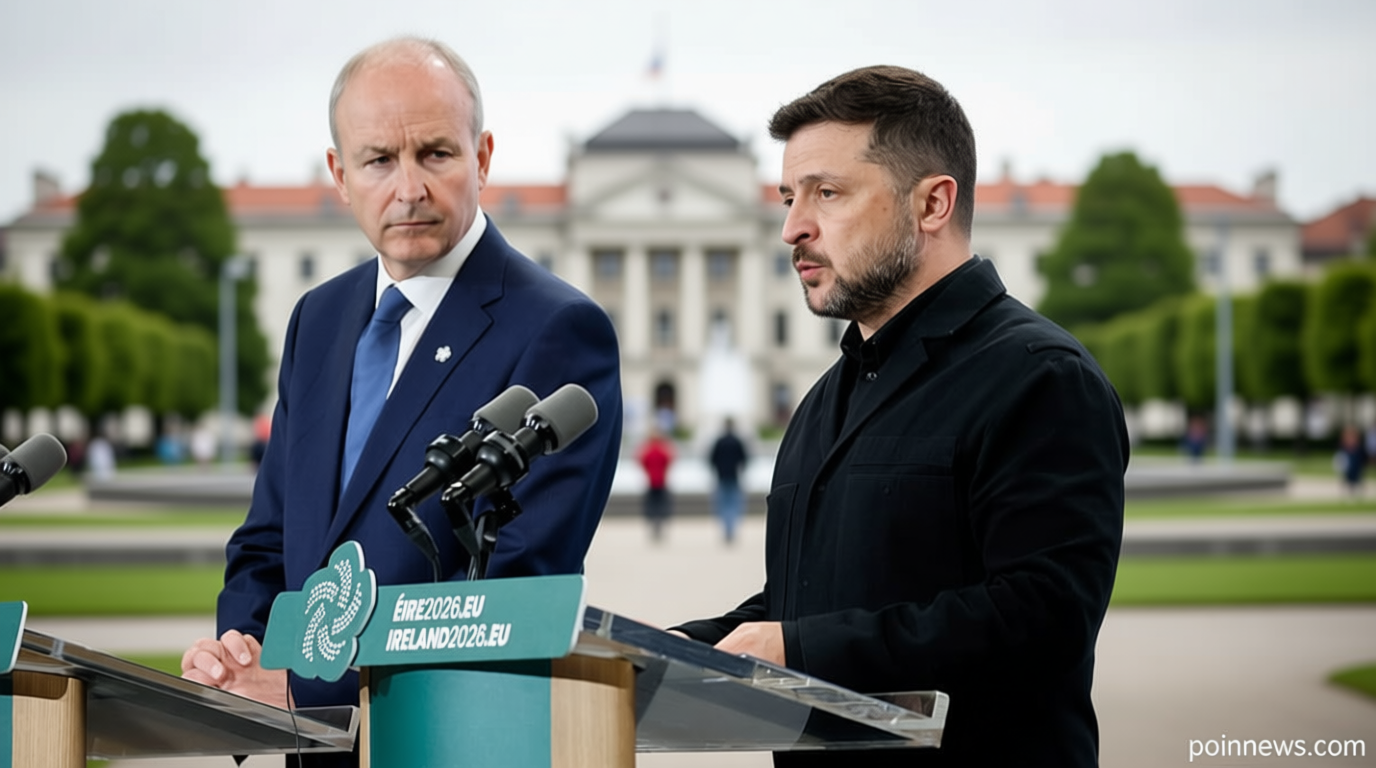
The debate gained momentum following a significant visit by Ukrainian President Volodymyr Zelenskyy to Dublin, where he urged an end to alumina trade with Russia. “Every tonne sent to Moscow fights us in this war,” Zelenskyy said during a joint press conference with Martin. “It directly impacts Ukraine’s survival.” Zelenskyy’s remarks underscore the urgency of the issue, linking alumina exports to the prolongation of the conflict. His argument aligns with broader concerns that the EU’s reliance on Irish alumina shipments may weaken its sanctions effectiveness.
“When the economy shrinks, Russia’s ability to wage large-scale attacks diminishes,” Zelenskyy explained. “This is reflected in the casualty numbers in Ukraine.”
Recent Russian strikes on Kyiv, which killed at least 21 people, have intensified calls for accountability. A major media investigation in March revealed Ireland’s role in supplying Russian-linked industries through Aughinish Alumina, connecting the plant’s exports to Rusal, a Russian company owned by oligarch Oleg Deripaska, who is sanctioned by the EU. This finding has fueled accusations that Ireland is indirectly supporting the war effort by allowing the continued flow of alumina to Moscow. The report also highlighted the company’s exports to other Russian entities, raising questions about the scope of Ireland’s involvement.
“We’re not just exporting alumina—we’re contributing to the war machine,” said one analyst. “The EU’s focus on no cherry-picking is about ensuring every export aligns with its sanctions goals.”
Despite the scrutiny, Aughinish Alumina has warned of potential job losses and supply chain risks if Ireland were to abruptly cut its exports. The company reportedly urged the Irish government to take over operations to mitigate these impacts. Martin and Harris have acknowledged these concerns, pledging to balance the need for sanctions with the economic and social implications for the country. Their stance reflects the complex decision-making process required to ensure no cherry-picking while maintaining Ireland’s role as a key supplier in the EU’s broader strategy against Russia.