Good breeding: Kazakh ‘satin’ horse becomes new national symbol
'Satin' Horse Becomes New National Symbol Good breeding - Kazakhstan's ancient history reveals its pivotal role in the early domestication of horses, with

Good Breeding: Kazakh ‘Satin’ Horse Becomes New National Symbol
Poinews.com – Kazakhstan’s ancient history reveals its pivotal role in the early domestication of horses, with recent findings challenging earlier timelines. While the Botai culture of Central Asia had previously indicated horse taming began around 2200 BCE, new research suggests the process could have started as far back as 3500 BCE. This revelation underscores the country’s deep historical ties to equine domestication.
For centuries, horses have been central to the nomadic lifestyle of the region. They were not only vital to trade and warfare but also essential for migration across the vast steppe landscapes. These animals symbolized power, wealth, and mobility, serving as carriers of entire settlements, providers for families, and tools for military campaigns. Civilizations like the Huns and Mongols relied heavily on horseback movement, a tradition that persisted through industrialization and even into World War I and II.
A Modern Connection to the Past
In Kazakh culture, the bond between humans and horses continues to inspire art and heritage. National celebrations and public events often feature horse races, while the iconic “horned horse” remains a staple in historical exhibitions. The latest symbol of this enduring relationship is Aqzhan, a light-colored Akhal-Teke foal named by President Kassym-Jomart Tokayev.
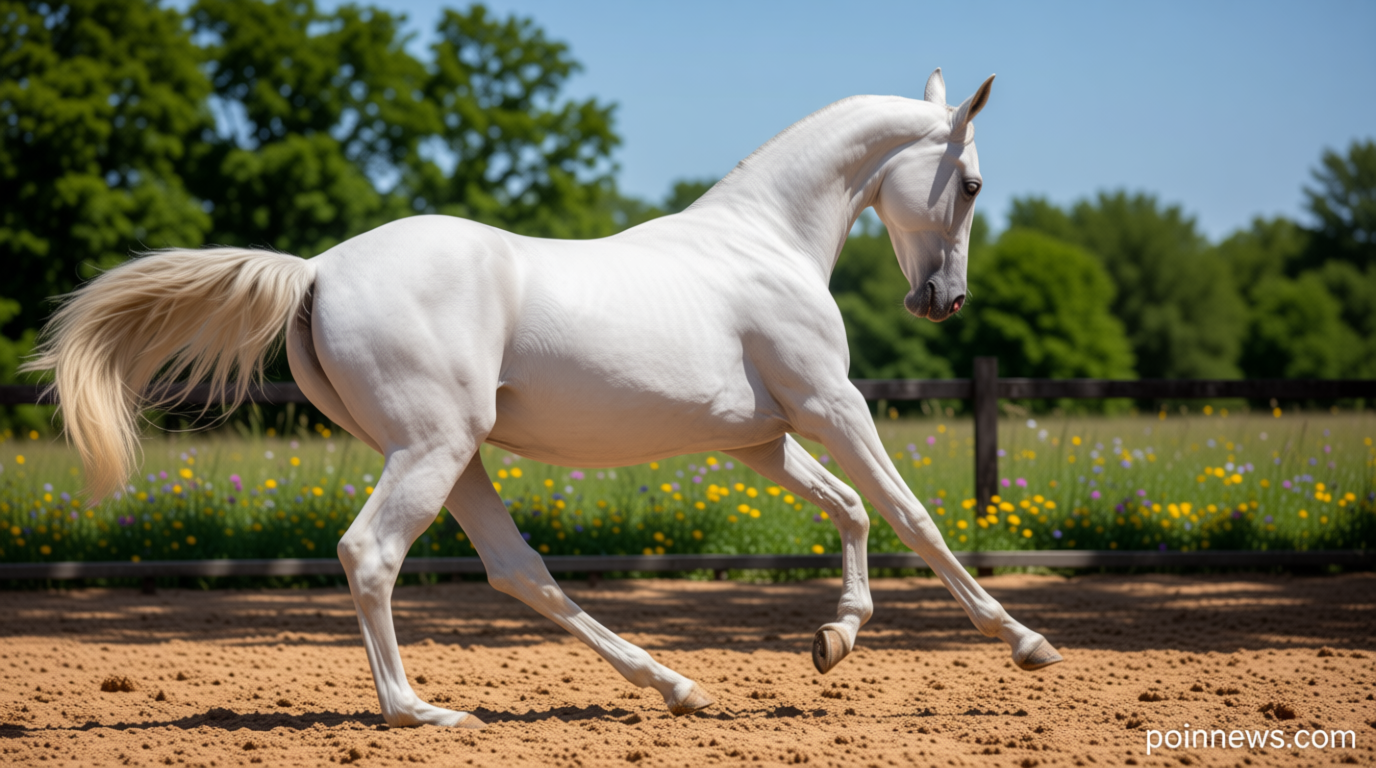
“During the May holidays, I found time to stop by and see how the horses, donated over the years, are being cared for. A year ago, I named a light-colored Akhal-Teke foal Aqzhan. His breed characteristics are immediately apparent from his appearance: tall, with a graceful neck, neat ears, a slender body, and a clear gaze. He moves confidently and appears intelligent and noble,” the president said.
Aqzhan’s unique isabelline color—found in just 3% of Akhal-Teke horses—has captivated attention. Born in Astana on March 30, 2025, the foal’s coat possesses an optical effect, with fine hairs refracting light to create a satin-like gleam. In steppe traditions, such a color has long been seen as a sign of fortune and prosperity.
Experts highlight the rarity of the isabelline hue, even within the Akhal-Teke breed. The horse’s striking appearance has sparked discussions in social media and international publications. One local newspaper described Aqzhan as “a metaphor for modern Kazakhstan, where civic responsibility and moral values shape urban identity and national consciousness.” The name “Pure Soul” reflects this symbolic connection.
Preserving Tradition and Promoting Awareness
As head of state, Tokayev serves as the patron of the Presidential Stables, where he regularly engages in animal care. His visits include feeding the horses and emphasizing their cultural importance. The president also uses these interactions to advocate for equestrian sports and animal rights, urging a strict stance against mistreatment and legal accountability for abusers.
Kazakhstan has made progress in reviving its natural heritage through a major reintroduction program. The Altyn Dala State Nature Reserve in central Kazakhstan now hosts 22 Przewalsky horses, a species thought to be a genetically unaltered ancestor of modern horses. After being locally extinct for two centuries, this international initiative aims to restore the wild horse population to its native steppe.