EU-backed project brings social housing back to Budapest
EU-backed initiative revives social housing in Budapest EU backed project brings social housing - A long-closed school in Budapest is transforming into the

EU-backed initiative revives social housing in Budapest
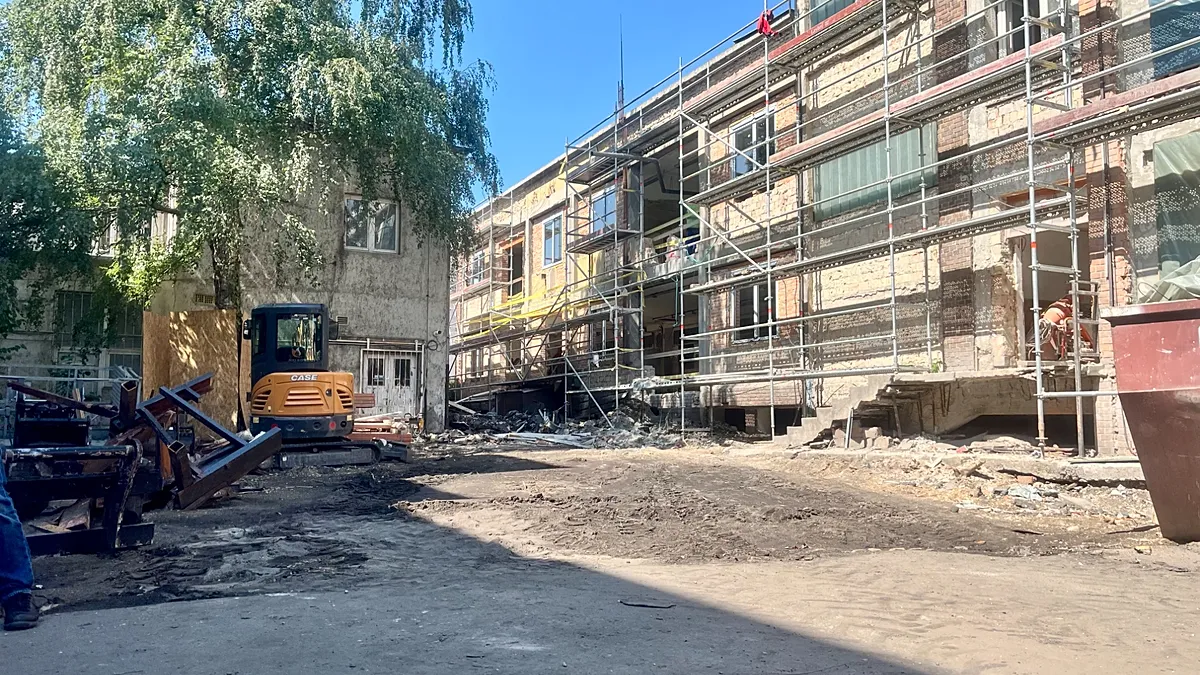
Poinews.com – A long-closed school in Budapest is transforming into the city’s inaugural social housing project in over two decades, supported by the European Union and municipal authorities. The €6.2 million initiative at 39–43 Baross Street in Újpest will provide 26 rental units, with the first residents set to move in by early 2027. This development marks a critical step in addressing the capital’s escalating housing challenges.
A housing crisis in focus
Budapest Mayor Gergely Karácsony highlighted the worsening affordability issue, noting that property prices have surged sharply in recent years. “Budapest has experienced the most dramatic price increases across the EU in the past decade,” he stated, attributing the trend to decades of flawed housing policies.
Reimagining space for modern needs
Balázs Humayer, a key figure in the AHA Budapest project, emphasized the unexpected benefits of repurposing the school. “Classrooms were built with wide corridors to accommodate children,” he explained. “For housing, we can reduce wall space by 35–40%, creating more usable area.” This approach demonstrates how old structures can be adapted to meet contemporary requirements.
Testing sustainable housing models
The AHA initiative, backed by the European Urban Initiative (EUI), evaluates underused buildings for potential conversion, redevelopment, or sale. “Demolition or sale might be better options in some cases,” Humayer noted, adding that the program is developing a framework to assess these choices. At its core is the Demo Hub, a pilot project blending energy efficiency with innovative urban living solutions.
Targeted tenant selection
Tibor Kiszelyi, from the From Street to Home! Association, outlined the criteria for allocating units. “Some flats naturally suit specific groups,” he said, citing larger homes for big families and accessible units for individuals with mobility needs. The program also aims to support single-parent households and youth transitioning from state care, though refining these selection methods remains a complex task.
Progress amid long-term gaps
Karácsony acknowledged that 26 units alone won’t resolve the city’s housing deficit. “This project showcases how public bodies and experts can collaborate,” he said, emphasizing that buildings no longer serving their original function present unique opportunities. While the number of new homes may seem modest, he stressed it represents meaningful advancement after 25 years of stagnation in social housing construction.