G7 leaders agree to increase weapons deliveries for Ukraine, step up pressure on Russian economy
G7 Leaders Agree to Boost Ukraine's Arms Supply and Intensify Economic Pressure on Russia G7 leaders agree to increase weapons - G7 leaders have reached a key

G7 Leaders Agree to Boost Ukraine’s Arms Supply and Intensify Economic Pressure on Russia
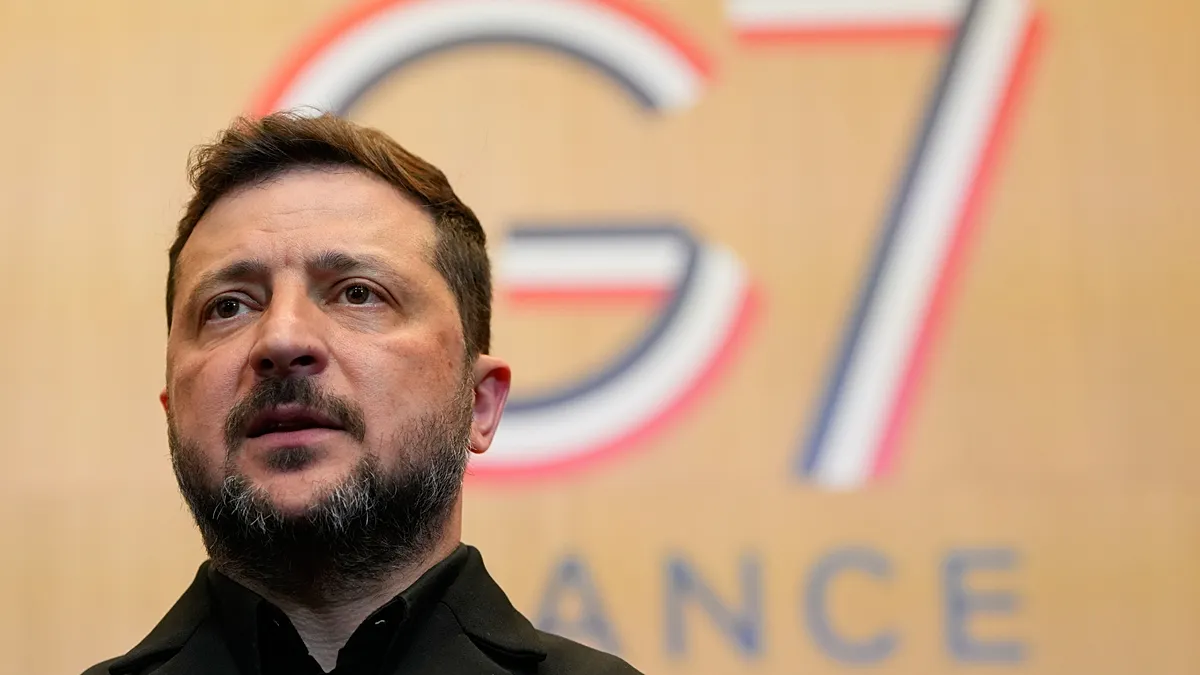
Poinews.com – G7 leaders have reached a key decision to increase weapons deliveries to Ukraine, marking a significant escalation in support for Kyiv’s defense efforts. The agreement, announced at a summit in Évian-les-Bains, France, reflects a unified stance among the seven nations to amplify military aid and tighten economic sanctions against Russia. This move aims to address Ukraine’s urgent need for advanced weaponry, including air defense systems and long-range missiles, while applying sustained pressure on Moscow’s war economy. The decision underscores the G7’s commitment to ensuring Ukraine’s capacity to repel Russian aggression and maintain its territorial integrity.
Strategic Expansion of Military Aid
The summit discussions highlighted the G7’s determination to scale up arms shipments in response to evolving battlefield dynamics. Leaders emphasized the importance of equipping Ukrainian forces with modern capabilities to counter Russian advances, particularly in the face of winter campaigns that could exploit vulnerabilities in energy infrastructure. The consensus also included a commitment to streamline the approval process for military equipment, ensuring timely delivery of critical supplies. This expansion of support comes amid growing concerns about the sustainability of Ukraine’s defense efforts and the need to deter further Russian incursions. By increasing the pace of weapons deliveries, the G7 seeks to bolster Kyiv’s strategic advantage and accelerate the resolution of the conflict.
A key component of the agreement involves the allocation of additional resources to Ukraine’s energy sector, which has been a focal point for Russian attacks. The G7 nations pledged to provide financial assistance to sustain Ukraine’s power grid and heating systems during the harsh winter months. This initiative is expected to complement existing aid packages and mitigate the impact of Russian sabotage on civilian populations. The leaders also expressed confidence in Ukraine’s resilience, noting that its military progress has been instrumental in reclaiming territory and stabilizing frontlines. The decision to intensify support signals a long-term strategy to maintain pressure on Russia while securing Ukraine’s sovereignty.
Economic Sanctions and Targeted Pressure on Russia
Alongside military aid, the G7’s focus on economic pressure has intensified, with leaders agreeing to broaden sanctions targeting Russia’s energy exports. The agreement explicitly calls for measures to restrict Moscow’s ability to generate revenue from its oil and gas industries, which have been central to funding the war in Ukraine. By linking economic sanctions to energy sector restrictions, the G7 aims to weaken Russia’s financial reserves and limit its geopolitical leverage. This strategy aligns with previous efforts to isolate Russia economically, including the imposition of trade barriers and restrictions on financial transactions. The G7 leaders also reiterated their support for the European Union’s sanctions framework, which has already seen over 20 rounds of measures against Russia.
“We commit to increase pressure on Russia’s war economy by expanding sanctions and targeting its energy exports,” stated a spokesperson for the G7. “This will not only hinder Moscow’s ability to fund its military operations but also send a clear message that the global community will not tolerate further aggression.” The statement further highlighted the importance of coordination among G7 members to ensure consistency in sanctions enforcement. This includes measures to block Russian oil sales and disrupt its “shadow fleet,” a network of vessels used to bypass sanctions and transport goods to Ukraine. The economic strategy is designed to create a dual impact: limiting Russia’s financial resources and encouraging its allies to reconsider support for the conflict.
Meanwhile, the United States has taken a leading role in the G7’s economic initiatives, leveraging its influence to accelerate the implementation of sanctions. President Donald Trump noted that Washington would reimpose restrictions on Russian energy exports, which had been temporarily eased to ease global oil supply tensions. This decision follows a new framework agreement between the US and Iran, aimed at restoring shipping through the Strait of Hormuz. The G7’s economic strategy is also supported by the EU, which has introduced 21 sanction packages targeting various sectors of Russia’s economy. These measures include export controls on critical technologies and restrictions on Russian financial institutions operating in Europe.
The G7’s decision to increase weapons deliveries and economic pressure is part of a broader effort to maintain a unified front against Russia. By coordinating their actions, the group aims to amplify the impact of their sanctions and ensure Ukraine receives the necessary resources to sustain its defense. This includes not only military equipment but also financial aid and technical assistance to modernize Kyiv’s infrastructure. The leaders also called for increased collaboration with international partners, such as NATO and the World Bank, to secure additional funding and logistical support. As the conflict enters a critical phase, the G7’s renewed commitment signals a determination to prolong the pressure on Russia until a resolution is achieved.