‘Heads must roll’: France demands judicial overhaul after murder of 11-year-old girl
France Demands Judicial Overhaul After 11-Year-Old Girl's Murder Heads must roll - The phrase “heads must roll” has become a rallying cry across France

France Demands Judicial Overhaul After 11-Year-Old Girl’s Murder
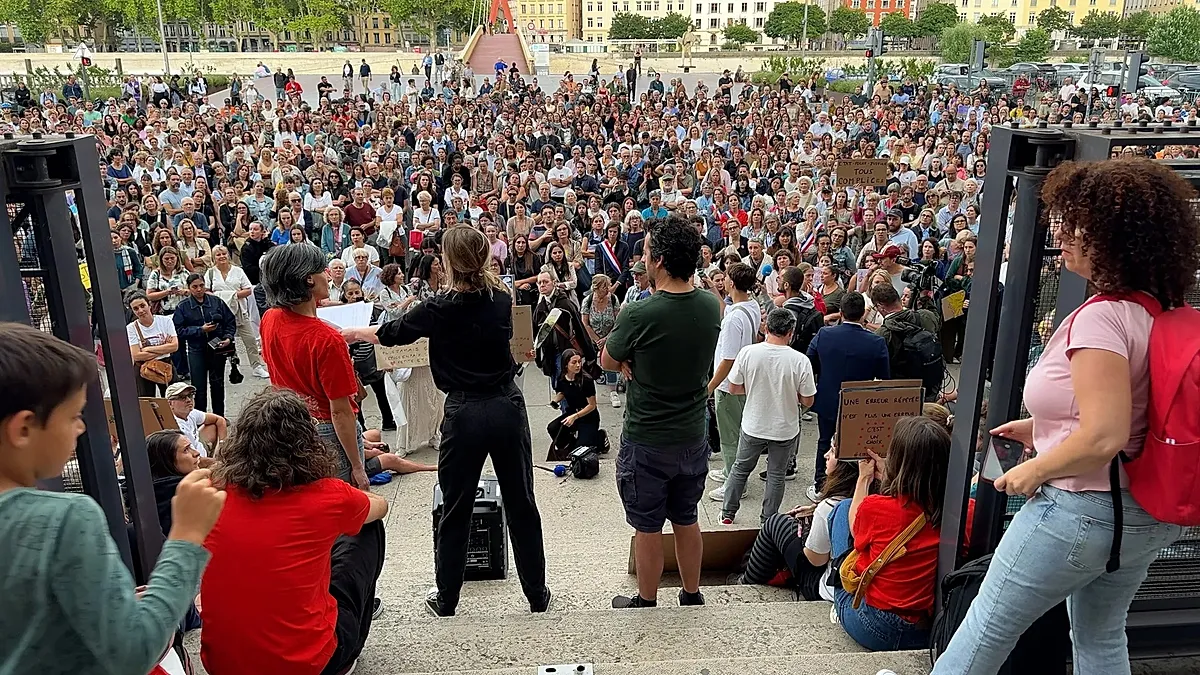
Poinews.com – The phrase “heads must roll” has become a rallying cry across France following the tragic murder of an 11-year-old girl, Lyhanna, who disappeared in late May and was found dead on a farm six days later. Her death has sparked widespread outrage, with protests erupting in over 150 towns and cities. Thousands have gathered outside courthouses, demanding accountability for the systemic failures that allowed a man with prior accusations to remain free until a child was killed. The incident has intensified calls for a complete overhaul of the justice system, which many believe failed to protect Lyhanna and countless others.
A Systemic Crisis
The murder of Lyhanna has exposed deep cracks in France’s judicial framework, according to Virginie Bordeaux, an activist with the child rights group Collectif Enfantiste. She co-organized a demonstration in Lyon, where she emphasized that “the entire system needs rethinking.” The girl’s disappearance and subsequent death highlight a pattern of inaction, as her case was not prioritized despite prior reports of abuse. The delay in taking legal action against Jérôme Barella, a 41-year-old teacher at Lyhanna’s school, has left many questioning how such a tragedy could occur.
“For years, we’ve been shouting that children aren’t being protected,” said Chloé, a participant in the Lyon rally. “Mothers and parents have filed complaints, but the system ignores them. Now, we’re demanding that the justice system address these issues before more lives are lost.”
Jérôme Barella was last seen entering his car with Lyhanna, and investigators later discovered that he had been reported multiple times for sexual abuse of minors. A complaint filed in August against him for repeatedly raping a 10-year-old girl was dismissed for nine months, leaving the public to wonder why his alleged crimes weren’t investigated sooner. This lack of urgency has fueled accusations that the legal system is complicit in child abuse cases, with many calling for a reevaluation of how child victims are treated.
A Call for Urgent Action
France’s Justice Minister, Gérald Darmanin, has publicly apologized to Lyhanna’s family, acknowledging that the system failed to act in time. He promised to review all pending cases involving child victims, estimating there are around 70,000 such cases currently under investigation. The government’s response has been met with mixed reactions, as many activists argue that the reforms must be more than symbolic.
“The system let this happen because it didn’t act when it should have,” declared Louis, a protestor holding a sign reading “Je suis Lyhanna.” “We’re fed up with lenient justice. Now, heads must roll to show we’re serious about change.”
Lyhanna’s case has become a symbol of broader concerns about child protection in France. Her death has prompted a nationwide debate about the effectiveness of current legal procedures, particularly in cases involving minors. Advocacy groups are now pushing for faster processing of child abuse cases, stricter penalties for repeat offenders, and improved communication between law enforcement and victims’ families. The phrase “heads must roll” has taken on a new urgency, as citizens demand tangible results from the judicial system.
The Path Forward
As the nation grapples with this crisis, proposals for reform are gaining traction. One key demand is the creation of a specialized child protection unit within the judiciary, which would prioritize cases involving minors and expedite investigations. This unit would work alongside prosecutors to ensure that allegations of abuse are not overlooked. Additionally, activists are calling for a review of the legal definitions of child abuse and the implementation of stricter reporting requirements for educators and caregivers.
“We need a system that protects children, not one that hides them,” said an anonymous activist, speaking at a smaller gathering in Toulouse. “Heads must roll, but we also need new laws to prevent this from happening again.”
With the protests continuing to grow, there is a palpable sense of determination among the French public. The demand for accountability is not just about Jérôme Barella but about the entire justice system. Lyhanna’s murder has become a catalyst for change, urging lawmakers and officials to take immediate steps toward reform. As the country reflects on this tragedy, the question remains: will the system rise to the occasion, or will more children suffer before the reforms take effect?